
Brake pads enable you to slow down and stop your vehicle safely. Due to frequent, heavy use, they can fail. How can you tell if your brake pads are worn? How do you know when it’s time to visit a garage or a tyre repair shop? We’ll explain!
Assessment of the technical condition of brake pads
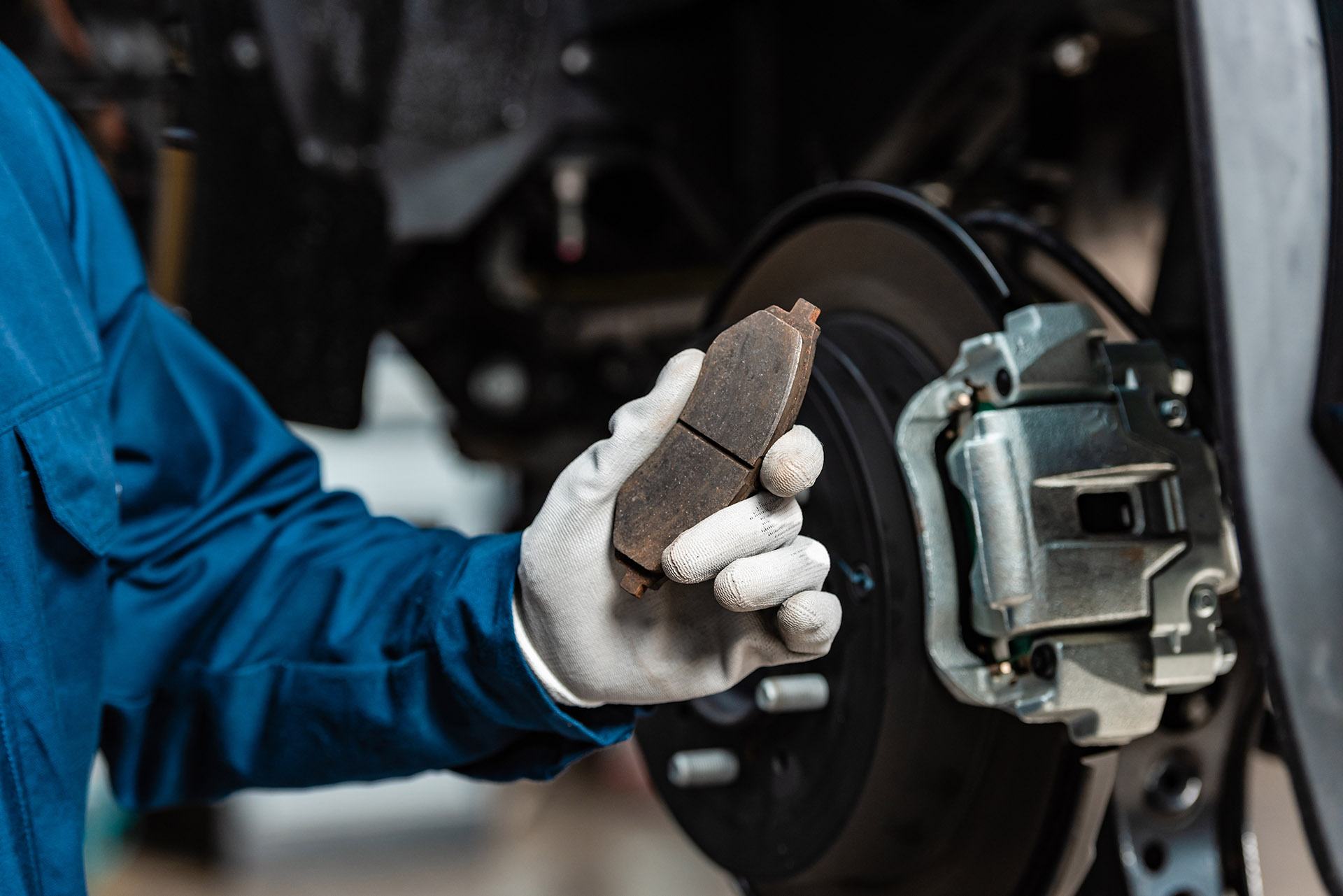
Modern vehicles are fitted with special sensors synchronised with the on-board computer. When the brake pads are worn, these sensors send a warning signal and a message appears on the screen indicating that they need replacing. An alternative to the electronic sensor is a metal plate. When the brake pads are too worn, the plate rubs against the disc, producing a distinctive squeal. However, neither mechanical nor electronic sensors perform their functions flawlessly. A warning signal is generated when a change in the pad’s thickness is detected. The sensors therefore do not detect mechanical faults. Experts advise carrying out a check yourself, as it does not require specialist servicing knowledge. Brake pads should be replaced if there are visible signs of wear, chips or similar damage on their surface. A visual inspection can be carried out, for example, when changing tyres. It is worth noting that new brake pads have distinctive grooves, and if these are no longer visible, the pads need to be replaced.
How can you tell whilst driving that your brake pads might be worn out?
Poor condition of the brake pads affects braking efficiency. The vehicle may pull to one side, and you may also hear friction noises, squeaking, whirring, grinding, etc. Brake pads in a car used mainly in town, where driving conditions vary greatly, should be replaced every 30,000 km. For longer journeys, this may be every 60,000 km. The type of gearbox fitted to the vehicle also affects brake pad wear. An automatic gearbox causes greater wear and tear on the entire braking system, as it is not only the pads but also the discs that are subject to wear.
Replacing brake pads yourself
Many people who have noticed a problem with their brake pads decide to take their car to a garage. You can also carry out the replacement yourself using an A-frame jack, brake cleaner and a piston press. A jack fitted with a hydraulic cylinder will make the job easier, allowing you to lift the car with ease.
However, changing the brake pads yourself is quite a challenge in modern cars, as it usually involves connecting a computer; therefore, it is best to take your car to a garage equipped with professional equipment.
Regular replacement of brake pads is the basis for safe driving. It is therefore worth remembering to keep an eye on your vehicle and, if you notice any worrying noises or unusual behaviour when stopping or slowing down, to have it serviced straight away.