
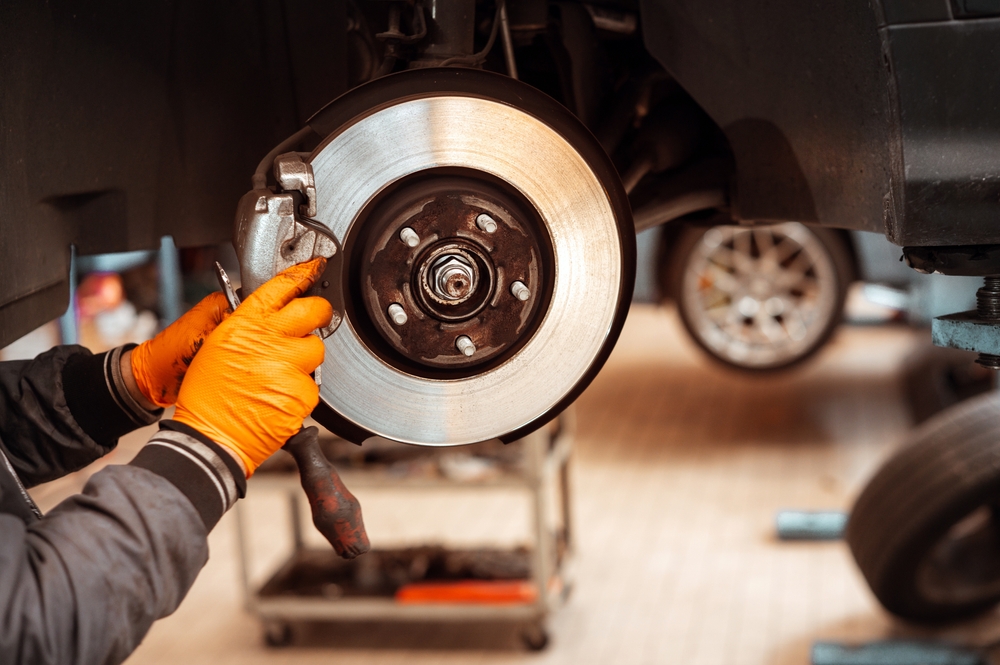
Brake pads have a direct impact on our safety on the road. If they are damaged or worn out, they make braking more difficult and can even lead to a vehicle veering off the road. Is it possible to tell when they need replacing? And how can you check whether the brake pads are burnt out?
Brake pads are one of the components of our car that need to be replaced regularly – usually every 30,000–50,000 kilometres. Of course, this interval depends on our driving style, as well as the terrain on which we drive. Drivers in urban areas, as well as those in mountainous regions, use their brakes more frequently, so it is worth checking the condition of the brake pads regularly, even as often as every 10,000 kilometres.
Worn brake pads – what are the consequences?
Brake pads are an integral part of the braking system and come into play whenever we press the brake pedal. Wear and tear on them not only results in a longer and more dangerous braking distance, but can also lead to damage to the entire braking system – not just the discs.
Brake pad replacement in Warsaw It can also be carried out when changing tyres for the season. This is the perfect time to check the condition of our brake pads – we have better access to them then.
When changing from summer to winter tyres, or vice versa, you can ask the tyre fitter to check the condition of both the brake pads and the brake discs – that way, you can be sure that it’s completely safe to carry on driving.
Burnt-out brake pads – what are the signs?
Burnt-out brake pads are nothing out of the ordinary – this mainly happens during long, fast journeys. It is a normal physical phenomenon in which the materials from which the pads and discs are made become overheated. Very often This can happen when braking suddenly whilst driving at speed, as well as when pulling away rapidly with the brake still applied.
The signs of burnt brake pads can be heard and felt, and include:
- a squeaking noise when braking;
- the smell of something burnt;
- uneven brake pedal travel.
All of the above symptoms indicate that there is something wrong with our brake pads – they are burnt or worn out, and therefore need to be replaced. New cars are also fitted with special sensors which, much like the oil warning light, display a message when the brake pads are worn out.
Which brake pads are durable?
There are no brake pads that will last us a lifetime. Whether we choose ceramic, metal or organic pads, they all wear out gradually. It’s also worth bearing in mind that the quality of the pads themselves is of the utmost importance, so it’s not worth opting for the cheapest alternatives, especially as the pads are responsible for our safety.
Replacing brake pads yourself may cause damage to the braking system. If you notice that your brake pads are overheating, be sure to book an appointment to have them checked and replaced.