
Noisy tyres – what’s the cause and what can you do about it?
Excessive noise whilst driving may indicate a wide range of problems developing with the tyres. Although noise itself is a natural phenomenon, any irregularities in its intensity and frequency may indicate technical problems. In this article, we outline the most common causes of increased tyre noise and suggest what remedial measures you can take to eliminate this nuisance.
Noisy tyres – the cause of excessive noise whilst driving
Drivers who find their tyres are excessively noisy should first check the condition of the tread. Uneven tread wear can result in unexpected noises. This phenomenon is known as tread spalling, and the vibrations it generates are audible at lower speeds. 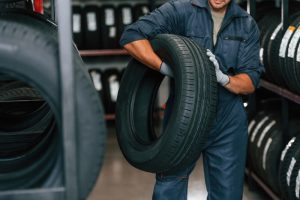
Another common cause is mechanical damage developing within the tyre’s structure: various bulges, protrusions and cracks. Their presence will disrupt the tyre’s performance, producing a thumping noise that occurs at irregular intervals.
Another common cause is incorrect wheel balancing, which leads to additional symptoms – deviations from the intended driving line and acoustic resonance. In the case of misaligned wheels, the best remedy is to have them professionally balanced and aligned.
Tyres with incorrect pressure – either too high or too low – can be a significant source of noise. In such cases, the tyre’s contact with the road surface is compromised and noise may be generated as a result of the tyre rolling incorrectly.
It is also worth noting that noise may be caused by a faulty bearing or wheel hub, shock absorbers, suspension faults, or other components. Sometimes the best solution is simply to carry out a comprehensive diagnosis of this system or tyre replacement in Warsaw.
Noisy tyres – what to do to sort out the problem
Drivers wishing to tackle noisy tyres should, first and foremost, carry out a thorough visual inspection and assess their technical condition. If no structural faults are detected, it may be necessary to seek professional servicing. The most common procedures involve adjusting the suspension alignment or balancing the wheels, as well as carrying out a comprehensive inspection of the suspension and bearings. Drivers wishing to ensure their tyres function correctly at all times should monitor tyre pressure and respond to any symptoms – however minor – that may indicate a fault with the tyres.