
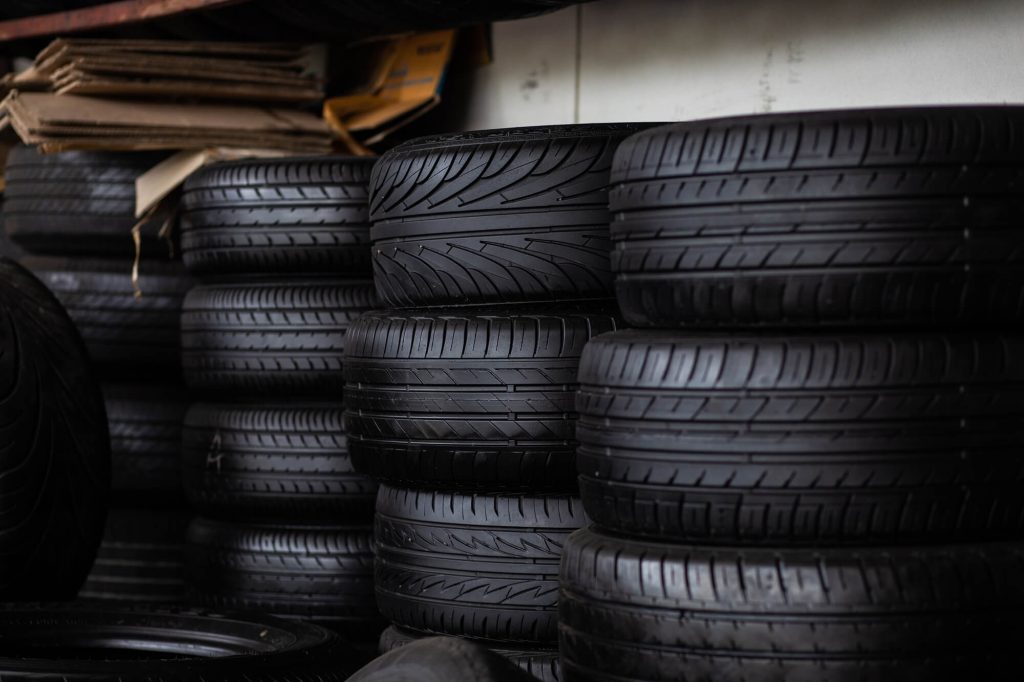
What is the difference between asymmetric, directional and symmetric tyres?
We all have to choose tyres, and the differences in tread patterns are not just a matter of aesthetics. They determine grip, noise levels and safety in the rain or on bends. More and more people are asking which type of tread pattern is best for city driving, on the open road and in winter.
In this article, I explain the differences between asymmetrical, directional and symmetrical tyres. You’ll learn how to read the markings on the sidewall of a tyre, how to rotate your tyres, and which types offer better protection against aquaplaning.
How do asymmetrical, directional and symmetrical tyres differ?
They differ in terms of tread pattern, fitting requirements and performance on wet roads.
Asymmetrical tyres have a distinct inner and outer side. The inner side usually drains water more effectively, whilst the outer side has stiffer tread blocks for stability when cornering. They are fitted with the ‘Outside’ marking on the outer side of the rim. Directional tyres have a V-shaped or arrow-shaped tread pattern and must be rotated in the direction indicated by the ‘Rotation’ arrow. This allows them to quickly displace water from beneath the wheel. Symmetrical tyres have the same tread pattern on both sides and do not require a specific direction or mounting side. This is a simple, predictable solution for a smooth ride.
What do tread patterns mean, and how do they affect grip?
The tread pattern controls the flow of water and air beneath the tyre, as well as the stiffness of the rubber blocks. This affects braking, handling, noise and wear. Wide circumferential grooves channel water along the tyre. Angled channels and a V-shape accelerate water discharge to the sides. Dense incisions, known as sipes, bite into snow and slush. Large, stiff shoulders improve cornering precision, but can increase noise levels. Highly grooved tread blocks improve grip in winter, whilst a soft tread may wear out more quickly in summer. In everyday use, it’s all about striking a balance between water dispersion, stability and noise levels.
Which tyres cope better with aquaplaning, and why?
Directional tyres are designed to disperse water quickly at higher speeds. Angled grooves and a V-shape create escape routes for water, which delays the phenomenon of the tyre hydroplaning. Good asymmetrical tyres also perform well on wet roads, thanks to their wide inner grooves. Symmetrical tyres generally have a lower resistance to deep water. Aquaplaning is also influenced by tread depth, tyre width, tyre pressure and speed. Even the best tread pattern loses its effectiveness when the tread is heavily worn or the tyre pressure is too low.
How do asymmetrical, directional and symmetrical tyres affect driving comfort?
Symmetrical tyres often ensure a smooth, quiet ride and even wear. Asymmetrical tyres combine comfort with better cornering stability and steering precision. Directional tyres can be noisier at certain speeds due to their distinct V-shaped pattern, but they offer greater confidence on wet roads. Comfort is also determined by the rubber compound and the stiffness of the tyre sidewall. It is worth checking the EU label for external noise levels and wet grip ratings.
Which types of tyres are better for driving in winter, and which for summer?
In winter, what matters are the sipes, a compound that remains soft at low temperatures, and the 3PMSF marking – the symbol of three peaks and a snowflake. Many winter tyres have a directional or asymmetrical tread pattern with dense sipes. In summer, temperature stability and stiff shoulders are important. Asymmetrical tyres often prove their worth here, although symmetrical tyres will also be suitable for relaxed, urban driving. All-season tyres combine the characteristics of both seasons, but require you to accept certain compromises. The most important thing is to use tyres that are suitable for the season and comply with the vehicle manufacturer’s recommendations.
How do you read the directional and fitting side markings on a tyre?
Look for an arrow marked ‘Rotation’ on the sidewall of the tyre. This indicates the correct direction of rotation. Asymmetrical tyres are marked ‘Outside’ and ‘Inside’. Less commonly, you’ll see ‘Left’ and ‘Right’, which indicate a specific side of the car. You’ll also see the tyre size, load and speed indices, as well as seasonal markings, including 3PMSF for winter tyres and M+S. Correctly interpreting these markings makes fitting, rotation and the selection of replacement tyres easier.
Do wheel fitting and rotation affect the service life of different types of tyres?
Yes. Correct fitting, balancing, tyre pressure and suspension alignment significantly extend the life of tyres. Symmetrical and non-directional asymmetrical tyres can be cross-rotated, which evens out wear. Directional tyres are rotated front-to-rear on the same side. Swapping left and right requires the tyre to be repositioned on the rim to maintain the direction. Regular checks of toe and wheel alignment help to minimise tread shearing. In cars fitted with TPMS sensors, it is advisable to carry out the sensor pairing procedure after rotation to ensure the system reads the pressure correctly.
How do you choose tyres that suit your driving style and road conditions?
Choose a tyre tread pattern to suit the roads, the climate, the car’s weight and your own priorities.
- Plenty of motorways and frequent rain: a directional tread pattern or a modern asymmetrical one with wide grooves.
- Dynamic handling and cornering: an asymmetrical tyre with wide shoulders and good performance in wet conditions.
- A smooth city ride and ease of use: symmetrical and low-noise.
- A winter with frequent snowfall: winter tyres with 3PMSF, often directional or asymmetrical with dense sipes.
- Vans and heavier loads: pay attention to the load index and reinforcement; an asymmetrical tread pattern helps with stability under load.
As part of our mobile service, we carry out tyre change, basic tyre repairs and wheel changes for cars and vans; more complex work, such as wheel rim straightening or extensive mechanical repairs, requires a visit to our workshop at 4A Parowcowa Street, 02-445 Warsaw.
A well-chosen tyre tread pattern improves safety and reduces stress in wet or winter conditions. The key is to realistically assess your routes and driving style, and to ensure that your tyres are fitted correctly, inflated to the correct pressure and rotated regularly. This is a simple way to ensure your tyres last longer and perform predictably in all conditions.
Book a tyre service now!