
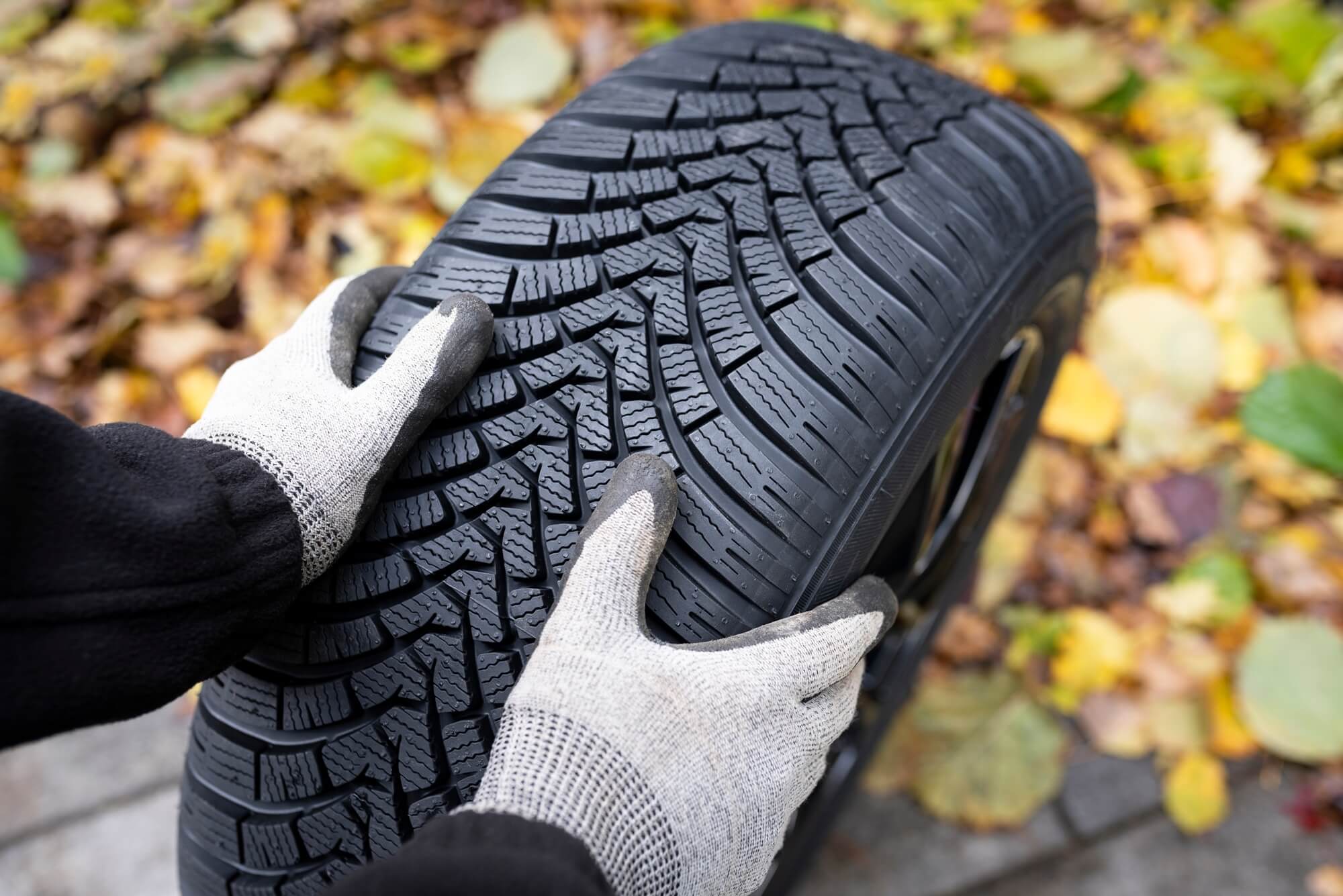
What is the difference between summer, winter and all-season tyres?
We all face a choice: summer, winter or all-season tyres. The weather can be unpredictable. And the differences in braking performance resulting from the wrong choice become apparent as soon as the first rain or frost sets in.
In this article, I explain in simple terms how tyres differ in terms of their construction and road handling. You’ll find out which ones are best suited to your climate and driving style, and how to look after your tyres so you can drive more safely and for longer.
How do summer, winter and all-season tyres differ?
They differ in terms of their rubber compound, tread pattern and the temperature range in which they perform best.
Summer tyres are designed for warm weather and rain. They feature a harder compound, stiff tread blocks and wide water-dispersing channels. They offer a short braking distance on dry and wet tarmac at higher temperatures. Winter tyres are designed for cold conditions. They are soft, have dense sipes and grip well in snow and slush. Look for the snowflake symbol against a mountain background, known as 3PMSF. All-season tyres are a compromise. They combine the features of both types and often also carry the 3PMSF mark, but in extreme heat or cold they are outperformed by specialised seasonal tyres.
How do tyre compounds affect grip in different conditions?
Temperature affects the elasticity of the rubber, which in turn determines grip, braking performance and wear.
Summer tyres harden in the cold and lose grip on the road surface. A winter tyre softens in the heat, which increases braking distances and accelerates wear. Manufacturers modify the rubber with silica and polymers to improve wet-weather grip and reduce rolling resistance. Ageing also alters the compound. Over time, the rubber becomes harder, even if the tread looks fine.
How do different tread patterns differ, and when is each one best suited?
Summer tyres have stiff blocks and wide water channels, winter tyres have dense sipes and a deeper tread, whilst all-season tyres combine both designs.
In summer tyres, the tread is based on large blocks. This provides precise handling and resistance to aquaplaning in the rain. In winter tyres, the key feature is the sipes – the fine slits that create additional gripping edges on snow and ice. All-season tyres have distinct zones. They often feature a side designed more for summer conditions and another for winter. They perform well in transitional weather conditions and in town, but in extreme snow or during high-speed motorway driving, they will be a compromise.
How do temperatures and road conditions affect tyre performance?
The further the conditions deviate from the tyre’s operating range, the poorer the handling and the longer the braking distance.
In winter, summer tyres become stiffer and lose grip more easily, even on dry tarmac. Winter tyres flex excessively in summer. This reduces stability, and the ABS and ESP have to correct the car’s path more frequently. All-season tyres maintain predictability, but in extreme conditions they are no match for specialised tyres. Remember to check your tyre pressure too. It drops in freezing conditions and rises in hot weather, which affects grip, tyre wear and the risk of aquaplaning.
Is it safe to use the same set all year round?
They are safe in mild weather and when driving at a steady pace, but in extreme conditions, all-season tyres are better.
For everyday city driving, without steep inclines or frequent trips to the mountains, all-season tyres bearing the 3PMSF symbol can strike the right balance. If you frequently use motorways in summer or regularly drive on snow and ice in winter, tyres designed specifically for the season offer an advantage. The key is to choose tyres suited to the actual roads you drive on, rather than theoretical scenarios.
How do you choose the right type to suit your riding style and the weather conditions?
Choose tyres to suit the prevailing temperatures, your usual routes and your driving style.
- City driving and short journeys all year round, gentle driving: all-season tyres with 3PMSF winter certification.
- Country roads and motorways in summer, high speeds, precise handling: summer tyres for the warmer months.
- Frequent snow, uphill climbs, winter trips to the mountains: winter tyres for the cold season.
- Commercial vehicles and fleet vehicles, constant load: reinforced tyres suitable for the load, with seasonal selection.
If you’re in any doubt, what matters is the local climate and the most common scenarios. A single tricky situation with a poor-quality tyre can wipe out any savings made by compromising.
How long do tyres last, and what factors affect their lifespan?
Tyre life depends on driving style, mileage, road surface quality, tyre pressure, alignment, load and the age of the rubber compound.
Aggressive acceleration and braking accelerate tyre wear. Tyre pressure that is too low or too high causes uneven wear. Incorrect wheel alignment and imbalance damage the tread and reduce comfort. Storage conditions and exposure to sunlight accelerate the ageing of the rubber. It is worth checking the DOT code, which indicates the date of manufacture. Many manufacturers recommend regular tyre condition checks after a few years’ use and replacement at the latest after a decade, even if the tread appears to be in acceptable condition.
What can be done today to improve tyre safety and service life?
Regular checks of tyre pressure, tread condition and wheel alignment yield quick, tangible results.
Here are the key actions:
- Check tyre pressure regularly when the tyres are cold and in accordance with the vehicle manufacturer’s recommendations.
- Periodic rotation of tyres between axles and seasonal changes in line with weather conditions.
- Wheel balancing and wheel alignment checks following impacts with kerbs or potholes.
- Check the tread depth and whether the tyres are wearing evenly, especially before a long journey.
Further aspects:
- Checking the DOT production date and assessing cracks, deformations and damage.
- Store in a cool, shaded place at the correct pressure and on clean rims.
- A fully functional TPMS system and rapid puncture repair using only tyre-specific methods.
- Selection of load capacity and speed rating in accordance with the vehicle manufacturer’s recommendations and the actual load.
In Warsaw, you can make use of a full tyre service, which also offers a mobile service in the districts of Włochy, Mokotów, Ochota, Bemowo and Ursus. Services available include tyre replacement, repairs, wheel balancing with a road test, and the fitting of new tyres with expert advice; when you buy new tyres, fitting is free of charge. We also stock a wide selection of second-hand tyres.
Well-chosen and well-maintained tyres improve safety in all weather conditions, reduce fuel consumption and minimise stress behind the wheel. It’s an investment in peace of mind that pays off every day you drive.
Agreements tyre change or a consultation in Warsaw – we operate through 24H and offer a mobile service, so you can drive safely in all conditions!