
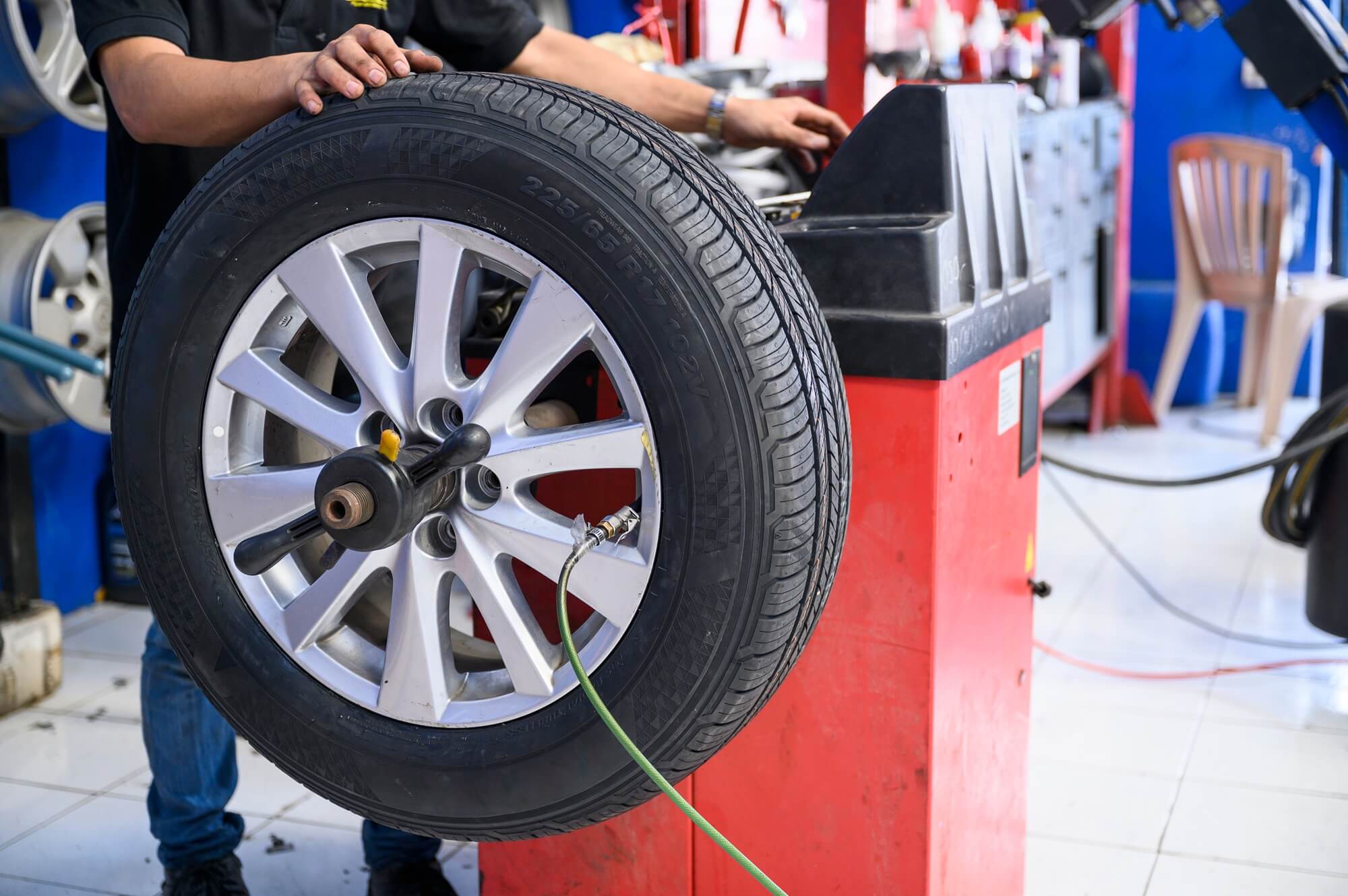
Why is it worth having your wheels balanced after every tyre change?
More and more drivers are putting off having their tyres balanced after a seasonal tyre change. This is a false economy, which quickly comes back to haunt them in the form of vibrations, noise and faster tyre wear. Every time you change a tyre or swap the wheels round, the weight distribution changes. That’s enough to cause a wheel to wobble.
In this article, we explain why it’s worth having your tyres balanced after every tyre change. We’ll show you how this affects comfort, safety and costs, what signs you should look out for, and what to check before and after fitting.
Why is it worth balancing your wheels after every tyre change?
This is because the wheel’s weight distribution changes, which, if left uncorrected, leads to vibrations, noise and accelerated wear of the tyres and suspension components.
Even new tyres have manufacturing tolerances, and their position relative to the rim changes during removal and fitting. The old balance weights are removed, and minor misalignments, dirt and variations in how the tyre sits on the rim make a difference even at higher speeds. Wheel balancing restores an even distribution of forces, ensuring that the wheel rolls smoothly and does not transmit unwanted vibrations to the car.
How does wheel balancing improve ride comfort?
It reduces steering wheel and body vibrations and minimises road noise.
Unbalanced wheels generate centrifugal force, which increases with speed. The steering wheel starts to shake, the wing mirrors vibrate and the cabin hums. Once the wheels have been properly balanced, the car handles more stably, the characteristic ‘wobble’ disappears, and the journey becomes quieter and less tiring. This is particularly noticeable on the open road, where the range of speeds tends to highlight any imbalance.
How does uneven weight distribution on the wheels accelerate tyre wear?
This causes the tyre tread to be pressed down at specific points on the road surface, leading to ‘serration’ and localised overheating of the rubber.
An imbalance means that the tread does not make contact with the road evenly. This results in bulges and indentations in the tread, which increase rolling resistance and noise. The tyre loses grip in critical situations, and its service life is reduced. Over time, micro-cracks and damage to the tyre carcass may develop, rendering the tyre unfit for further use.
What symptoms experienced by the driver indicate problems with the wheels?
Steering wheel shake, seat vibrations, body ‘rattling’ and a hum that gets louder as speed increases.
If the vibrations are felt mainly on the steering wheel, the problem is more likely to be with the front wheels. When the seat shakes more, the rear wheels are usually to blame. A rumbling noise that increases with speed also indicates an imbalance or uneven tread wear. Persistent ‘pulling’ of the car is more often linked to wheel alignment, but an imbalance can exacerbate this effect.
How do wheel vibrations damage the suspension and wheel rims?
They accelerate the wear and tear of bearings, bushings and pins, and increase the risk of micro-cracks and deformation in the rims.
Constant vibrations place excessive strain on the shock absorbers and rubber-to-metal components. This leads to play, reduced damping and knocking noises. The bearings operate under adverse conditions, which shortens their service life. The rims take a real beating; deformation and micro-cracks may develop, and the damage worsens with a harder impact on a pothole. This is a direct route to more costly repairs.
How long does it take for a specialist to check and adjust the wheel alignment?
This usually takes anywhere from a dozen or so to several dozen minutes per set.
The time taken depends on the condition of the rims and tyres, the type of wheel balancer and whether the rim needs straightening. When a road test is carried out on the wheel balancer, the procedure may take longer, but it allows problems with tyre deflection and rim runout to be detected. In many cases, this is the only way to permanently eliminate vibrations felt within a specific speed range.
What should you check before and after fitting new tyres to avoid problems?
First, prepare and check the alignment, then set the correct tyre pressure, balance the tyres and take them for a short test drive.
The list below makes installation a breeze:
- The condition of the rims, including lateral and radial runout and any warping.
- Cleaning the hub and rim of the wheel to remove corrosion and dirt, ensuring a perfect fit.
- Tread direction and ‘inside/outside’ markings on asymmetrical or directional tyres.
- The condition of the TPMS valves and sensors, new seals and correct programming.
- Dynamic balancing, and in difficult cases, balancing with a road test.
- The correct tyre pressure as specified on the vehicle manufacturer’s plate.
- Tightening torque for the bolts and a follow-up check after a short run.
- Adjust the wheel alignment if the steering wheel was crooked or the tyres were wearing unevenly.
- Marking the position of the wheels for future rotation and storing the removed set correctly.
- Check the age of the tyres and the condition of the tread to avoid fitting tyres that are past their best.
Ready to book a wheel inspection after your next tyre change?
Yes, because it’s a simple procedure that protects the suspension, extends the life of the tyres and improves comfort and safety.
If you drive in the city and on the open road, having your tyres balanced after every change prevents vibrations across the typical speed range and helps maintain the car’s stability. At our service centre in Warsaw, we carry out wheel balancing – including a road test – wheel straightening and servicing of wheels fitted with TPMS. We serve drivers from districts including Włochy, Ochota and Mokotów, as well as those who frequently visit us from Bemowo and Ursus. For fleets and delivery vans, a mobile service is also available, which resolves the issue without the need to visit the workshop.
Book a wheel inspection and balancing at our service centre in Warsaw to ensure a smooth, vibration-free ride.