
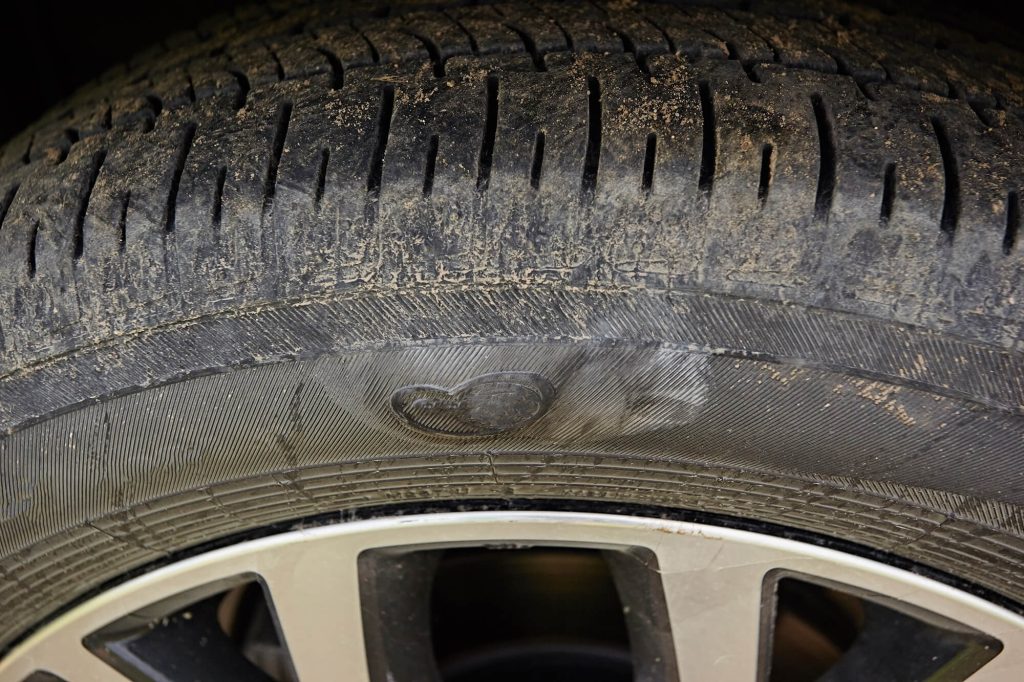
The tyre is wearing down on the sides – why is this happening?
Every day we drive to work, drop the children off and pop out to do some shopping. The tyres run quietly until one day you notice the tread worn down on the sides. The car still drives, but the tyres are telling you that something’s not quite right.
Uneven wear doesn’t just happen out of the blue. In this article, you’ll discover the most common causes of tyre sidewall wear, learn how to spot them and find out how to prevent them.
Why do tyres wear down at the sides?
The most common causes are poor wheel alignment, tyre pressure that is too low, worn suspension components or driving style.
When a tyre wears down on both edges, it’s usually because it’s under-inflated or the car’s wheel alignment is incorrect. If it wears down on one side only, this is often due to wheel camber or damage to the suspension. Aggressive cornering and overloading also accelerate the wear on the tyre shoulders.
How does incorrect wheel alignment lead to sidewall wear on tyres?
Incorrect toe and camber settings cause the sides of the tyres to rub against the tarmac.
If the camber is too far out of alignment, it ‘scrubs’ the shoulders and causes characteristic fraying at the edges of the tread blocks. Excessively negative or positive camber causes the tyre to run ‘on its edge’, so one side wears out faster. Hitting a pothole or kerb, or replacing suspension components, can throw the wheel alignment out of alignment. Checking and adjusting the angles tackles the problem at its source.
Can tyre pressure that is too low cause the tyre edges to wear down?
Yes, an under-inflated tyre wears mainly on both shoulders.
Inflating tyres to too low a pressure increases tread deflection. The centre of the tyre rises, whilst the edges bear a greater load. The shoulders heat up, the rubber softens and wears out more quickly. The car feels ‘soft’ to drive, fuel consumption increases and braking distances become longer. It is worth checking tyre pressure when the tyres are cold and maintaining the levels recommended by the vehicle manufacturer. The TPMS helps to detect drops in pressure, but it is no substitute for regular checks.
Does too high a tyre pressure cause the centre of the tyre to wear out faster than the sides?
Yes, excessive tyre pressure usually wears down the centre of the tread, not the edges.
An over-inflated tyre presses down harder in the centre. Contact with the tarmac is reduced at the sides, so the edges wear more slowly. This pattern of wear is sometimes mistaken for the tyre being in ‘good’ condition, as the shoulders look better. In practice, reduced grip, poorer shock absorption and longer braking distances on wet surfaces are real risks.
How do driving style and load affect uneven tyre wear?
Dynamic driving and heavy loads significantly accelerate the wear on the sidewalls.
Fast cornering, sharp manoeuvres and frequent driving up against the kerb place extra strain on the outer shoulder of the tyre, particularly on the front axle. Driving regularly with a full boot or an uneven load distribution overloads the tyres and requires higher pressure in accordance with the car manufacturer’s specifications. Smooth driving and an even distribution of luggage help to minimise shoulder wear.
How do worn shock absorbers contribute to sidewall wear?
Faulty shock absorbers cause the wheel to bounce and the tyre tread to become ‘jagged’, including at the edges.
When a shock absorber loses its damping capacity, the tyre loses constant contact with the road surface. This results in uneven, stepped wear patterns on the tyre, often closer to the sides. You will then hear an increasing hum, and the car will handle less well on bends and when braking. Along with the shock absorbers, the bushings, pins and fasteners wear out more quickly. A comprehensive suspension inspection helps to identify the full list of causes.
How can you tell whether the problem is down to wheel balancing, wheel alignment or the suspension?
The pattern of wear and the symptoms experienced whilst driving indicate where the problem lies:
- both edges wear down more quickly: usually due to low tyre pressure or misalignment;
- one edge is more clearly worn: this is often due to incorrect wheel alignment or damage to suspension components on one side;
- frayed edges on the tread blocks: incorrect toe-in or worn guide sleeves;
- bobbing, wobbling and increasing noise: worn shock absorbers or an imbalance;
- steering wheel vibration at a certain speed: most commonly caused by unbalanced wheels, a warped rim or a tyre with a runout;
- The car pulls to one side or the steering wheel does not return to the straight-ahead position: this is usually due to the wheel alignment or play in the steering system.
It is also helpful to measure the tread depth at three points across the width of the tyre. Consistent readings indicate proper contact with the road. Inconsistent measurements suggest a specific line of investigation. It is also worth paying attention to the TPMS warning light or variations in pressure readings, which may indicate a problem with tyre pressure or a puncture. Wheel balancing combined with a road test reveals vibrations that cannot be detected on the balancing machine alone. It is advisable to check the wheel alignment after any suspension repairs and following a heavy impact with an obstacle.
How can you prevent tyre sidewall wear on a day-to-day basis?
Preventative maintenance involves regular checks to help prevent premature tyre wear:
- It is worth checking your tyre pressure every few weeks and before a long journey, taking measurements when the tyres are cold;
- It is worth having your wheel alignment checked after any major suspension repair, a seasonal change of wheels, or after hitting a pothole or kerb;
- Wheel balancing and checking for rim runout reduce vibrations, which accelerate wear on the tyre shoulders and suspension components;
- Well-functioning shock absorbers and a steering system with no play help to stabilise the vehicle’s trajectory and maintain tyre contact with the road surface;
- Rotating the tyres between the axles in accordance with the car manufacturer’s recommendations evens out tyre wear;
- A sensible riding style, gentle turns and avoiding riding up onto kerbs minimise the strain on the shoulders.
In addition, an even load distribution and adjusting the tyre pressure to the load are crucial for tyre longevity. You should also use tyres of the correct size, with a load index and speed rating suitable for your car, as this ensures the tread functions correctly. A properly functioning TPMS also helps to detect drops in pressure and punctures more quickly.
Uneven tyre wear is a warning sign, not just a ‘feature’ of the tread. A quick check saves tyres, improves handling and enhances safety. It’s worth taking a moment to check the tyre pressure, have a quick look at the wear pattern and plan regular wheel alignment. These are simple steps that pay off in peace of mind behind the wheel and better grip in difficult conditions.
Book an appointment with mechanics and get your tyres and wheel alignment checked today!