
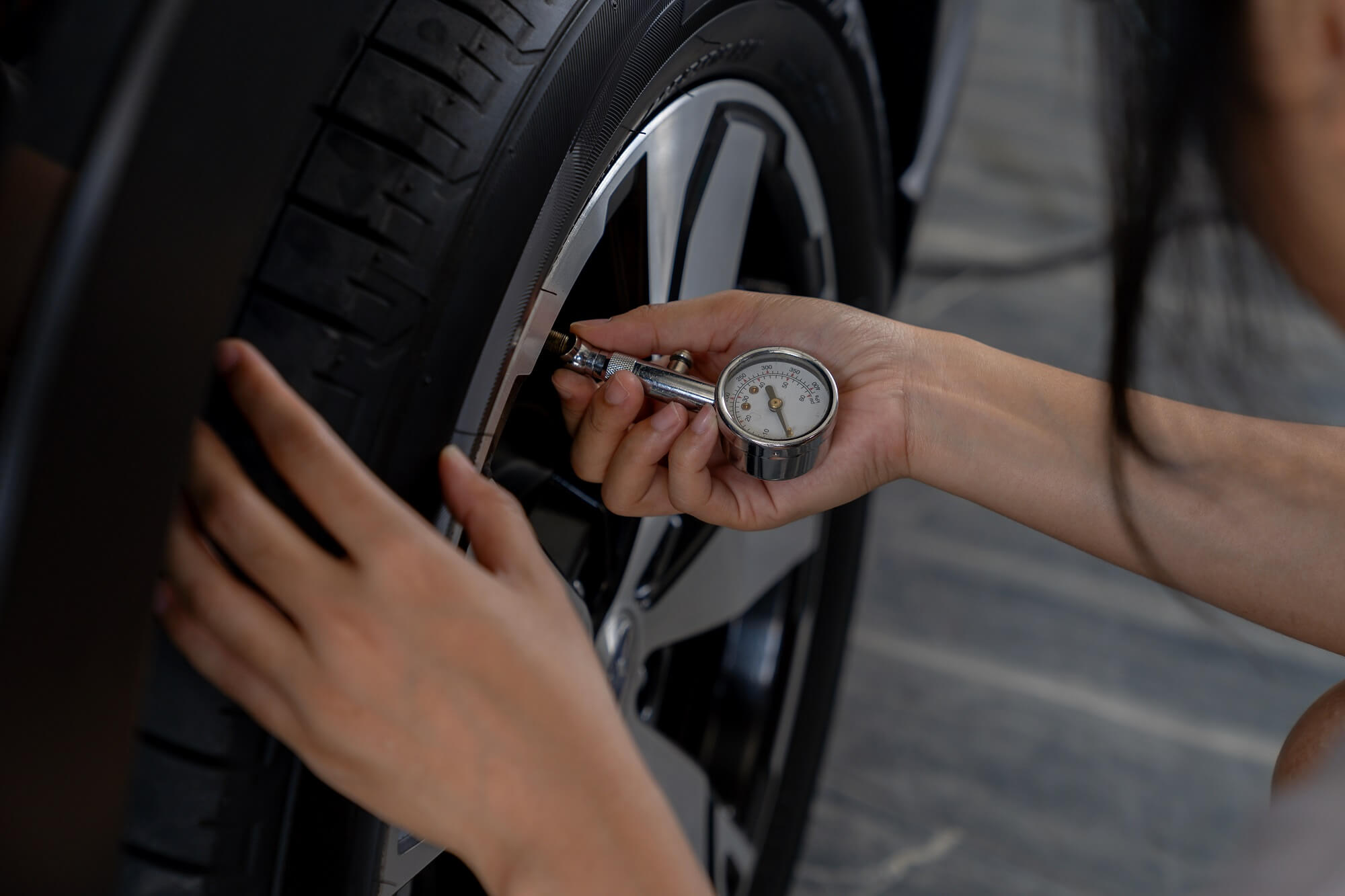
The tyre is ‘going flat’ despite being pumped up – what could be the cause?
It’s morning, you’re in a rush, and suddenly the tyre pressure warning light comes on. You top up the tyre, carry on your way and… the very next day, it happens again. The tyre is ‘losing pressure’, even though there’s no sign of a nail or a cut. It’s frustrating because the problem is often hidden.
In this article, you’ll find out what causes slow air leaks. You’ll learn about common sources of leaks, simple tests you can carry out yourself, and when it’s best to call in a professional.
Why does a tyre lose air despite being pumped up regularly?
The most common causes are minor leaks: a faulty valve, faulty connections on the rim, micro-perforations, ageing rubber or an installation error.
Even a tyre in good condition is affected by temperature. A drop of around 0.1 bar per 10°C is normal. If the pressure drops more quickly or only on one side, this is a sign of a puncture. In tubeless tyres, air can escape at the point where the tyre meets the rim, through the valve, or via a micro-tear in the tread. In tyres with an inner tube, the problem is often the inner tube itself, the rim tape, or sharp edges inside the rim.
Does a faulty valve cause air to leak out slowly?
Yes. A worn or faulty valve is one of the most common causes.
A leak can be caused by a worn-out core, a cracked rubber seal, corrosion of the socket or a loose insert. A foam test using water and washing-up liquid on the tip of the valve and at the base will reveal bubbles. In tyres fitted with a TPMS, the valves are part of the system and require dedicated service kits and correct tightening. If the foam bubbles, replacing the cartridge, the entire valve, or having the TPMS serviced will help.
How does a leak at the rim cause a drop in pressure?
Corrosion, dirt or a warped rim edge can compromise the tyre bead seal.
Corrosion and pitting occur on steel and aluminium rims, forming micro-channels. Dirt and dried-out mounting compound also cause leaks. This is indicated by bubbles appearing at the point where the tyre meets the rim after a foam test. The solution is to remove the tyre, clean and level the rim, apply the correct compound and, if necessary, straighten the rim. In spoked wheels, the tightness of the rim tape is crucial.
Can a micro-puncture in an inner tube be invisible and develop slowly?
Yes. A thin piece of wire, a nail or a screw may be lodged in the tread and cause the tyre to lose air very slowly.
Often, a foreign object blocks the hole, so the puncture is subtle and worsens under load. In a tubeless tyre, a proper repair is carried out from the inside using a mushroom-type plug. A cord from the outside is treated as a temporary fix. In tyres with an inner tube, a micro-puncture is easy to overlook without removing the tyre. After removing the foreign object, you must also check the tread from the inside to ensure no splinters remain, which could puncture the inner tube again.
Do the ageing of the rubber and the porosity of the walls lead to leaks?
Yes. Over time, the rubber deteriorates, micro-cracks appear and permeability increases.
UV radiation, ozone, salt and temperature fluctuations accelerate degradation. Damage is particularly common on the sides of the tyre, around the bead and on the rubber valve stems. Visible crack patterns, brittle valves or a tyre that has been in storage for a long time are signs that it needs replacing. Inflating tyres with a gas other than air may stabilise the pressure during temperature changes, but it will not seal a worn tyre.
Does fitting the inner tube or rim tape incorrectly cause punctures?
Yes. A punctured inner tube, a misaligned rim tape or sharp edges inside the rim cause a constant loss of pressure.
The inner tube may be cut by the tyre lever or twisted whilst being fitted, leading to friction and punctures. A misaligned valve causes the seal to fail. Poor-quality or damaged tape exposes the valve stem holes, and the edges inside the valve hole can rub against the rubber. This requires the tyre to be removed, the rim inspected, the holes deburred, the tape replaced and the inner tube fitted correctly.
How can you check for a puncture without taking the wheel off?
Use a solution of water and the liquid, watch for bubbles and monitor the drop in pressure using the gauge.
– Set the correct pressure on a cold tyre and make a note of the reading.
– Spray the solution onto the valve, its base, the area where the tyre meets the rim, and the tread and sidewall in any areas of concern.
– Look for bubbles. A little foam indicates a slow leak; lots of bubbles mean a bigger hole.
– Check the tread. If you can see a nail, do not pull it out without preparing to repair the tyre first, as the damage will get worse.
– Listen for any hissing sounds and check that the tyre is straight. Hitting a kerb often results in a bent rim.
– Measure your blood pressure at the same time each day for a few days. This will show the rate of decline and help you assess how urgent the repair is.
When should you repair a fault yourself, and when should you take it to a service centre?
A top-up of air or a temporary spare tyre will get you to your destination. A permanent repair should be carried out by a service centre after they have assessed the inside of the tyre and the wheel rim.
You can sort it out yourself as a temporary measure if there’s a small puncture in the tread of a tubeless tyre and you need to get to a garage. Damage to the sidewall, bead or large tears should not be repaired. After driving on very low tyre pressure, you should check the condition of the tyre carcass. Wheels fitted with TPMS sensors require the correct parts and tools. Corrosion or warping of the rim is a job for a specialist, involving cleaning, straightening and balancing. There is a tyre service in Warsaw catering for cars and vans, including a mobile service. It supports drivers from the districts of Włochy, Ochota and Mokotów, as well as frequently from Bemowo and Ursus. It offers tyre repairs, fitting, balancing, valve and TPMS servicing, and rim straightening.
Regular tyre pressure checks, a swift response to punctures and professional repairs extend the life of your tyres and improve safety. This means fuel savings and peace of mind on the road. If you’re unsure about the nature of the damage, visiting a service centre will ensure you receive an accurate diagnosis and the correct repair method.
Book an appointment or arrange a home visit now!