
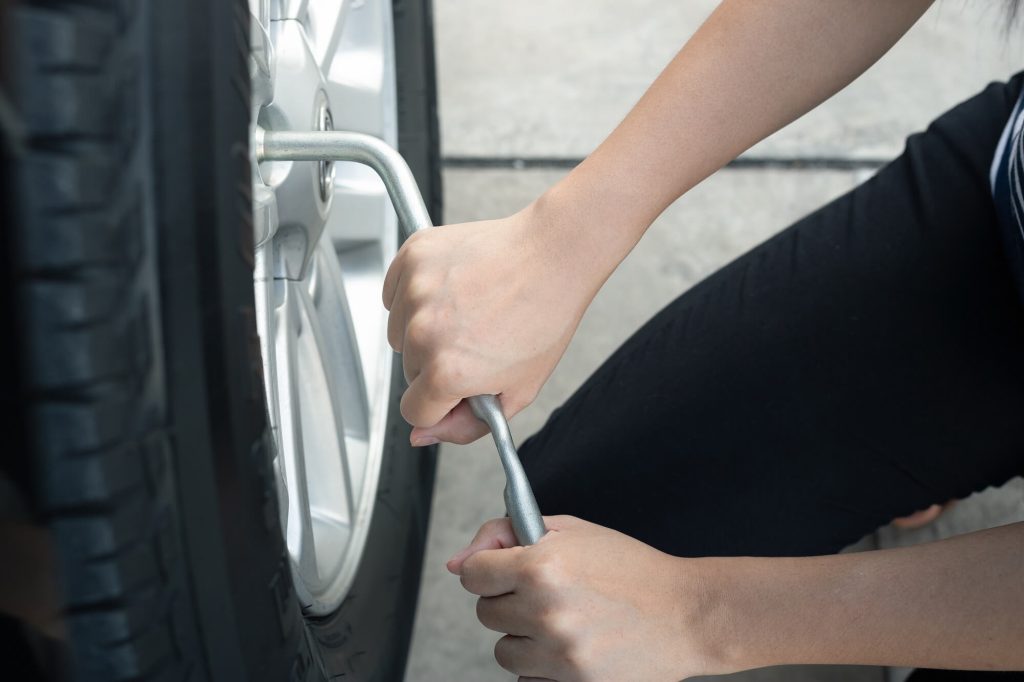
How do you unscrew the bolts on a wheel without stripping the thread or damaging the rim?
To safely unscrew the wheel bolts without risking stripping the thread or scratching the wheel rim, you must use the right tools and techniques, and avoid using excessive force if you encounter resistance. The most important thing is to use a spanner with the correct socket, ensure the car is properly supported and work with care; and if that isn’t enough, resort to tried-and-tested methods such as penetrating oils. A flat tyre on the road or a seasonal wheel change are situations every driver is familiar with. Unfortunately, sometimes a simple task turns into a nightmare when one of the bolts won’t budge.
Our many years’ experience of running a tyre service in Warsaw have shown that the most common causes of problems are corrosion and bolts being tightened too tightly – often using an air wrench without any checks. We’ll show you how to deal with this at home and when it’s better to give up, so as not to incur further costs. After all, the aim is to keep your car roadworthy and safe, whilst ensuring you don’t get frustrated by a basic maintenance task.
In a nutshell
- You can loosen a seized bolt using a penetrating oil or by heating it carefully, but be aware of the risk of damaging the wheel rim.
- Use an extendable spanner to loosen the nut for greater leverage, and always use a torque spanner to tighten it to a torque of approx. 110–140 Nm.
- If you lose the cap for the securing bolt or the bolt head becomes stripped, the safest option is to call in a professional service, such as our mobile tyre repair service.
- To avoid problems in the future, clean the hub and the bolt threads thoroughly with a wire brush before each wheel fitting.
How do you unscrew a seized wheel bolt?
To unscrew a seized bolt, first apply a penetrating oil, which will help dissolve the rust and loosen the fastening. Remember to ensure that, before attempting to unscrew the bolt, the car is parked on level ground with the handbrake applied, and that the wheel is in contact with the ground to prevent it from turning. Only once you have loosened all the bolts slightly should you jack up the car. Jerking the spanner with force is a sure-fire way to damage the bolt head or even strip the thread.
Can a penetrating lubricant such as WD-40 be used?
Yes, using a penetrating agent is the simplest and safest method, and it’s the one we should always start with. Spray the screw thread generously and wait a few, or even a dozen or so, minutes to allow the product time to penetrate the gaps and start working on the rust. In our workshop at Parowcowa 4A, we’ve found that being patient at this stage often saves a lot of trouble. After waiting, try unscrewing the bolt again with a smooth, firm motion, rather than by jerking it violently.
How does heating a seized bolt work?
Heating causes the metal to expand, which can effectively ‘crack’ the rust and loosen a seized threaded joint. In professional workshops, we use induction heaters for this purpose, which allow the bolt itself to be heated precisely and safely, minimising the risk of damage to the wheel rim or hub. Using a gas torch at home is very risky, especially with alloy wheels, which may suffer permanent deformation or damage to the paintwork. If chemical solutions do not work, it is safer to use our emergency bolt removal service.
Is it safe to tap a key with a hammer?
Tapping the shank of the spanner with a hammer is a last-resort and risky method that may do more harm than good. Whilst the vibrations may help to loosen the bolt, there is a high risk of damaging the bolt itself, the spanner and, above all, the wheel rim – especially an aluminium one. If you really must do this, strike briefly and vigorously, but never use this method as your first choice. We often see customers from Warsaw with cracked or chipped rims as a result of precisely such DIY experiments.
What tools should you use if a spanner doesn’t do the job?
When a standard spanner from a car tool kit is too short, the best solution is to use a telescopic or cross-head spanner. The longer arm provides greater leverage, allowing you to apply more torque without using excessive force. Remember to ensure the socket fits the bolt size perfectly, as any play is a sure-fire way to strip the head and cause a much bigger problem.
Which wheel spanner should you choose: a telescopic one or a cross-head one?
The choice between a telescopic spanner and a cross-head spanner depends on your preferences and the situation. A telescopic spanner offers the greatest torque thanks to its adjustable arm length, which is invaluable when dealing with seized bolts. A cross-head spanner, on the other hand, allows you to work much more quickly once the bolts have been loosened, whilst also providing better stability and symmetrical application of force. At our tyre service centre, we use both types of tool depending on the stage of the job.
| Feature | Telescopic spanner | Cross-head spanner |
|---|---|---|
| Lever | Extra large (adjustable length) | Good (fixed arm length) |
| Operating speed | Low | High |
| Storage | Compact when folded | It takes up more space |
| Stability | It requires a firm grip | Very good (two-handed grip) |
Is it worth using a domestic impact wrench?
A domestic impact wrench can be very useful, but it must be used with care. Its greatest advantage is that it generates short, powerful bursts of torque, which effectively tackle stubborn bolts without the need for significant physical force. However, the greatest risk lies in using it to tighten wheel bolts. Without torque control, it is very easy to overtighten and strip the thread, which will lead to even greater problems later on when trying to loosen the bolt, or even to the bolt breaking whilst driving.

How do you unscrew a locking screw without a spanner?
Unscrewing a security bolt – commonly known as a ‘theft-deterrent bolt’ – without a specialised socket is a very difficult and risky task. If you have lost the key, attempts to unscrew it using universal sockets or by tapping in a smaller key usually result in damage to the bolt head and the wheel rim. In such a situation, the most sensible course of action is to seek professional help. At Wulkanizacja 24H, we have specialist tools for the emergency removal of this type of security device.
Where can I find the size of a lost screwdriver bit?
The identification number of a unique wheel lock is usually found in the original packaging of the wheel lock set or in the vehicle documentation. Sometimes it is a small slip of paper with a code, which is worth keeping together with your vehicle registration document. If you have this number, you can order a replacement from the bolt manufacturer or an authorised service centre. Without the number, identifying the model is virtually impossible, and the only option is to remove the bolt mechanically.
Is welding a nut onto a bolt a good idea?
Welding a larger nut onto a damaged locking bolt is an extreme method used by garages as a last resort. The heat from the welding helps to loosen the bolt, whilst the new nut provides a secure grip for the spanner. However, this is a very risky procedure, particularly with alloy wheels, which are sensitive to high temperatures and welding spatter. This operation should only be carried out by an experienced mechanic with the appropriate equipment, who is aware of the risk of damaging the wheel.
How can you avoid damaging the wheel rim when unscrewing a bolt?
To avoid damaging the wheel rim, always use sockets of the correct size that will not slip on the bolt head. The spanner should be fitted straight and pushed all the way in so that the force is applied evenly. It is also very important that, when loosening or tightening the bolts, the spanner does not slip and strike the delicate surface of the wheel rim, especially if it is made of aluminium. Taking an extra second to make sure everything is in place can save you the cost of an expensive repair.
How can you protect alloy wheels from scratches?
The best way to protect alloy wheels is to use special impact sockets with a plastic cover. This simple plastic sleeve creates a barrier between the metal spanner and the painted surface of the wheel, effectively preventing scratches. This is standard practice in professional garages, but such sockets are also available to private motorists. It is a small investment that protects the appearance and value of your wheels.
Can a damaged alloy wheel be repaired?
Yes, most mechanical damage, such as scratches, scrapes from kerbs or even minor dents, can be professionally repaired. At our garage, we offer a service such as straightening of alloy wheels, which restores them to their original geometry and appearance. This process requires precise equipment and expertise, which is why it is always best to leave it to the specialists. Attempting to repair them yourself, for example using a hammer, will almost certainly result in permanent damage to the wheel rim.

How much torque should be used when tightening screws to avoid stripping them?
The wheel bolts must be tightened to the torque specified by the car manufacturer, which ensures safety and prevents damage to the threads. For most passenger cars, this value ranges from 110 to 140 Nm (newton-metres). Tightening ‘by feel’ or with maximum force is one of the biggest mistakes, leading to the bolts seizing up and, in extreme cases, breaking. Always check the recommended value in your vehicle’s owner’s manual.
What is a torque wrench and how do you use it?
A torque wrench is a precision tool that allows you to tighten a bolt or nut to a precisely set torque value. You set the desired torque value (e.g. 120 Nm) on the spanner, and once this is reached whilst tightening, the spanner emits a distinctive click or signal to indicate that the job is complete. This is the only way to be sure that the wheels are fitted correctly. In all our services, from tyre changes to vehicle repairs, the use of a torque wrench is an absolute standard.
Is it okay to apply lubricant to screw threads before tightening them?
No, the threads of wheel bolts should not be lubricated. Vehicle manufacturers specify torque values for dry and clean connections. Applying grease (e.g. copper or ceramic grease) to the thread reduces friction, which means that, with the torque wrench set to the same value, the bolt is in fact being tightened much more tightly. This is a sure-fire way to overtighten the bolt, damage it, or even cause the wheel to come loose whilst driving. Instead of lubricating the thread, it should be thoroughly cleaned with a wire brush.
When should you call for help to unscrew bolts in an emergency?
You should call in a professional when home remedies have failed and further attempts risk damaging the bolt, the thread or the wheel rim. Situations such as a stripped bolt head, the loss of a lock nut or a complete lack of response to penetrating oils are clear signs that it is time to pick up the phone. Remember that the cost of a professional service is usually lower than the cost of repairing damage caused by inexperienced handling.
How much does it cost to have a bolt loosened as an emergency repair at a garage?
The cost of an emergency bolt-removal service depends on the complexity of the problem. The price is influenced by whether the bolt is simply seized, has a damaged head, or is perhaps a keyless security bolt. Although we cannot quote a single fixed price, we know from experience that this is an investment which protects you from much higher costs for new wheels or hub repairs. We always strive to offer very competitive prices, commensurate with the work carried out.
Will the Wulkanizacja 24H be delivered at night or on a public holiday?
Yes, it is one of the cornerstones of our business. Our service Wulkanizacja 24H We operate 24 hours a day, 7 days a week, including all Sundays and public holidays. We understand that a breakdown can happen when you least expect it, which is why we’re ready to help at any time of the day or night. For many drivers in Warsaw and the surrounding area, from Włochy to Mokotów, our round-the-clock availability guarantees peace of mind on the road.
How does the mobile tyre repair service in Warsaw work?
Our mobile tyre service is a fully equipped workshop on wheels that comes directly to the customer. Once we receive a call-out, our technician will arrive at the specified address, whether it’s a car park outside a house in Bemowo or the side of the road in Ursus. We have all the tools needed on site to change tyres, carry out repairs and perform emergency bolt removal. It’s a convenient and quick solution that saves you time and eliminates the need to have your vehicle towed.
How can you prevent bolts from seizing up in future?
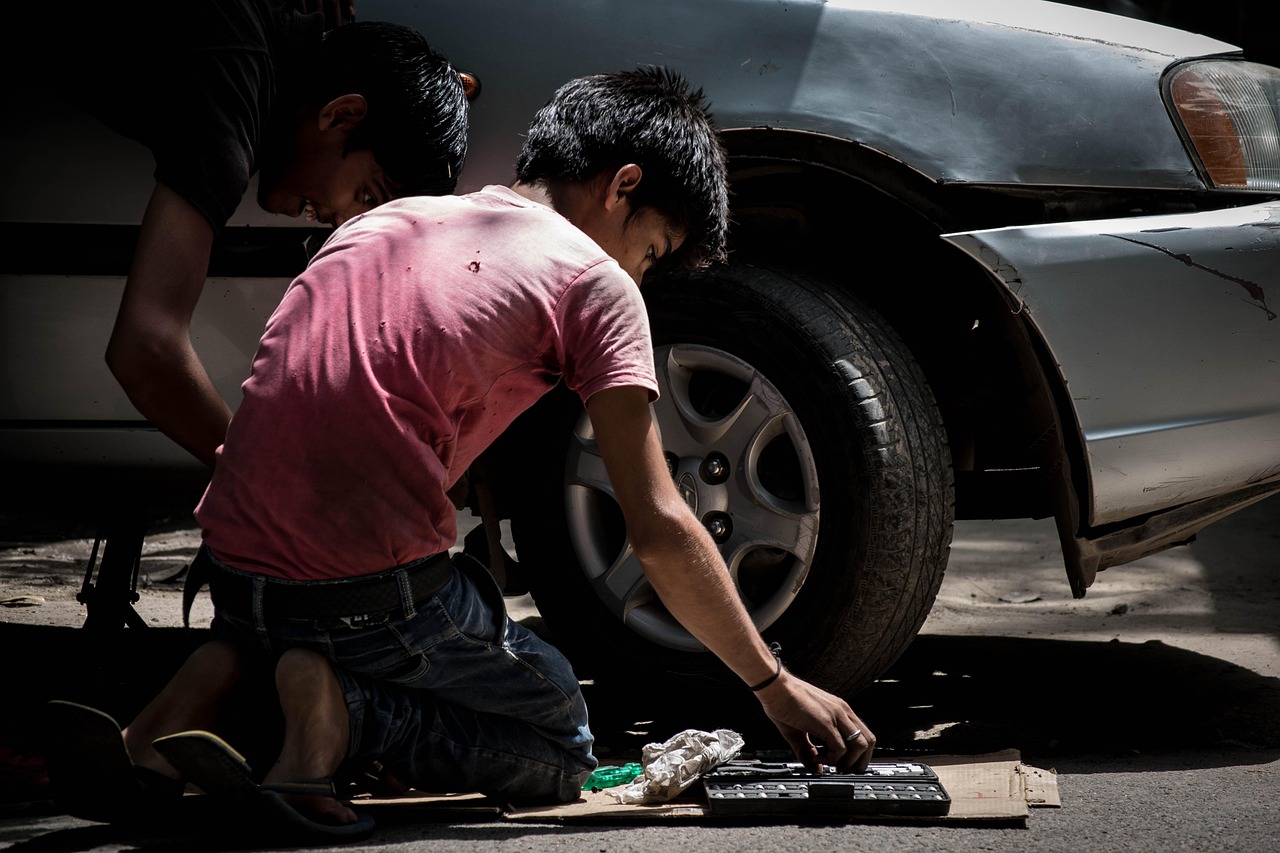
To avoid problems with loosening bolts in the future, preventative maintenance is crucial every time a wheel is fitted. The most important thing is to thoroughly clean the contact surface between the rim and the hub, as well as the threads themselves. It is a simple task that takes just a few minutes, yet can save you hours of frustration and potential repair costs in the future. Prevention is always better than cure.
How do you prepare the hub and bolts before fitting the wheel?
Before fitting the wheel, thoroughly clean the hub surface and the bolt threads using a wire brush. This removes rust, dirt and residues of old grease, which are the main causes of seizing. You may apply a very thin layer of copper or ceramic grease to the hub’s centring surface, but never to the bolt threads or the conical surface of the bolt heads. A clean connection ensures correct fitting and easy removal in the future.
How often should you check and tighten the wheel bolts?
After each wheel or tyre change, we recommend re-checking the torque on the bolts after driving approximately 50–100 kilometres. During this time, the components settle into position relative to one another and slight loosening may occur. Afterwards, it is worth checking the bolts during regular vehicle servicing or when changing tyres for the season. Making a habit of this ensures that the wheels are always securely fastened.
Summary
Dealing with a seized bolt doesn’t have to end in failure, provided you approach it sensibly and with the right tools. The key to success is patience, using the right techniques, and knowing when to give up and call in the professionals. Remember that correct installation and regular maintenance are the best ways to avoid similar problems in the future.
- Use Always use a torque wrench to tighten the bolts to the torque specified by the vehicle manufacturer.
- Clear Thoroughly clean the hub and the screw threads with a wire brush before each wheel fitting to prevent corrosion.
- Don’t hesitate Call for help when home remedies fail – our Wulkanizacja 24H is available round the clock.
- Protect alloy wheels, using wheel covers with a plastic lining to prevent costly scratches.