
How often should brake pads be replaced?
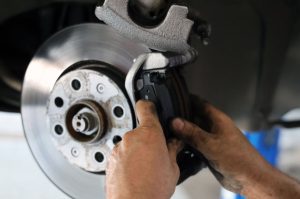 Only a properly functioning braking system can guarantee safe driving. If you suspect that these parts in your car are faulty, have them checked straight away. Worn brake pads usually show clear signs that are hard to miss. Find out when and how often to replace worn brake pads.
It is not without reason that a car is called a bottomless money pit. Over time, a vehicle in use may break down and its components may wear out. This is natural and difficult to avoid, but for safety reasons it requires regular checks. If an inspection reveals that the brake pads are worn, you can always have them replaced before more components fail, for example whilst driving.
What are the signs that the brake pads need replacing?
Even if you’re not an expert, but you’ve been driving for a while and you feel/hear/see that something has changed, this could be a sign that your brake pads are worn out. Discuss your concerns with a specialist, who will assess the technical condition of the brake pads and the entire braking system.
The following are cause for concern:
- longer braking distance,
- reduced sensitivity / delayed response to braking,
- the screech of brakes,
- a warning light indicating a problem with the brake pads,
- The lining on the blocks is quite thin – the groove is not visible (worn away).
How often should you replace your brake pads?
Of course, how often brake pads need replacing is a very individual matter. It depends on many factors, such as the make and model of the vehicle, driving style, the manufacturer’s recommendations and the quality of the components used. However, it is possible to establish a general timeframe within which replacement is most often required:
- how many kilometres does the 30-50 000 last when driving calmly in town,
- how many kilometres does the 10-20 000 last under dynamic urban driving conditions,
- how many kilometres does the 50-80 000 last when driving calmly on long journeys,
- at most every 50,000 km in the case of dynamic driving on long-distance journeys.
It’s worth having your car serviced even more frequently, especially if you’ve bought a second-hand car that hasn’t been serviced at an authorised service centre. Finding out what parts are fitted and what condition they’re in will give you an idea of how to look after them properly.
How much does it cost?
Sometimes drivers delay replacement of brake pads, fearing the high cost of such work. However, at the garage, you can choose the type of components – mineral compounds are cheaper and more common, whilst ceramic pads are more expensive. What’s more, the bill is always lower than the one you’d receive after a full brake system overhaul.