
Cracks in a tyre – does it need replacing?
Tyre degradation is a natural phenomenon resulting from heavy use and the constant pressure exerted by the tyre on the road surface. Cracks appearing in a tyre may indicate excessive wear, gradual ageing of the material, and therefore suggest that the tyre should be serviced or replaced with a new one. In this article, we explain whether and when cracks in a tyre can be safely repaired, and when it is better to buy a new tyre.
Tyre cracks – types of cracks and their causes
Cracks that appear in the structure of tyres can be divided into three main categories, depending on where they occur. In the first case, these are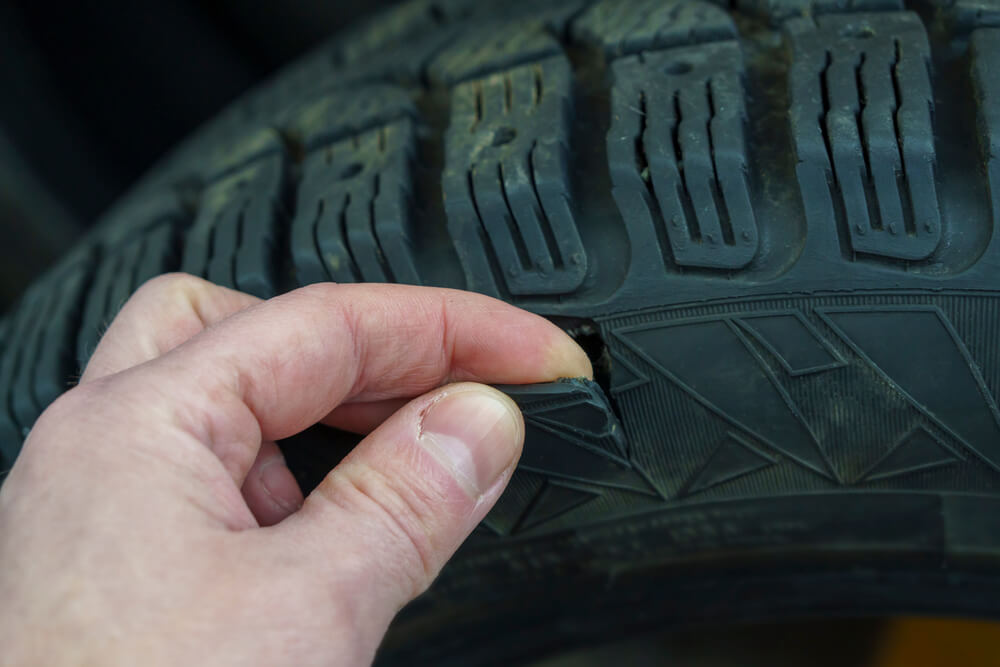 Cracks along the tyre tread, caused by material fatigue and degradation of the tyre layers. The second type consists of cracks located on the sidewall of the tyre, often in a mesh-like pattern. A separate category comprises cracks on the tyre located near the rim seat, which may be caused by poor fitting or defects in the rim.
In addition to the aforementioned ageing of the material and excessive tyre wear, the causes of cracks include:
- incorrect tyre pressure (both too high and too low),
- prolonged exposure to UV rays,
- the occurrence of serious mechanical damage,
- incorrect tyre storage,
- choosing poor-quality tyres.
Assessing the condition of a tyre – when to patch it and when to replace it?
The tyre will need to be replaced if the cracks in it are deep and large. If they have a mesh-like pattern and therefore extend across several areas of the tyre’s surface, it is also advisable to tyre replacement in Warsaw. Furthermore, cracks in older tyres – those more than 6–10 years old – mean they need to be replaced. It is worth noting that cracks often occur alongside other faults: uneven tread wear, clearly visible bulges or deformations.
It is permissible to opt for patching cracks rather than replacing the tyres if they are located in the central part of the tread, within the so-called repairable zone. If the cracks are no larger than 6 mm and, furthermore, the inner layers of rubber have not been damaged, patching is also possible. Furthermore, it is essential that the crack does not overlap with an area that has already been patched in the past. This type of repair is most effective on new tyres and those with only isolated cracks.