
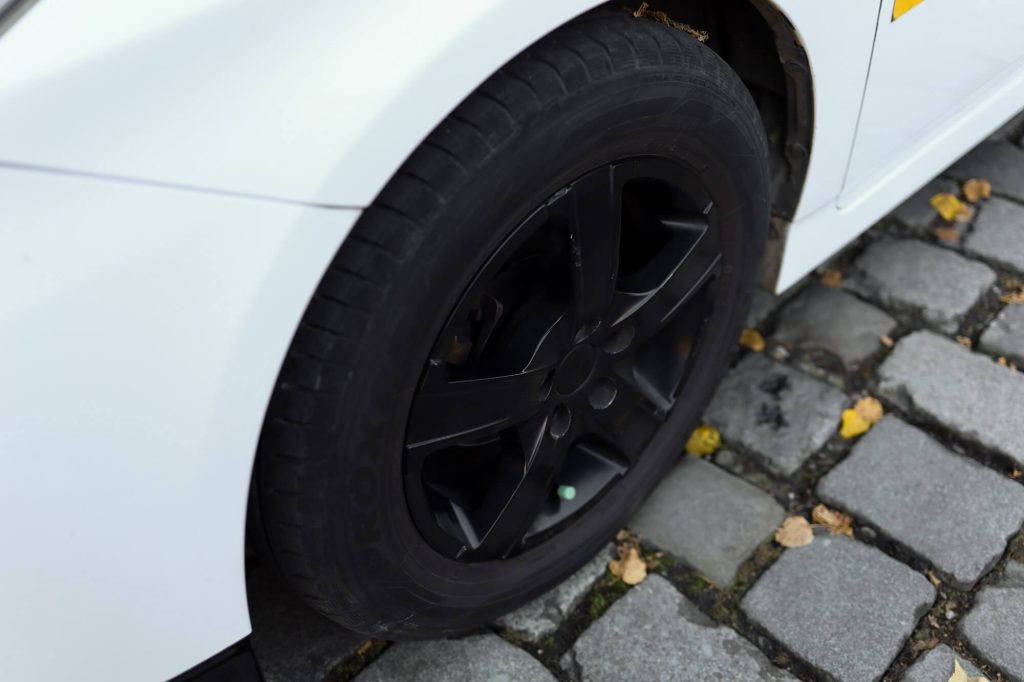
What might happen to a wheel if it hits a kerb hard?
A hard impact with a kerb can lead to a wide range of damage, from cosmetic scratches on the wheel rim to serious suspension faults that jeopardise driving safety. From our many years’ experience in the tyre industry, we know that even a seemingly harmless encounter with an obstacle can cause hidden problems that only become apparent after a few days or weeks. That is why you should never underestimate such an incident, regardless of whether it resulted from skidding on a slippery surface or an unfortunate manoeuvre whilst parking.
A quick and accurate diagnosis is crucial, as continuing to drive with a damaged wheel or suspension is a sure-fire way to cause much more serious breakdowns that are far more expensive to repair. Every day at our service centre in Warsaw, we help drivers who have found themselves in such situations, which is why we know exactly what to look out for and how to effectively get your car back to full working order. In this article, we’ll share our practical knowledge so that you know how to react and what to expect.
In a nutshell
- A hard impact against a kerb can damage not only the tyre and wheel rim, but also key suspension components such as the control arm, steering knuckle or bearing.
- Symptoms such as the car pulling to one side, vibrations in the steering wheel or the steering wheel being out of alignment almost certainly indicate suspension damage and require an urgent visit to a garage.
- Continuing to drive with visible damage (e.g. a bulge in a tyre) or noticeable symptoms is dangerous and may result in you losing control of the vehicle.
- After any suspension repair or replacement of suspension components, it is absolutely essential to have the wheel alignment carried out by a professional.
What should you do immediately after hitting a kerb?
After a heavy impact with the kerb, the most important thing is not to panic and to bring the vehicle to a halt in a safe place as quickly as possible. Switch on your hazard warning lights and assess the situation. Even if, at first glance, nothing seems to have happened and the car is driving straight, the force of the impact may have caused hidden damage which, over time, could lead to a more serious breakdown. This is the first and most important step towards ensuring your safety.
How do you assess the damage on site?
First and foremost, take a close look at the tyre and the wheel rim that took the impact. Look for any visible deformities, cracks on the sidewall of the tyre, and in particular a characteristic ‘bulge’ – a protrusion that indicates damage to the internal cord structure. Check that the tyre is not losing air and that the rim is not obviously bent or cracked. Bear in mind that alloy rims are more prone to cracking, whilst steel rims tend to bend.
When should you call out a mobile tyre repair service?
If you notice a puncture, a visible crack in the wheel rim or the aforementioned bulge on the tyre, you must not continue your journey. In such situations, the safest and most convenient solution is to call a breakdown service or a specialist garage. That is precisely why we have launched our mobile tyre repair service for cars and vans, which travels to customers in Warsaw and the surrounding area to provide assistance in such emergencies. If you feel strong vibrations after setting off or the car feels unstable, do not take any risks – pull over and call in the experts.
What are the most common wheel and suspension faults?
Hitting a kerb transfers a huge amount of energy, which has to be dissipated somewhere. The tyre and wheel rim are the first to suffer, but the force of the impact often travels further, damaging parts of the suspension and steering systems. At our workshop, we regularly diagnose and repair a whole range of faults resulting from such incidents, from the simplest to the most complex.
Damaged tyre – bulge or tear
The most treacherous type of tyre damage is a bulge on the sidewall. This indicates a tear in the inner layers of the carcass and is a ticking time bomb – such a tyre could burst at any moment, especially at higher speeds. Any bulge means the tyre must be replaced immediately. An impact can also cause the rubber to be cut or torn, leading to a slow or sudden loss of pressure.
A bent or cracked steel or aluminium wheel rim
Steel rims are more malleable, so they usually bend on impact, causing the wheel to wobble and vibrate. In many cases, they can be straightened. Aluminium rims are stiffer and more brittle, so a heavy impact often causes them to crack. Although straightening of alloy wheels It is possible to repair them, and in some cases to weld them as well; however, every such repair must be assessed by a specialist to ensure it is safe.
Suspension damage – control arm, steering knuckle, bearing
The force of the impact is often transferred to the suspension. The components most commonly affected include the control arm, which can become warped, altering the wheel alignment. The steering knuckle – the component connecting the control arm to the shock absorber – is also affected, as is the hub bearing, which may start to make noise and wear out quickly following a severe impact. In extreme cases, this can even lead to damage to the shock absorber or the suspension beam.
How can you tell if the suspension is faulty?
A faulty suspension sends out a number of warning signs that must not be ignored. These are a direct indication that something is wrong with the running gear and that the car needs to be checked immediately at a garage. Responding correctly and promptly to these symptoms can protect you from a serious accident and significantly higher repair costs.
The car pulls to one side whilst driving
This is a classic symptom and one of the most common. If, after hitting a kerb, you have to constantly countersteer to keep the car travelling in a straight line, this is an almost certain sign that the suspension alignment has been thrown out of alignment. Most likely, a control arm, tie rod or some other component has become misaligned, causing one of the wheels to be out of line with the others.
Vibrations in the steering wheel at different speeds
Vibrations can have several causes. The most common is an unbalanced wheel, caused by a warped rim or a damaged tyre. However, if the vibrations become more pronounced at certain speeds or when cornering, this may indicate more serious problems, such as a faulty wheel bearing, drive joint or other suspension component.
The handlebars are misaligned when riding in a straight line
If, whilst driving straight ahead on a level road, the steering wheel is noticeably turned to the left or right, this is further evidence of misaligned suspension geometry. The car may drive in a straight line, but this comes at the cost of the wheels working against each other, leading to rapid tyre wear and unstable handling when cornering. This symptom always means the vehicle requires an urgent visit to a garage for alignment. wheel alignment.
Can you carry on driving with a damaged wheel?
The decision on whether to carry on driving with a damaged tyre depends on the type and extent of the damage, but in most cases the answer is: no, it’s not worth the risk. Safety is the absolute priority, and damage caused by hitting a kerb can lead to a sudden loss of control of the vehicle. Even if you manage to reach your destination, you could cause much more damage along the way.
What types of damage completely rule out continuing the journey?
There are several situations in which you should under no circumstances continue driving. These include, first and foremost:
- Statement a “bulge” on the tyre, which poses a risk of a sudden blow-out.
- A note cracks in the wheel rim, particularly an aluminium one, which can cause it to break apart whilst driving.
- Total a flat tyre.
- Clearly a wheel that is standing at an angle (‘at an angle’), which indicates serious damage to the suspension.
- Very strong, persistent vibrations or loud, metallic noises coming from the area around the wheel.
In each of these situations, the only sensible course of action is to call for roadside assistance.
The risks associated with driving with a faulty suspension
Driving with damaged suspension, even if the symptoms seem minor, is extremely dangerous. Incorrect wheel alignment drastically reduces grip, particularly on wet roads, and increases braking distances. A damaged control arm or steering knuckle could snap at any moment, leading to an immediate loss of control of the car. Furthermore, driving with a faulty suspension system causes a cascade of further faults – accelerated wear and tear on tyres, shock absorbers and other components of the running gear.
How much does it cost to straighten a wheel rim or repair the suspension?
The cost of repairs following a collision with a kerb varies considerably and depends on the extent of the damage and the make and model of the car. It is not possible to quote a single, standard figure, as every case is different. The final price is the sum of the costs of spare parts and labour, which may include several different repair services.
How much does it cost to straighten alloy wheels in Warsaw?
Price of the service straightening of alloy wheels In Warsaw, the cost depends on several factors. The rim diameter is of key importance – the larger it is, the more expensive the service. Another factor is the complexity of the damage. A slight bend in the rim will be cheaper to repair than severe lateral runout or deformation on the rim’s spokes. If the rim is also cracked and requires welding, the cost of the repair increases accordingly.
What determines the cost of replacing a control arm or a bearing?
The cost of replacing suspension components, such as a control arm or a bearing, consists of two main elements: the price of the part itself and the labour cost. Part prices can vary dramatically depending on the make and model of the car, as well as whether you opt for a genuine part or a high-quality alternative. For example, a control arm for a popular city car may be several times cheaper than one for a luxury SUV. The cost of the replacement must also include the mandatory inspection and alignment required following such work. toe and wheel alignment, which is crucial for safety.
What does the diagnostic check and wheel alignment involve after a collision?
Professional diagnostics following a collision with a kerb is a multi-stage process. It begins with a thorough visual inspection and mechanical assessment, and concludes with precise measurements using specialist equipment. The aim is not only to repair visible damage, but above all to restore the chassis to its factory specifications, thereby ensuring safety and driving comfort.
How does computer diagnostics help to identify faults?
Although hitting a kerb is a form of mechanical damage, computer diagnostics plays an important supporting role. In modern cars, a shock can damage the sensors of safety systems such as ABS or ESP, which are integrated into the wheel hub. Connecting a diagnostic computer allows us to check whether any of the systems are reporting faults, which could indicate hidden damage to the electronics or wiring. This is an important part of a comprehensive assessment of the vehicle’s condition.
Why is wheel alignment necessary?
Wheel alignment is absolutely essential after any modification to the suspension, and particularly after hitting an obstacle. Even the slightest deviation from the manufacturer’s specifications causes the car to handle unsteadily, tyres to wear out at an alarming rate, and fuel consumption to increase. Correctly aligned wheels ensure stability, predictable handling when cornering and optimal performance of the entire chassis.
What is wheel balancing with a road test?
This is one of our specialist services, which is extremely helpful following collisions with kerbs. Standard wheel balancing only corrects the wheel’s mass, whereas wheel balancing with a road test It goes one step further. A special machine applies pressure to the wheel with a roller, simulating the forces acting on it whilst driving. This allows us to detect not only imbalance, but also issues with tyre stiffness or wheel rim warping invisible to the naked eye, which cause vibrations under load. It is the best way to ensure that the wheel will roll perfectly smoothly.
Can hitting a kerb damage the TPMS sensors?
Yes, hitting a kerb very often results in damage to the sensors of the tyre pressure monitoring system, or TPMS (Tire Pressure Monitoring System). These are delicate electronic devices that are not resistant to strong shocks and mechanical impacts. A sensor fault is usually indicated by a warning light on the dashboard that remains lit.
Where is the TPMS sensor located, and how can it become damaged?
In most cars, the TPMS sensor is integrated into the air valve and is located inside the tyre. When hitting a kerb hard, the tyre flexes sharply and the rim may strike the sensor housing directly, causing it to crack or damaging the internal electronics. Sometimes the valve itself is damaged, leading to a puncture and a loss of tyre pressure.
What does the servicing and calibration of a TPMS system involve?
Replacing a faulty sensor is not the end of the story. The new sensor must be ‘introduced’ to the car’s on-board computer, a process we refer to as programming or calibration. At our service centre, we have specialist diagnostic equipment that allows us to clone data from the old sensor or programme the new one with a unique ID number. Professional TPMS service ensures that the system will work properly and will once again look after your safety.
Where can I find help 24 hours after hitting a kerb in Warsaw?
Hitting a kerb can happen at any time of the day or night. In such a stressful situation, quick access to professional help is crucial. That is why our service is open round the clock to provide support to drivers in Warsaw, whatever the time.
Wulkanizacja 24H at 4A Parowcowa – round-the-clock assistance
Our workshop Wulkanizacja 24H on the street 4A Parowcowej In Warsaw, we operate 24 hours a day, 7 days a week, including all Sundays and public holidays. This means that, no matter when you experience a breakdown, you can count on our expert assistance. As a certified company A Reliable Company, we guarantee a professional and honest approach to every repair, as evidenced by our years of experience and the trust placed in us by our customers.
Quick repairs for residents of the Włochy, Ursus and Ochota districts
Our location makes us the ideal choice for drivers from the western part of Warsaw. We offer quick and easy access for residents of districts such as Italy, Ursus, Ochota or Bemowo. Our proximity to the main transport routes also enables us to respond efficiently as part of our mobile service across the whole city, providing assistance where it is most needed.
Summary
Remember that hitting a kerb with your wheel is something that should not be taken lightly. Even if everything seems fine at first glance, hidden damage could put your safety at risk. It is vital that you know how to assess the situation and when to seek help from specialists.
- Always stop after a knock and carry out a preliminary inspection of the tyre and wheel rim.
- Never carry on driving if you notice a bulge in a tyre, a cracked wheel rim or feel strong vibrations.
- Symptoms such as the car pulling to one side or the steering wheel pulling to one side are a sure sign of suspension damage and the need for a wheel alignment.
- If you have any doubts or if there is serious damage, please contact a professional repair service, which is available 24/7.