
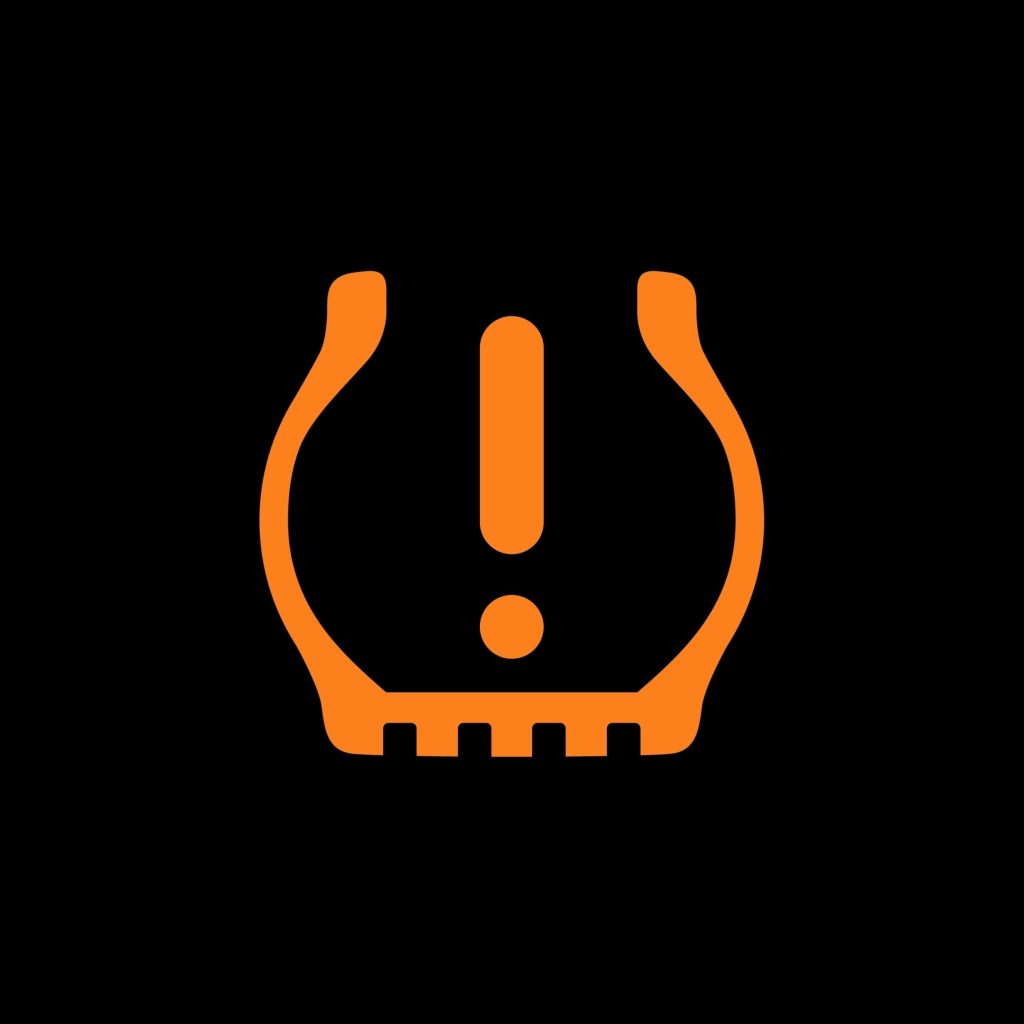
What does the tyre pressure warning light (TPMS) mean?
A tyre pressure monitoring system has been compulsory equipment in all new cars sold within the European Union since 1 November 2014. Its purpose is to keep the driver constantly informed of any faults before they become a genuine hazard on the road. Understanding exactly what this symbol on the dashboard means and how to respond correctly is essential for the safe and informed use of your vehicle.
In a nutshell
- The TPMS warning light comes on when the tyre pressure drops to around 20–25 per cent below the normal level.
- A flashing warning light (for approx. 60–90 seconds) does not indicate low tyre pressure, but rather a fault with the TPMS system itself.
- A drop in tyre pressure of 0.5 bar can increase fuel consumption by 5 per cent and reduce the tyre’s service life by up to 30 per cent.
- In Warsaw and the surrounding area, our mobile tyre repair service resolves TPMS and tyre issues 24 hours a day.
What does the yellow warning light with a tyre and an exclamation mark mean?
If this warning light remains on, it is a direct indication from the on-board computer that the tyre pressure in one or more tyres is dangerously low. This is not a suggestion, but a specific warning that requires your immediate attention. The system does not activate without reason, and ignoring it can lead to damage to the tyre or wheel rim, and in extreme cases, to a loss of control of the vehicle. At our service centre, we see drivers every day who come in with this problem, and a swift response helps them avoid costly repairs.
What does the tyre pressure warning light look like?
The symbol is standardised and looks almost identical in all cars, regardless of make. It depicts a cross-section of a tyre (resembling a horseshoe) with an exclamation mark in the centre. The symbol is usually yellow or orange, which, according to the automotive colour code, indicates a warning that requires attention but does not necessarily mean the vehicle must be stopped immediately, unlike red warning lights. Remember, however, not to ignore this warning and to investigate the cause as soon as possible.
What is the difference between a direct and an indirect TPMS system?
There are two main types of TPMS systems, and understanding them will help you diagnose the problem more effectively. A direct system (dTPMS) uses physical sensors fitted inside each wheel, which continuously measure pressure and temperature and transmit the data via radio to a computer. An indirect system (iTPMS) does not have dedicated pressure sensors; instead, it uses the existing wheel speed sensors from the ABS/ESP system to monitor tyre pressure. The table below compares the two systems.
| Feature | Direct system (dTPMS) | Indirect system (iTPMS) |
|---|---|---|
| Measurement method | A sensor in each wheel measures pressure and temperature. | It uses ABS/ESP sensors to analyse the rotational speed of the wheels. |
| Accuracy | Very high; it often displays the exact value in bars for each wheel. | Less accurate; it merely indicates a drop in pressure, without giving a specific reading. |
| Wheel identification | In most cars, it indicates exactly which wheel the problem is with. | It provides general information about the issue, without specifying a particular club. |
| After-sales service | It requires specialist tools for diagnostics, programming and sensor replacement. | It does not incur any additional maintenance costs relating to sensors. |
Why has the tyre pressure warning light come on?
The most common cause is, of course, a natural, slow loss of air from the tyre or a mechanical puncture. Over time, air escapes through micro-pores in the rubber, which is a normal process; this is why checking tyre pressure regularly is so important. Other reasons include damage to the valve, a leak where the tyre meets the rim, or sudden changes in ambient temperature. The causes may be trivial, but they may also indicate a more serious problem requiring a visit to a garage.
Can a low temperature cause the TPMS warning light to come on?
Yes, low temperatures are a very common reason for the TPMS warning light to come on, particularly in autumn and winter. Our customers in Warsaw often ring us first thing in the morning, surprised to find a new symbol on their dashboard after a frosty night. This is due to a simple law of physics: as gas cools, its volume decreases, leading to a drop in pressure. It is estimated that a 10°C drop in temperature causes the tyre pressure to fall by around 0.1 bar, which may be enough to trigger the warning.
What sort of tyre damage might the warning light indicate?
The TPMS warning light may be the first sign of serious tyre damage that is not visible at first glance. Most commonly, this is a classic puncture caused by a nail or other sharp object, which results in a slow but steady loss of air. It could also be damage to the sidewall caused by hitting a kerb, a leak at the junction with the rim due to corrosion or dirt, or even a crack in the rim itself. In any of these cases, continuing your journey is dangerous and risks completely destroying the tyre.
Is a TPMS sensor fault a common problem?
A fault with the sensor itself, although less common than a drop in pressure, does occur and may cause the warning light to come on. TPMS sensors are delicate electronic devices with their own battery, which usually lasts between 5 and 10 years. I remember a customer with an Audi A4 B8 whose warning light would come on at random, despite the tyre pressure being correct. Our computer diagnostics It quickly became apparent that one of the sensors had simply reached the end of its service life and needed replacing, which resolved the problem of false alarms.
Is it safe to drive with the tyre pressure warning light on?
Driving whilst the TPMS warning light is on is strongly discouraged and should be kept to an absolute minimum – that is, just long enough to reach the nearest petrol station or service centre. Ignoring this warning puts your own safety and that of other road users at risk. Even if the drop in tyre pressure seems minor, it can drastically affect how the car handles on the road. That is why our first piece of advice to every driver is the same: pull over in a safe place and check what is going on.
What should you do as soon as the TPMS warning light comes on?
Firstly, don’t panic, but stay alert. Slow down and avoid sudden manoeuvres, such as hard braking or sharp turns. Next, find a safe place to pull over, away from traffic, and carry out a visual inspection of all four tyres. Look for any visible damage, embedded objects or a distinct ‘flat spot’. If the tyre looks completely flat, do not continue driving and call for assistance – for example, our mobile tyre repair service, which operates throughout Warsaw 24 hours a day.
What are the risks of driving with low tyre pressure?
The risks are very real and multifaceted, which is why we keep reminding people of this. Firstly, the braking distance is significantly increased and the car becomes unstable, particularly when cornering and on wet roads. Secondly, the risk of a tyre blowout increases, as the sidewalls overheat and become weakened. Finally, driving with low tyre pressure leads to much faster and uneven tread wear, as well as increased fuel consumption, which results in completely unnecessary costs.
How can you check and top up your tyre pressure yourself?
Checking and topping up tyre pressure is a simple task that every driver can and should carry out regularly, at least once a month. The easiest way to do this is at a petrol station, using the compressor with a pressure gauge available there. Remember to always check tyre pressure when the tyres are ‘cold’, i.e. before a long journey or at least 2–3 hours after you’ve finished driving. The pressure in a warm tyre is naturally higher, so the reading will be unreliable.
Where can I find information on what constitutes a normal blood pressure reading?
You will find information on the manufacturer’s recommended tyre pressures on a special sticker, known as the type plate. It is usually located on the B-pillar on the driver’s side (visible when the door is opened), on the inside of the fuel filler flap or in the passenger glove compartment. The sticker lists different values depending on tyre size and vehicle load (e.g. one value for driving alone and another for a full complement of passengers with luggage). Always follow these recommendations.
What should you use to inflate tyres: air or nitrogen?
As a standard practice, tyres are inflated with compressed air, which is a cheap and widely available option. However, inflating tyres with gas – specifically nitrogen – is becoming increasingly popular, including amongst our customers. The main advantage of nitrogen is its stability – it is less prone to changes in volume due to temperature and diffuses more slowly through the rubber structure. This means that the pressure in a tyre filled with nitrogen remains more constant, which translates into better handling and slower tread wear.
How do you reset the tyre pressure warning light?
Once the tyre pressure in all tyres has been adjusted to the correct level, the TPMS warning light does not always switch off automatically. In most cars, it is necessary to carry out a reset or calibration procedure for the system. This allows the on-board computer to ‘learn’ the new, correct pressure value as a reference point for future measurements. This procedure is usually straightforward and can be carried out by the owner without visiting a garage.
How do you calibrate the TPMS on a car?
The calibration method varies depending on the car model. Most often, this is done using a dedicated button marked with the TPMS symbol, which you must hold down for a few seconds whilst the ignition is on, until the indicator light flashes or you hear a beep. In newer cars, such as many Toyota or Hyundai models, you’ll find the reset option in the on-board computer menu, accessible via the multifunction steering wheel or the multimedia system. You’ll find detailed instructions for your vehicle in its owner’s manual.
Why doesn’t the TPMS warning light go out after I’ve pumped up the tyres?
If the warning light remains on after topping up the tyre pressure and attempting a reset, this may indicate several issues. Firstly, ensure that the pressure in the spare tyre (if it is fitted with a sensor) is also correct. Secondly, one of the sensors may have failed, or there may be a communication fault. In this situation, you will need to visit a service centre – here at Wulkanizacja 24h in Warsaw, we use specialist TPMS diagnostic equipment which allows us to pinpoint the source of the problem.
The indicator light is flashing instead of staying on – what does this mean?
A flashing TPMS warning light means something completely different from a light that stays on, and this is a crucial distinction. If, after starting the engine, the warning light flashes for around 60–90 seconds and then switches to a steady glow, the system is informing you of a fault in the tyre pressure monitoring system itself. This does not indicate a problem with tyre pressure, but rather that the system is faulty and will be unable to warn you in the event of an actual drop in pressure. It is a sign that the system requires diagnosis and repair.
What faults does a flashing TPMS warning light indicate?
A flashing warning light may indicate a number of different faults within the TPMS system. The most common causes we encounter in our day-to-day work include a faulty or flat battery in one of the wheel sensors, a problem with the signal receiver in the car, and software errors. Sometimes the problem arises after a seasonal wheel change, if the new sensors have not been correctly programmed and ‘registered’ with the vehicle’s on-board computer. Whatever the cause, the system is useless in this state.
What should you do if the tyre pressure warning light is flashing?
If the warning light is flashing, you should book an appointment as soon as possible at a specialist tyre service centre that has the appropriate diagnostic equipment. You cannot diagnose or repair a fault in the TPMS system yourself. At our service centre, we carry out a full diagnostic check, read out error codes and pinpoint exactly which component has failed. Remember that a fully functional TPMS system is a vital safety feature, and any failure should be taken seriously.
How much does it cost to service and replace TPMS sensors?
The costs associated with servicing a TPMS system can vary considerably and depend on the type of fault and the car model. A simple computerised diagnostic check and clearing the fault code usually incur only a small cost. Replacing a faulty sensor is considerably more expensive, particularly in the case of original equipment manufacturer (OEM) sensors. Fortunately, high-quality universal sensors are available on the market; these offer a cheaper alternative and we successfully programme them for our customers.
What does a professional TPMS service involve at our garage?
A comprehensive approach to the problem is standard practice for us. We begin the TPMS service process by connecting a specialist diagnostic tester, which communicates with each sensor individually and reads its status: ID number, pressure, temperature and battery status. On this basis, we precisely pinpoint the source of the problem. If a replacement is necessary, we select the appropriate sensor, fit it, and then programme and pair it with the car’s computer to ensure everything works as it did when new.
Do the new pressure sensors need to be programmed?
Yes, in the vast majority of cases, fitting a new TPMS sensor requires it to be programmed. Each sensor has a unique identification number (ID) which must be entered into the vehicle’s control unit. Otherwise, the on-board computer will not ‘recognise’ the new sensor and the system fault indicator will remain lit. Programming may involve cloning the ID of the old sensor or assigning a new one, and this is a procedure that requires specialist tools and expertise.
Where in Warsaw can I get a TPMS fault repaired 24/7?
A tyre or TPMS failure can happen at any time of the day or night. That is why our company, Wulkanizacja 24h, operates in Warsaw and the surrounding area 7 days a week, 24 hours a day, including all Sundays and public holidays. Whether you’re stuck on your way to work in Mokotów or on a weekend trip from Ursus, we’re ready to help. Our availability guarantees that you’ll never be left to deal with the problem on your own.
How does our mobile tyre repair service help in emergencies?
Our fully equipped mobile tyre repair service is the solution to sudden and unexpected problems on the road. If your TPMS warning light has come on and you’re worried about continuing your journey, all it takes is one phone call. We’ll come to your location anywhere in Warsaw – for example, in the Włochy or Ochota districts – and diagnose the problem on the spot. We can check the tyre pressure, locate and repair a puncture, and, if necessary, even replace the tyre so that you can safely continue your journey.
Why should you trust us as a Reliable Company?
Our many years’ experience in the tyre industry and the thousands of customers we have served, including owners of delivery vehicle fleets, speak for themselves. We are proud to hold the ‘Rzetelna Firma’ (Reliable Company) certificate, which attests to our integrity, professionalism and transparency. We prioritise friendly service and expert advice, and thanks to our 24/7 operation, we ensure there are no long waiting times for our services. By choosing us, you’re choosing peace of mind and the assurance that your car will be looked after by true professionals.
Summary
- React immediately: A lit TPMS warning light is an important warning sign of a drop in tyre pressure, which must not be ignored.
- Distinguish between the signals: A steady light indicates a pressure problem, whilst a flashing light indicates a fault with the TPMS system itself.
- Check regularly: Checking and topping up your tyre pressure yourself once a month is the best way to avoid problems and ensure your safety.
- Put your trust in the professionals: In the event of a system failure or if you have any concerns about the condition of your tyres, seek assistance from a specialist workshop that has the appropriate equipment and expertise.