
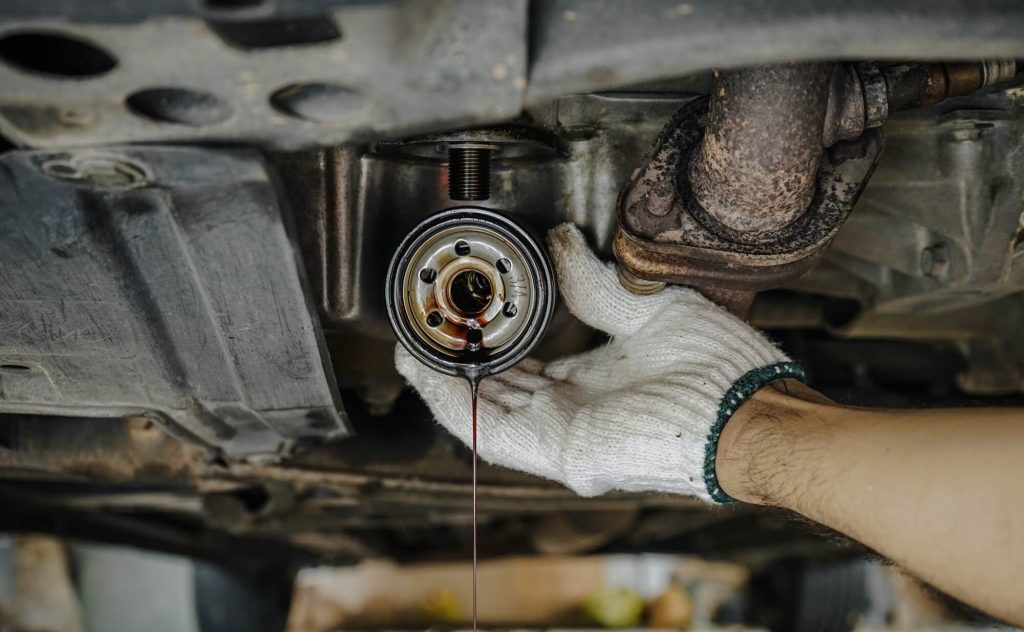
WHAT HAPPENS WHEN YOU DRIVE WITH OLD OIL?
More and more drivers are putting off an oil change because their car ‘still runs’. It’s tempting, especially when you’re in a rush every day. Unfortunately, old oil is unforgiving; it causes problems silently and leads to costly breakdowns. Later in this article, we explain what happens to the oil in the engine, how to tell when it needs changing, and how to prevent this, thereby protecting both your engine and your wallet.
What happens to the oil in the engine whilst it is running?
The oil oxidises, loses its performance-enhancing additives, collects contaminants and gradually ceases to protect the engine effectively.
Whilst the engine is running, the oil is exposed to high temperatures and oxygen, which accelerates its ageing. Dispersant and anti-wear additives are depleted, whilst soot, dust and combustion products either increase the oil’s viscosity or reduce it when fuel enters the oil. The oil’s acidity also increases, which promotes corrosion. Over time, the oil film becomes thinner, whilst friction and temperatures rise.
What signs indicate that you’re using old oil?
Signs of this include a louder engine, the oil pressure warning light coming on, smoke, a loss of power, increased fuel consumption and an unpleasant burnt smell.
You may hear knocking noises in the cabin when the engine is cold, as well as a more pronounced rattling from the valve hydraulics. Bluish smoke is emitted from the exhaust, and the oil level drops more quickly. The oil on the dipstick is very dark, watery or lumpy. After a long drive, you may notice a smell of burnt oil. You may also experience fluctuations in engine speed and the radiator fan switching on more frequently.
Does driving with old oil risk causing permanent damage to the engine?
Yes, used oil significantly increases the risk of seizure and costly breakdowns.
A thinner film of lubricant no longer separates metal surfaces effectively. Friction and temperature rise, which accelerates wear on the bearings, cylinder liners and turbine. Corrosive combustion products attack the engine’s internal components, and blockages in the oil passages can cause a sudden drop in pressure. In extreme cases, this results in seizure.
Which engine components are most affected by used oil?
Highly loaded and high-speed components are the most vulnerable.
- Shaft and connecting-rod bearings
- Turbocharger, particularly the plain bearings
- Timing chain and tensioners
- Hydraulic valve pushers
- Piston rings and cylinder liners
- Oil pump and oil passages
- Shaft seals and valve guides
How can you check the oil level yourself, and when should you take action?
Check the oil level and condition using the dipstick after a short stop, and take immediate action if you notice anything unusual.
- Park on level ground, switch off the engine and wait a few minutes.
- Remove the dipstick, wipe it, reinsert it and read the level. It should be between ‘min’ and ‘max’.
- Assess its appearance. If it is very thin and has a strong smell of fuel, or is thick like syrup and contains lumps, this indicates a problem.
- Check the colour. Dark oil may be normal after use, but an immediate visit to a mechanic is advisable if you notice a tar-like deposit, metallic particles or a milky tinge.
- The oil pressure warning light or the message ‘oil pressure’ is a sign that you should stop driving immediately.
If the level is close to ‘min’, top up with oil of the specification recommended by the manufacturer and plan for an oil change.
When is the best time to change the oil: based on mileage, time or conditions?
Mileage, time and driving conditions are all taken into account, in accordance with the manufacturer’s instructions.
In many cars, the recommended interval is either once a year or after a specific mileage, whichever comes first. City driving, short journeys, frequent cold starts, towing a trailer or dynamic driving in hot weather are all demanding conditions. In such cases, tyres should be replaced more frequently, even if the mileage is lower. LongLife systems only work in cars designed for this purpose and when driven regularly outside the city. Regardless of the manufacturer’s claims, it is worth considering the actual conditions of use.
Is replacing the filter enough if the oil has already deteriorated?
No, the filter alone will not restore the oil’s properties or halt the wear process.
The filter traps some of the contaminants, but does not restore the additives or the oil’s viscosity properties. Used oil loses its protective and cooling properties, and over time clogs the filter itself. It is standard practice to change both the oil and the filter at the same time. Only this combination ensures the correct pressure and cleanliness of the system.
What simple steps can be taken to prevent oil from wearing out more quickly?
Simple habits can really extend the life of your oil and engine.
- Warm up the engine by driving gently; avoid high revs when the engine is cold.
- Avoid very short journeys, as these do not allow the fuel to evaporate from the oil.
- Check the oil level every few weeks and before a long journey.
- Use oil and a filter that comply with the manufacturer’s specifications.
- Make sure the air filter and the air intake system are in good working order – this helps to reduce pollution.
- After a spirited drive, let the turbo cool down for a moment whilst the engine is idling.
- Keep an eye out for leaks and be on the lookout for the smell of burning.
When, after a long drive, should you start to worry and take your car to a mechanic?
If the pressure warning light comes on, or if you hear distinct knocking noises, notice smoke or experience a loss of power, urgent diagnostics are required.
Other causes for concern include rapid oil loss, a greasy deposit under the filler cap, metal shavings on the dipstick, overheating and jerking at a constant speed. If you notice these symptoms, there’s no point in delaying. At a mechanics and diagnostics centre, you can have an oil service, a filter change and a check of the lubrication system carried out. In Warsaw, you can also take advantage of a 24-hour service, which makes it easier to act quickly in the event of a breakdown.
Summary
Changing your oil regularly is one of the simplest things you can do to really protect both your engine and your wallet. It’s better to plan your service in advance than to have to put out a fire after the event. If your journeys are short or involve a lot of stop-start driving, take a cautious approach to the service interval and act sooner rather than later. It’s a small effort that brings peace of mind every day.
Book an oil service and keep your engine in good condition for longer!