
Is a patched tyre safe?
Patching is a fairly common repair procedure used to address various faults in car tyres. Patches can be successfully used to ensure safe driving, provided that the entire repair has been carried out safely and professionally (in accordance with standards) and that it has been applied to areas of the tyre suitable for such repairs.
In this article, we set out the key information on the use of retreaded tyres and advise on when it is worth using them on your vehicle and when it is better to opt for new tyres instead.
Is it safe to drive on a patched tyre – and when is it possible?
The basic condition for a patched tyre to be approved for use is the location of the defect to be repaired. If it is located in the tread, that is, in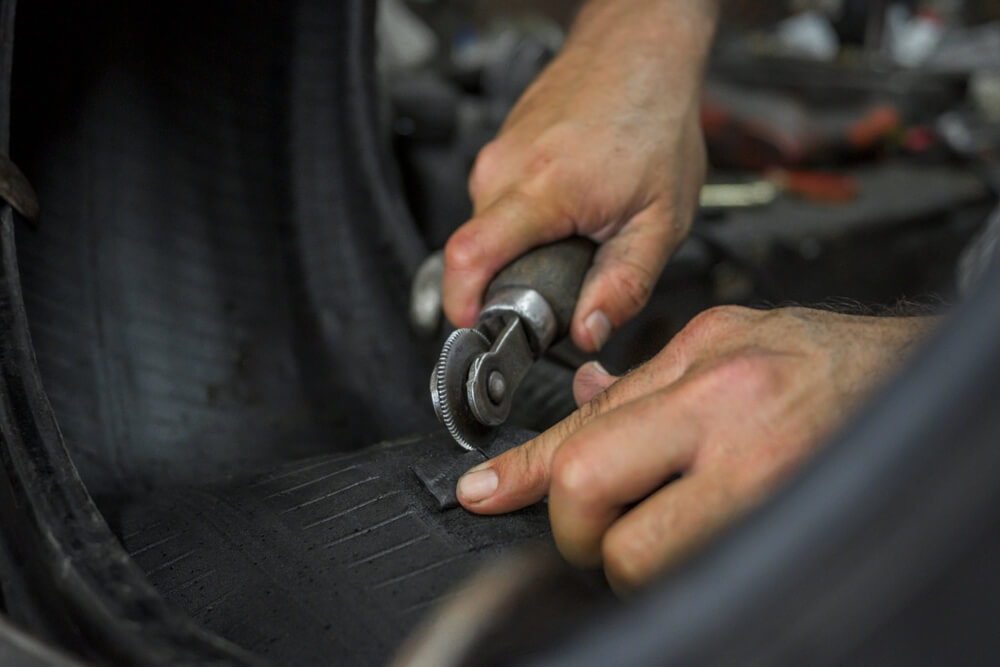 Within the so-called repairable zone, the tyre will still be fit for use. However, if the defect is located on the sidewall of the tyre, no repair will guarantee safe use and it is better to replace it with a new one.
Another important factor is the size of the resulting puncture. If the hole is more than 6 mm in diameter, patching will be ineffective, even if the puncture is on the tread. Holes of a smaller diameter can be successfully patched, after which the tyre can be used safely.
It is equally important that a tyre being repaired has not been driven on when deflated. In such a case, the internal layers of the tyre’s structure could be damaged, and no patch would be able to repair this. The only effective solution in such a case would then be tyre replacement in Warsaw for a new one.
The final important condition is that the damage must be a single instance, and the area where it is located must not have previously undergone such a repair. This means that repeated patching of the same tyre should be avoided, as should repairs to extensive or net-like damage.
Effective patching methods with the help of a professional
Drivers wishing to patch a tyre have a choice of three main methods. The first is the so-called ‘mushroom’ method, which is widely used and allows the tyre to be used for several more seasons.
An alternative is repair using the internal patch method, which is used for partial punctures and eliminates the need to fill the resulting hole.
The third method used is a combination of the two mentioned above: a mushroom seal and a patch. It therefore combines mechanical and chemical protection, ensuring maximum watertightness and a longer service life.
When choosing a specific method, it is worth seeking the help of professionals, who will quickly assess the internal condition of the tyre, the type of damage and its extent.