
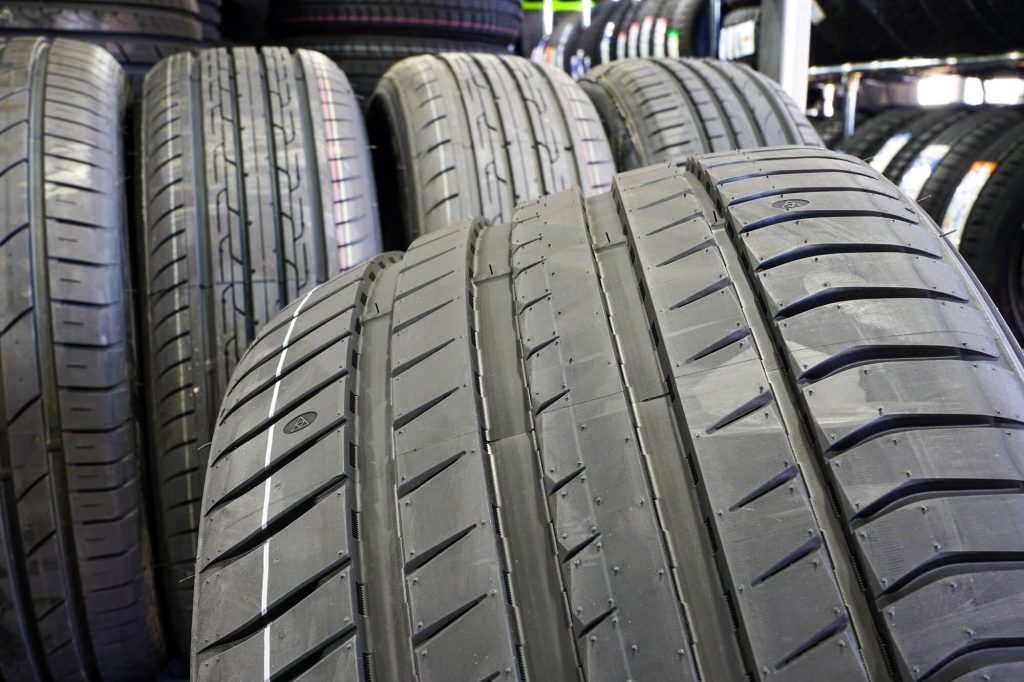
Is it possible to fit tyres that are narrower or wider than those recommended by the manufacturer?
Yes, technically it is possible to fit tyres that are narrower or wider than those recommended by the manufacturer, but this is an operation that requires expertise and an understanding of the consequences. This is one of the questions we hear most often in our workshop. Changing the tyre size affects not only the car’s appearance, but above all its handling, safety, and even legal and insurance matters. It is crucial that any replacement tyres fall within the limits permitted by the vehicle’s type-approval or do not deviate significantly from the original specifications, in order to avoid problems.
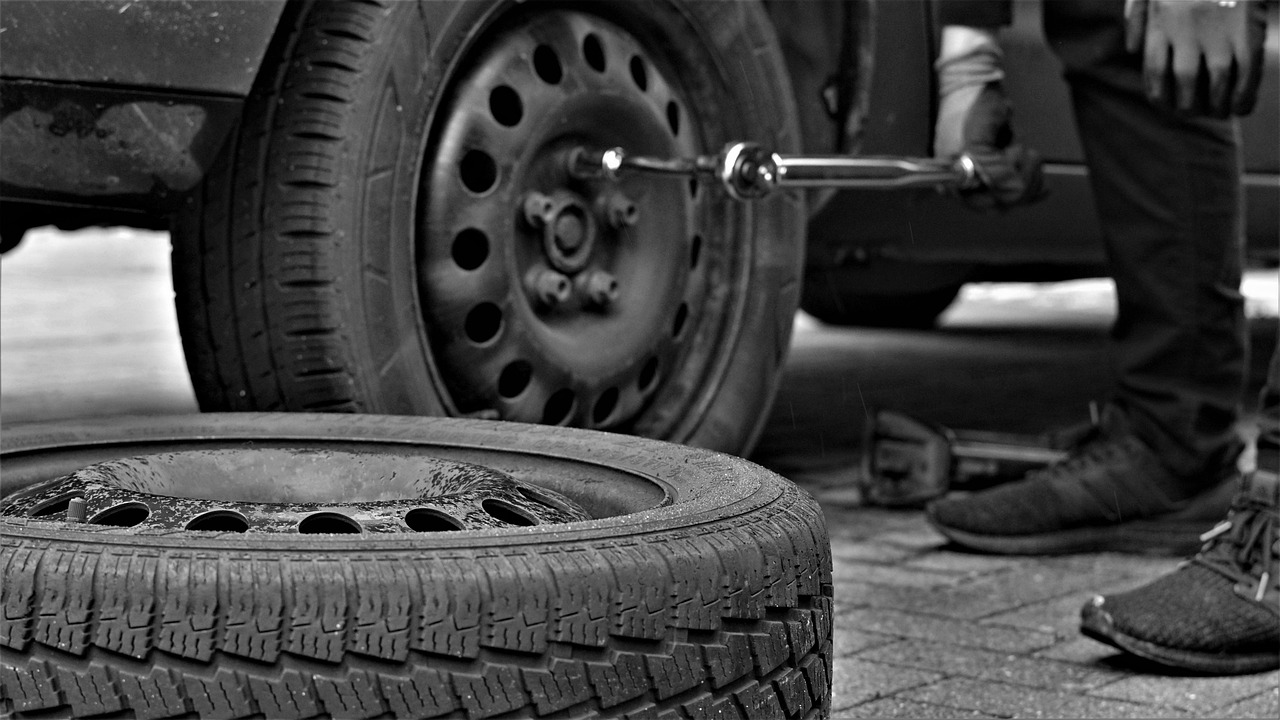
As specialists with many years’ experience, we help drivers in Warsaw choose the right tyres on a daily basis. We’ve seen almost everything – from modifications that improved handling to those that posed a real danger on the road. That is why we want to share our observations and explain what to look out for when deciding on a non-standard tyre size for your car.
In a nutshell
- You can change the tyre size, but the difference in the overall wheel diameter should not exceed +1.5 per cent and -2 per cent compared with the manufacturer’s specification.
- Wider tyres generally improve grip on dry roads, but they increase fuel consumption and the risk of aquaplaning.
- Narrower tyres are often a better and safer choice for winter, as they perform better on snow and slush.
- Fitting tyres that do not comply with type-approval requirements may result in the loss of the vehicle’s warranty, a refusal to pay compensation and, in extreme cases, the confiscation of the vehicle registration certificate.
Where can I find the recommended tyre size for my car?
Information on the tyre sizes approved for your vehicle is readily available, and you should always start by checking this. The manufacturer places this information in a few specific locations so that you can find it easily. Most commonly, this is in the vehicle’s owner’s manual, on a special sticker on the driver’s side door pillar, on the inside of the fuel filler flap, or, less commonly, in the glove compartment. This is the primary source of information, which guarantees that the tyres you choose will be 100 per cent compatible with your car.
How do you read the markings on a car’s type plate?
The type plate lists not just one, but often several alternative tyre sizes approved by the manufacturer. You will also find key information there about the recommended tyre pressure for each size, as well as for different vehicle load capacities. Reading this information is straightforward; simply locate the section on wheels and tyres. These figures form the basis for driving safely and in accordance with the law.
What do the individual digits in a tyre size mean?
Deciphering the markings on a tyre is easier than it seems, and it’s a vital skill for every driver. Let’s take a popular tyre size as an example 205/55 R16 91V. The first number, 205, is the tyre width expressed in millimetres. The second, 55, is the tyre profile, i.e. the ratio of its height to its width, expressed as a percentage. The letter R refers to a radial tyre construction, which is standard in passenger cars, and 16 This is the rim mounting diameter in inches. The final designations, 91V, namely the load index (maximum load per tyre) and the speed rating (maximum permissible speed).
What are the advantages and disadvantages of fitting wider tyres?
The decision to fit wider tyres is a trade-off between better performance and higher running costs and potential risks. Wider tyres, thanks to their larger contact patch with the road surface, can significantly improve traction and reduce braking distances, but only under certain conditions. Before you make a decision, it’s worth weighing up all the pros and cons – something we often do together with our customers at our workshop in Warsaw.
| Feature | Wider tyres | Narrower tyres |
|---|---|---|
| Grip on dry surfaces | Better, larger contact area | Standard |
| Braking on dry surfaces | Shorter braking distance | Standard braking distance |
| Risk of aquaplaning | The higher it is, the harder it is to drain the water | Lower |
| Fuel consumption | Higher, greater rolling resistance | Lower |
| Driving comfort | Lower; the tyre does a poorer job of absorbing bumps | Higher |
| Purchase price | Usually higher | Usually lower |
Better grip and shorter braking distances on dry roads?
Yes, that is the main argument in favour of wider tyres, particularly on high-powered cars. A larger contact patch with the tarmac translates into better grip when cornering and allows power to be transferred to the road more effectively. As a result, the car handles more confidently during dynamic driving, and the braking distance on dry surfaces is reduced. This is why tuning enthusiasts and sports car owners often opt for this upgrade to fully exploit the potential of their vehicles.
Higher fuel consumption and a greater risk of aquaplaning on wet roads?
Unfortunately, wider tyres also have their downside. A larger contact patch and greater air resistance lead to increased rolling resistance, which directly results in higher fuel consumption. Our customers often report that after switching to wider tyres, their cars consume up to 0.5–1 litre more per 100 km. More importantly, on wet roads, a wide tyre is significantly less effective at dispersing water, which increases the risk of aquaplaning – that is, a loss of grip and control over the vehicle.
Are narrower winter tyres a good idea?
In the vast majority of cases, the answer is: yes, narrower winter tyres are a very good idea. Although it may seem counter-intuitive, a narrower tyre often provides better grip and safety in challenging winter conditions. As a service centre with many years’ experience in selling winter tyres, we regularly advise our customers in Warsaw and the surrounding area to consider this option, provided the car manufacturer permits it.
Why do narrower tyres perform better on snow?
The physics here are clear. A narrower tyre exerts greater pressure per unit area on the ground, which allows it to ‘cut through’ a layer of loose snow or slush more easily and reach the harder, more grippy surface beneath. A wide tyre tends to ‘float’ on the surface of the snow, much like a ski, which makes it harder to maintain control. Furthermore, narrower winter tyres are usually cheaper, which is another reason to choose them.
How does changing tyre size affect safety and the law?
Every car authorised for use on the roads in Poland must have a type-approval certificate specifying its technical specifications, including the permitted tyre sizes. Fitting tyres not included on this list is, strictly speaking, a breach of the regulations. In practice, it is essential that tyres do not protrude beyond the outline of the mudguards and do not rub against suspension components or wheel arches when turning or when the suspension is in operation. Such situations are unacceptable and pose a direct safety risk.
Can the police confiscate a vehicle registration certificate because of faulty tyres?
Yes, during a roadside check, a police officer is entitled to confiscate the vehicle registration certificate if they find that the vehicle’s technical condition poses a threat to road safety. Extremely large, non-approved tyre sizes, which cause the tyres to rub against other parts of the vehicle, constitute just such a ground. Furthermore, during the annual roadworthiness test, the inspector should check that the tyre size complies with the type-approval and, in the event of gross deviations, issue a failed test result.
Will I lose my warranty or compensation if I fit different tyres?
Yes, fitting tyres of a size other than that recommended by the manufacturer poses a real risk of voiding the warranty on a new car. The manufacturer may refuse to carry out warranty repairs, particularly to suspension or steering components, on the grounds that the fault was caused by unsuitable tyres. The situation is similar with insurance – this is a potential pitfall that many unaware drivers fall into.
What would the insurer say in the event of a collision or accident?
In the event of a collision or accident, the insurer is entitled to check whether the vehicle was in full working order and complied with its type approval. If an assessor finds that the tyres fitted were of a different size to that permitted and that this may have contributed to the damage (e.g. by increasing the braking distance), the insurance company may reduce or even refuse to pay compensation altogether. In our experience as a garage that also provides services such as wheel rim straightening Following collisions, we know that insurers are scrutinising every technical detail of a vehicle with increasing rigour.
How does changing the tyres affect the car’s electronics and the speedometer readings?
Changing the overall wheel diameter has a direct impact on the operation of many systems in a modern car. The speedometer and odometer will start to give inaccurate readings, as they are calibrated to the factory wheel diameter. More importantly, this can interfere with the operation of safety systems such as ABS and ESP (traction control), which rely on precise data regarding the rotational speed of each wheel.
How large can the error in the speedometer reading be?
The magnitude of the error is directly proportional to the change in wheel diameter. It is generally accepted that the safe limit for a change in the outer diameter of a tyre is a maximum of +1.5 per cent and -2 per cent compared to the original. Exceeding these values can lead to significant inaccuracies. For example, if you fit wheels with a diameter 5% larger, when the speedometer reads 100 km/h, you will in fact be travelling at 105 km/h, which could result in a fine.
How do you calibrate the TPMS system after changing tyres?
The Tyre Pressure Monitoring System (TPMS) needs to be reset or recalibrated after every tyre change or even after topping up the air pressure. The procedure is usually simple and described in the vehicle’s owner’s manual – it often simply involves holding down a single button. Here at Wulkanizacja 24H, comprehensive TPMS service It is a standard part of any tyre-change service, to ensure that the system works properly and alerts you in the event of a drop in tyre pressure.
How do you choose replacement tyres without making a mistake?
The safest option is to use the alternative sizes specified by your car’s manufacturer, which you’ll find on the type plate. However, if you wish to fit a size not included on this list, it is essential to ensure that the outer diameter of the wheel is as close as possible to the original. Also, remember to check the load index and speed rating – these must not be lower than those of the original tyres. It is always advisable to consult a specialist about such a choice.
How do you use online tyre replacement calculators?
Online tyre size conversion calculators are a very useful tool that allow you to quickly compare the diameters of different tyre sizes and check the percentage difference. Simply enter the original size and the size you’re interested in, and the calculator will show you the difference. Our customers often come to us with results from such calculators, which is a great starting point for a conversation. Remember, however, that this is only a tool to assist you, and we always check on the spot to ensure that a particular replacement tyre will definitely not interfere with the suspension components – this is part of our professional advice on buying tyres.
Where in Warsaw can you get your tyres professionally fitted and replaced?
If you’re looking for a place where you can count on expert advice and professional service, please do come and see us. As Wulkanizacja 24H with its registered office in Warsaw, we offer easy access from neighbourhoods such as Italy, Mokotów, Ochota or Ursus. We specialise in providing a comprehensive tyre service for cars, vans and even motorbikes and quads, drawing on our many years of experience and state-of-the-art equipment.
Do you need to adjust the toe-in after changing the tyre size?
Simply changing the tyre size, provided the rims have the same offset (ET), does not necessitate a wheel alignment check. However, it is an excellent opportunity to check and, if necessary, adjust the wheel alignment, which has a huge impact on even tyre wear and driving safety. That is why at our service centre, alongside the standard tyre change, we also offer quick and easy wheel alignment, which in most cases takes us between 15 and 60 minutes.
How do I book a 24-hour tyre change in Warsaw?
Our greatest strength, which is appreciated by customers from all over Warsaw, is our availability. Our service centre at 4A Parowcowa Street is open 24 hours a day, seven days a week, including all Sundays and public holidays. Thanks to the fact that We are open 7 days a week, 24 hours a day, you don’t need to book in advance or wait in long seasonal queues. Just pop in whenever you have time, and we’ll take care of your car straight away.
Summary
- Check it out the manufacturer’s approval as the first step before deciding to change tyre size.
- Remember…that wider tyres improve the car’s appearance and grip on dry roads, but this comes at the cost of higher fuel consumption and a greater risk on wet roads.
- Consider fitting narrower tyres for the winter, as they often provide better control of the vehicle in snow and slush.
- Consult Have any non-standard tyre size changes carried out by a professional service centre to avoid costly mistakes and legal problems.