
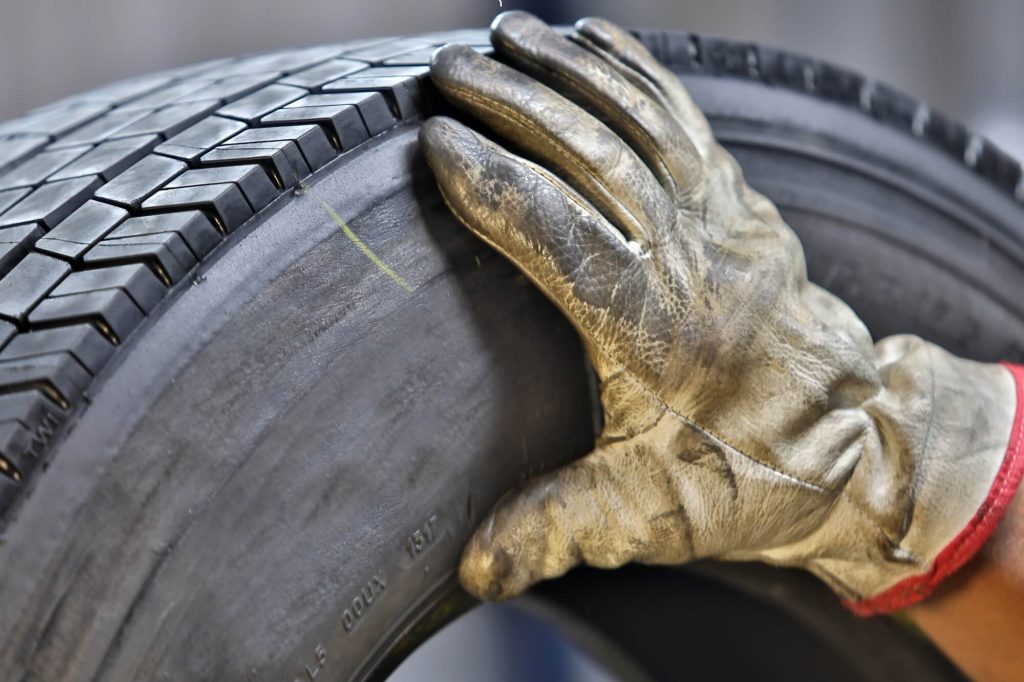
Is it worth buying retreaded tyres?
More and more drivers are considering retreaded tyres. They are attractive due to their lower cost and environmental benefits. However, questions arise regarding safety and the actual savings they offer in everyday driving.
In this article, you’ll find specific answers. You’ll find out when it’s worth keeping your tyres, how to check them, and when it’s better to buy new ones. All explained in a simple and practical way.
Are retreaded tyres worth the money?
Yes, but mainly in specific applications and with a reliable source. The savings come from reusing the tyre carcass. In practice, this works best for delivery vans and fleet vehicles that are mainly driven in town.
In passenger cars, the benefit tends to be less significant if you drive fast or cover long distances. Durability is also a key factor. Poor-quality remanufactured parts may mean more frequent replacements and additional downtime. Ultimately, it is worth comparing the cost over the entire life cycle, rather than just the purchase price.
Do retreaded tyres have poorer grip?
They may do so, particularly in difficult conditions and at higher speeds.
Grip depends on the rubber compound, the tread pattern, the quality of the carcass and the retreading process. Many retreaded tyres use harder compounds to improve durability. This can come at the expense of wet grip and comfort. In moderate, urban driving, the differences are less noticeable, but in dynamic driving and on the motorway, a new tyre usually performs more predictably.
How can you check the quality of a retreaded tyre before buying it?
Check the markings, visual condition, origin and warranty terms.
- Look for ECE R108 type-approval for retreaded tyres intended for passenger cars and ECE R109 for lorries; the tyre sidewall should bear the letter ‘E’ within a circle and the type-approval number.
- Check the speed rating and load index. They must meet the car’s requirements.
- Check the markings indicating the tyre carcass’s date of manufacture and the retreading date. Check the tyre carcass’s date of manufacture from the DOT code and avoid tyres older than 6 years; note the date of manufacture in the purchase records.
- Check the sides of the tyre. Look for cracks, blisters, delamination and signs of repairs on the sidewalls.
- Ask about the reconditioning method. Both the cold and hot methods can produce good results if carried out in accordance with the standard.
- Ask about non-destructive testing, such as pressure tests or shearography, and about balance checks.
- Ask for the proof of purchase and the warranty terms.
How long does a retreaded tyre actually last?
It depends on the quality of the tyre carcass, the manufacturing process, your riding style and how well you maintain the tyre pressure.
A well-regrooved tyre can cover quite a few kilometres when driven gently in town. It will usually last for a shorter time for drivers who drive fast, carry heavy loads or drive with under-inflated tyres. The frequency of driving over kerbs and the condition of the roads also play a part. Regular checks of tyre pressure and wheel alignment extend their lifespan.
How do retreaded tyres perform on wet roads?
They usually have a longer braking distance and are less resistant to aquaplaning.
This is down to the compound and the technology. A deep, fresh tread helps, but the compound itself tends to be harder. In everyday city driving, this can be compensated for by a relaxed driving style and keeping a greater distance from other vehicles. On motorways, the safety margin is sometimes smaller than with new tyres with comparable specifications.
When is it better to choose new tyres rather than retreaded ones?
When you drive fast, often on motorways, or expect maximum predictability.
New tyres are also ideal for high-powered cars and vehicles with advanced driver-assistance systems, which require consistent performance. It’s also worth opting for new tyres if the car carries children or is frequently driven in adverse weather conditions. Similarly, for electric cars – which are heavier and have high torque from low speeds – new tyres with the appropriate load index will be a safer choice.
What certificates and guarantees are worth checking before making a purchase?
ECE R108 or R109 type-approval, matching index numbers and a clear manufacturer’s warranty.
Look for the E-mark and information about the tread manufacturer on the sidewall of the tyre. Check that the speed rating and load index are not lower than the car manufacturer’s recommendations. Ask about the scope of the warranty, including any exclusions, and the complaints procedure. Make sure you can identify the production batch. This makes it easier to make any claims.
Where can you find a reliable service provider, and what questions should you ask?
Choose tyre repair shops with experience in assessing tyre casings and fitting retreaded tyres.
This reliable service centre offers a full range of tyre repair services, wheel balancing with a road test, and TPMS sensor servicing. You may find the mobile service and support for cars, vans and motorbikes particularly convenient. Please ask before fitting:
- What does the inspection of a tyre carcass involve before retreading and before fitting?
- Has the tyre been inspected for leaks and structural defects?
- What is the scope of the warranty and how does the complaints procedure work?
- Does the garage check the wheel alignment and tyre pressure to minimise uneven tyre wear?
What decision should I make if safety and my budget are both important to me?
Opt for a balanced compromise, tailored to your riding style and the conditions.
Do you drive calmly around town and cover short distances? Well-tested retreaded tyres may be a sensible option. Are you planning long journeys, frequent motorway driving, or do you have a more powerful car? New tyres would be a better choice. Whatever you decide, make sure you keep an eye on tyre pressure, wheel balancing and wheel alignment. This is key to genuine safety and a longer service life.
If you’re considering retreaded tyres, first assess your own driving style and the routes you take. This will enable you to choose a solution that’s easy on your budget without compromising safety.
Discuss your choice of tyres with an experienced tyre repairer and arrange for the installation at a time that suits you.