
How do tyres for electric cars differ from ordinary tyres?
Tyres for electric vehicles (EVs) differ from standard tyres primarily in their reinforced construction, a special rubber compound that reduces rolling resistance, and noise-reducing technologies. These changes are necessary to meet the challenges posed by the vehicle’s greater weight, the instantly available high torque, and the need to ensure acoustic comfort in a quiet interior. This is not a marketing ploy, but a genuine technological requirement which we, as practitioners at our Warsaw service centre, encounter on a daily basis.

Many drivers who switch to electric cars are surprised at how quickly the tread on their first set of tyres wears away. They often come to us asking whether it is normal to have to replace tyres much more frequently than on a petrol or diesel car. The answer lies precisely in the unique characteristics of electric vehicles and how these affect the only part that connects the car to the road. Choosing the right tyres is crucial not only for safety, but also for range and overall running costs.
In a nutshell
- Tyres for electric vehicles (EVs) have reinforced sidewalls and a higher load index (XL) to cope with a weight that is 20–30 per cent greater than that of petrol and diesel cars.
- A special rubber compound and a unique tread pattern reduce rolling resistance, which can increase the vehicle’s range by as much as 5–10 per cent.
- Due to the high, instantaneous torque, tyres on electric cars can wear out up to 30 per cent faster than standard models.
- Many tyres designed specifically for EVs contain a special acoustic foam inside, which reduces the rolling noise heard inside the cabin.
Why do electric cars need special tyres?
Electric cars present three main challenges for tyres that standard tyres cannot cope with. These are the vehicle’s significantly higher weight, the instantaneous and high torque, and the almost silent operation of the drive system, which makes all other sounds stand out. Our experience, as a service centre with many years’ experience in the tyre industry, shows that ignoring these factors leads to faster wear, reduced range and a less comfortable ride. That is why tyre manufacturers have had to develop completely new solutions specifically for EVs.
How does the heavy weight of an electric car affect the tyres?
The traction battery in an electric car can weigh between 300 and as much as 700 kilograms, which makes the car on average 20–30 per cent heavier than its internal combustion engine counterpart. This additional load must be borne by the tyres, which requires them to be significantly more durable. Standard tyres deform, heat up and wear out more quickly under such a load. That is why tyres for EVs almost always carry the XL (Extra Load) designation, which indicates a reinforced construction and a higher load index, enabling them to safely withstand greater forces.
How does instant torque damage ordinary tyres?
An electric motor delivers maximum torque practically from a standstill, unlike an internal combustion engine, which needs to ‘rev up’ to reach the required speed. This means that every time you press the accelerator pedal harder, a powerful, immediate surge of force is transmitted to the tyres. The standard, softer rubber compound in ordinary tyres is literally ‘worn away’ from the tread with every dynamic acceleration. We recall a customer who, in his new electric car, wore out a set of factory-fitted but standard tyres after just 20,000 kilometres, precisely because of his dynamic driving style and unsuitable tyres.
Why is tyre noise so important in a quiet electric car?
In a petrol car, the sound of the engine effectively masks many other noises, including the hum of tyres rolling over the tarmac. In an almost silent electric car, every noise, even the slightest, becomes clearly audible and can be irritating. The sound generated by the tyres, particularly at higher speeds, becomes the dominant source of noise in the cabin. EV tyre manufacturers are tackling this issue by designing special, more closed tread patterns and using noise-reducing technologies, which we’ll discuss in a moment.
How exactly does the construction of an electric vehicle tyre differ?
A tyre designed specifically for an electric car is a sophisticated piece of engineering which, at first glance, may not appear any different from a standard tyre, but the devil is in the detail. Engineers had to reconcile seemingly conflicting requirements. The tyre must be capable of withstanding heavy loads, be abrasion-resistant, run quietly and have the lowest possible rolling resistance so as not to ‘steal’ precious range. The key to success turned out to be modifying three fundamental elements: the internal structure, the rubber compound and the tread pattern.
| Feature | Standard tyre | Tyre for an electric car (EV) |
|---|---|---|
| Design | Standard carcass and fat cover | Reinforced side walls and frame (XL designation) |
| Rubber compound | Balanced in terms of grip and durability | Harder, with added silica for lower rolling resistance and greater wear resistance |
| Rolling resistance | Standard | Minimised to maximise range |
| Noise | Standard noise level | Reduced by a special tread pattern and acoustic foam |
| Wear resistance | Suitable for petrol and diesel cars | Increased to counteract the effects of high torque |
What are a reinforced construction and a harder compound?
The reinforced construction, as indicated by the aforementioned ‘XL’ designation, primarily consists of stronger sidewalls and additional reinforcement layers beneath the tread. As a result, the tyre flexes less under the weight of the car, retains its shape and is more resistant to damage. In turn, the harder rubber compound, often with a high silica content and special polymers, serves two purposes. Firstly, it is more resistant to wear caused by high torque, and secondly, it generates lower rolling resistance, which directly translates into energy savings.
How does a special tread pattern affect a car’s range?
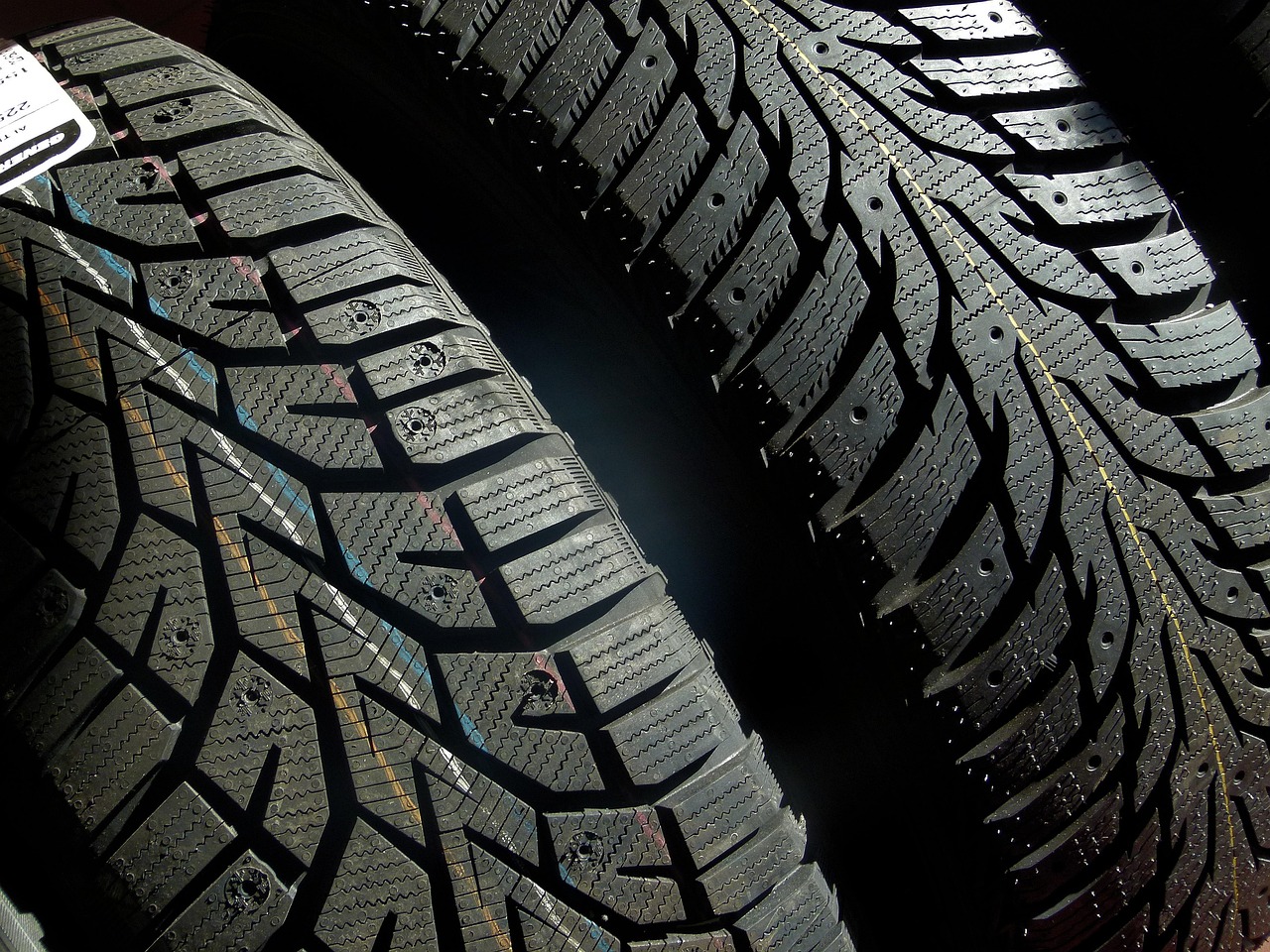
The tread on electric vehicle tyres is designed to minimise rolling resistance. This means it often has fewer grooves, and the tread blocks are larger and stiffer, which reduces their deformation whilst driving. The circumferential grooves are usually narrower and shallower. All of this means that the tyre rolls more easily, consuming less energy from the battery. The difference in range between tyres with low and high rolling resistance can be as much as a dozen or so per cent, which in practice means an extra 20–40 kilometres on a single charge.
What is the sound-deadening foam inside a tyre?
Sound-damping foam is one of the most interesting innovations in premium tyres, particularly those designed for EVs. It consists of a special strip of polyurethane foam bonded to the inner surface of the tyre, running around its entire circumference. Its purpose is to dampen the air resonance inside the tyre, which occurs whilst the tyre is rolling and is one of the main sources of noise. Thanks to this technology, the tyre is able to reduce the noise reaching the passenger compartment by as much as several decibels, which significantly improves travelling comfort.
Do tyres on electric cars really wear out faster?
Yes, even tyres specifically designed for electric cars wear out statistically faster than those on comparable internal combustion engine cars. Despite the use of harder compounds and a reinforced construction, the laws of physics are inexorable. The combination of high weight and high, instantaneous torque results in greater loads and faster tread wear. At our service centre, we regularly observe that the service life of tyres on EVs is, on average, 20–30 per cent shorter.
How many kilometres can you travel on EV tyres?
The estimated mileage on a single set of EV tyres varies considerably and depends on a number of factors. Whilst in a petrol or diesel car, good-quality summer tyres can last for 50,000–70,000 kilometres, in an electric vehicle this distance is often reduced to 35,000–50,000 kilometres. Of course, we are talking about average figures here. An aggressive driving style can cut this distance by as much as half, whilst a calm driver who ensures correct tyre pressure and wheel alignment can achieve results similar to those of internal combustion engine cars.
What factors cause tyres to wear out more quickly on an electric car?
The main factors responsible for accelerated tyre wear in an electric car are the three elements we have already mentioned: weight, torque and driving style. A heavy car puts more strain on the tyres when cornering and braking. The instant availability of full power encourages dynamic acceleration, which literally strips the rubber from the tread. Added to this are operational factors, such as incorrect tyre pressure or neglect of suspension alignment, which are even more significant in a heavy car.
Can I fit standard tyres to an electric car?
Technically speaking, you can fit standard tyres to an electric car, provided they are the correct size, have the right speed rating and, most importantly, the correct load index (usually XL). However, as specialists with many years’ experience, we strongly advise against this approach. It is a false economy that will soon take its toll on the vehicle owner’s safety, comfort and wallet. Inappropriate tyres will not provide optimal driving performance and will wear out at an alarming rate.
What are the consequences of driving on tyres that aren’t the right size?
Driving an electric car on standard tyres has a number of negative consequences. First and foremost, the vehicle’s range may drop by as much as a dozen or so per cent due to higher rolling resistance. Secondly, acoustic comfort will deteriorate significantly, and noise inside the cabin will become more bothersome. Thirdly, and most importantly, safety. A soft compound and standard construction may not provide adequate grip and stability for a heavy car, increasing braking distances and impairing cornering. Furthermore, such tyres will wear out very quickly, which will ultimately prove to be a more expensive solution.
Will I lose my car’s warranty just because of the tyres?
This is a very important point. Car manufacturers approve specific tyre models for their vehicles, and this information is included in the vehicle’s documentation. Fitting tyres that do not meet the manufacturer’s specifications (particularly with regard to the load index) may result in warranty claims being rejected. This applies not only to the tyres themselves, but also to suspension and steering components, where any failure could be linked to the use of non-approved tyres.
How can you look after the tyres on your electric car properly to make them last longer?
Proper tyre care in an electric car is even more important than in a petrol or diesel car, as it can significantly extend their lifespan and maintain optimal performance. At our service centre, we always remind our customers that a few simple habits and regular check-ups can save them a lot of money and hassle. Three aspects are key: tyre pressure, suspension alignment and precise wheel balancing.
How often should you check the tyre pressure on tyres fitted with a TPMS?
Correct tyre pressure is absolutely essential. In a heavy electric car, even a slight drop in pressure significantly increases rolling resistance (reducing the range) and causes uneven tyre wear. The TPMS (Tyre Pressure Monitoring System) is very helpful, but it only triggers an alarm when there is a significant drop in pressure. We therefore recommend checking and adjusting the pressure manually at least once a month. As a service centre offering professional TPMS servicing, we can also carry out diagnostics and calibration of the sensors to ensure they are working correctly.
Why is regular wheel alignment crucial for an electric car?
The heavy weight of an electric car means its suspension is more prone to misalignment, for example after driving over a large pothole. Even slight deviations from the norm mean that the tyres do not roll perfectly straight, which leads to ‘shearing’ on the inner or outer edge. Regular checks and alignment toe and wheel alignment This is the best way to extend the life of your tyres. At our service centre, we carry out this service quickly and accurately, which prevents premature and costly tyre replacement.
How does wheel balancing with a road test affect ride comfort?
In the quiet cabin of an electric car, every vibration in the steering wheel – even the slightest – is more noticeable. Standard wheel balancing is not always able to eliminate all vibrations, particularly those that occur under load. That is why, at our service centre, it is standard practice to wheel balancing with a road test. A specialised machine presses down on the wheel with a roller that simulates road pressure, enabling dynamic imbalance to be detected and corrected. This ensures maximum driving comfort and reduces wear on suspension components.
Where in Warsaw can you safely have the tyres on an electric car changed?
Changing the tyres on an electric car requires not only expertise but also the right equipment. Choosing a garage at random could result in costly damage to the vehicle. When looking for a garage, it is worth paying attention to a few key aspects that indicate professionalism and the ability to service modern cars. It is a question of experience, availability and having the right specialist tools.
Why does servicing an EV require a specialised hoist?
The greatest risk when servicing an electric car is damage to the battery located in the floor. These vehicles have precisely defined support points, and using a standard jack in the wrong place can lead to the battery casing being crushed, which is tantamount to destroying it and incurring enormous repair costs. Our workshop is equipped with jacks fitted with flat, rubber supports, which allow the vehicle to be safely raised at the manufacturer’s designated points, without any risk to the car’s most valuable component.
How can you find a reliable service that’s open 24 hours a day?
A flat tyre can happen at any time, and in the case of an electric car, being stranded far from a charging point is a double problem. That is why access to a service centre is crucial. As Wulkanizacja 24h, we are available to our customers 7 days a week, 365 days a year, including Sundays and public holidays. The ability to rely on expert assistance in emergency situations, whatever the time of day or night, is what sets us apart from the competition and gives our customers a sense of security.
Will I be able to get help from the districts of Włochy, Ursus or Bemowo?
Our service centre is strategically located to ensure easy access for residents of many districts in Warsaw. Whether you need assistance within the districts Italy, Ursus, Bemowo, whether it’s Ochota or Mokotów, you can count on us. What’s more, for those who are unable to get to us under their own steam, we offer a service mobile tyre repair service. Our specialist van will come to the location you specify and carry out the repair or tyre replacement on the spot, ensuring you’re back on the road in no time.
Summary
- Tyres for electric cars are essential due to the vehicles’ higher weight, instant torque and the need to reduce noise.
- They are characterised by a reinforced construction (XL), a harder rubber compound, a low-rolling-resistance tread and, often, sound-dampening foam.
- Using standard tyres on an electric car leads to faster wear and tear, a shorter range, reduced comfort and may invalidate the warranty.
- Regular monitoring of tyre pressure and wheel alignment, as well as professional wheel balancing at a specialist garage, are key to extending the life of the tyres on an electric vehicle.