
Tyre deformation – why does a tyre become egg-shaped?
Drivers who notice worrying changes in the shape of their tyres, particularly if they take on an egg-shaped appearance, should be aware that the tyre’s internal structure may be deformed. In such cases, continuing to drive will not only be uncomfortable but, above all, potentially dangerous. You should seek professional help as soon as possible and also consider replacing your tyres with new ones.
When and why does a tyre become oval-shaped?
The first and most common cause is leaving a car parked for too long, during which time its weight exerts pressure on the tyres, leading to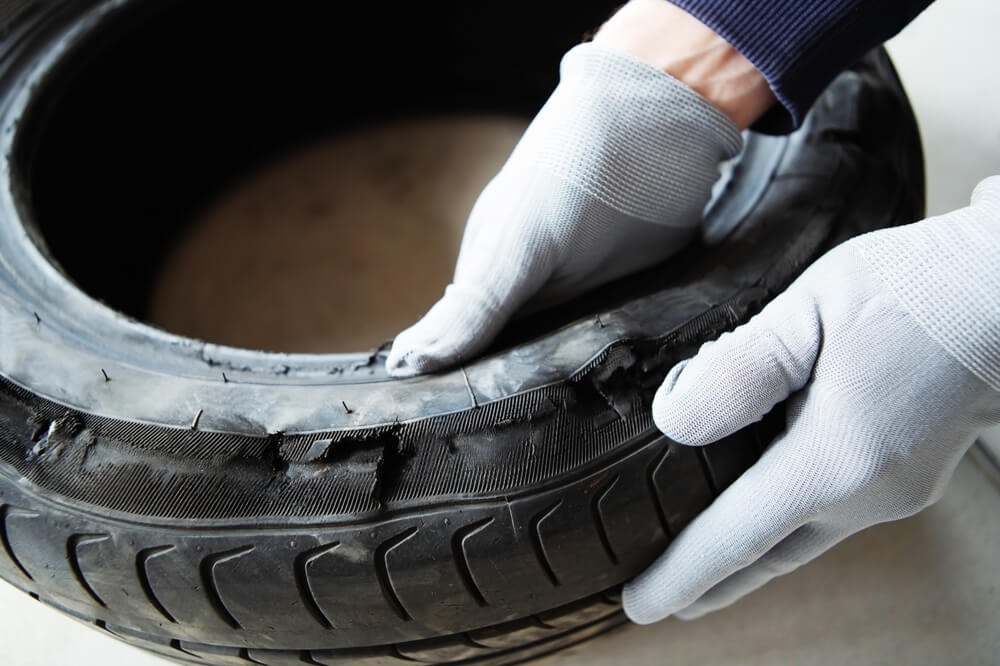 deformation. This may also apply to tyres that have been stored incorrectly, rotated too infrequently, or stacked in piles that are too heavy. Storing tyres over the winter in unsuitable conditions can also lead to other deformations, rendering them unusable.
Prolonged low tyre pressure can also cause the tyre to become egg-shaped. Tyre pressure that is too low can cause the tyre to overheat gradually, which is particularly dangerous when travelling long distances. This can lead to delamination of the tyre’s individual layers and, consequently, to more serious structural damage.
Another cause of an egg-shaped tyre may be mechanical damage, including, above all, impacts sustained whilst driving. Examples include driving over a pothole, or suddenly hitting a kerb or speed bump. If the impact was severe, it may have caused the cords to rupture or the tread to tear away, as well as further deformation.
It is also worth noting potential manufacturing defects which, although rare, may lead to tyre deformation over time. Furthermore, an oval shape may develop as a result of the material ageing and delaying the replacement of tyres with new ones for too long. Regardless of the causes, the most commonly chosen remedy is tyre replacement in Warsaw.
Symptoms of an egg-shaped meniscus – how can you recognise this deformity?
The main symptom is, of course, a change in the tyre’s shape, which is easily noticeable during a visual inspection of the tyres. Furthermore, drivers of cars with egg-shaped tyres may feel distinct vibrations in the bodywork and hear unusual noise, which intensifies at low speeds.
In such a case, you should obviously not continue driving, but carry out some basic checks: a tyre pressure check, a professional inspection and wheel balancing, which usually result in the need to replace the tyre with a new one.