
Wheels are a key visual element of a car and, for many drivers, also serve as a statement and a decorative feature of their vehicle. They often opt for non-standard wheel designs, which necessitate changing their existing tyres and selecting a new size. Wheels and tyres must be a precise match to ensure the vehicle functions correctly and handles properly. In this article, we focus on finding tyres that match the size of the wheels: we explain how significantly they affect driving conditions, how to determine the correct tyre size step by step, and where to find the necessary information.
A tyre that fits the wheel – the key benefits
A tyre that is correctly matched to the wheel rim ensures safe and controlled driving. An incorrect tyre fit leads to accelerated wear and tear, including tread wear. This reduces the car’s traction and can pose a real danger to the driver and passengers. The tyre will either exert excessive or insufficient pressure on the road surface whilst driving.
Furthermore, an incorrectly fitted tyre may rub against parts of the suspension or the wheel arch, leading to their gradual wear and tear. In the worst-case scenario, the tyre may come off the rim whilst driving. It is worth noting, however, that fitting an incorrectly selected tyre may simply prove impossible, and a mechanic may refuse to carry out the job. Nevertheless, it is worth avoiding unnecessary expenditure on tyres that do not fit.
Tyre size versus wheel size – how do you match them?
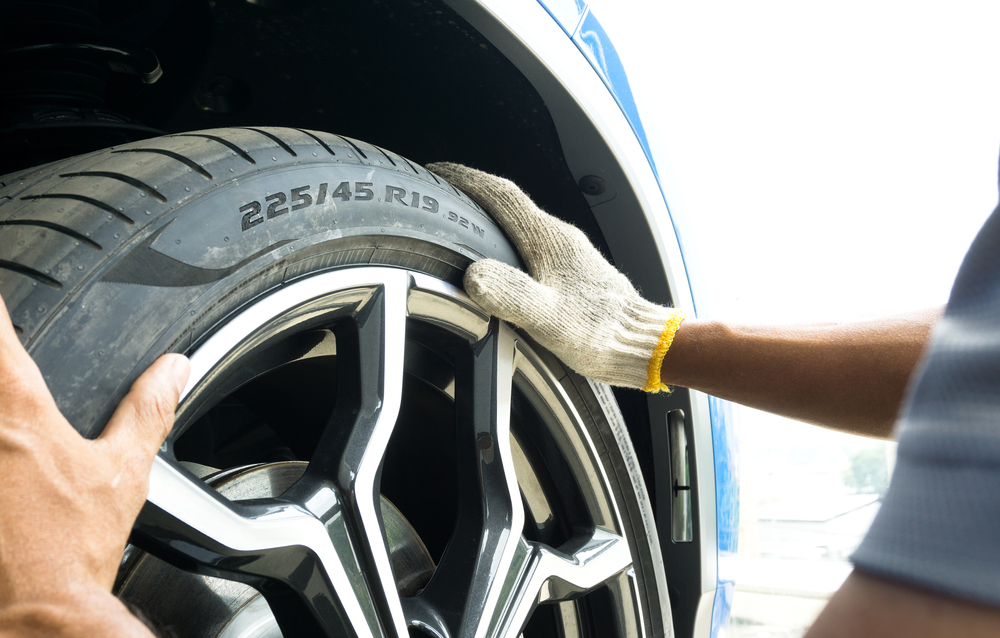
The person in charge of the tyres should know their size. If this is not the case, they will find the necessary information in the car’s manual, amongst the manufacturer’s recommendations. Care should be taken to ensure that the tyre dimensions specified are compatible with the factory-fitted rims. The necessary information can also be found on the information sticker on the inside of the door and on the tyre itself. It is worth looking at the sidewall of the tyre, where there should be a marking consisting of numbers and the letter R. Based on this, you can match the tyres to the rims.
An example of a tyre size designation is as follows: 195/60/R15, and each part of this designation provides the most important information about the tyre’s size. 195 refers to the tyre width, expressed in millimetres. 60 is the tyre sidewall height, also given in millimetres. R15 denotes the radius, and its value is given in inches. According to the recommendations, the rim should be slightly narrower than the tyre, ideally at 70–85 per cent of its width. However, the diameter of both the tyre and the rim must be identical.
How do you work out the right wheel size?
The information you’re looking for can be found quickly online. There are compatibility tables and charts available, as well as online calculators. Using these, you can easily determine the optimal tyre size for your rims, based on their physical specifications. Tyre size can also be identified based on details of your car: year of manufacture, model and make.