
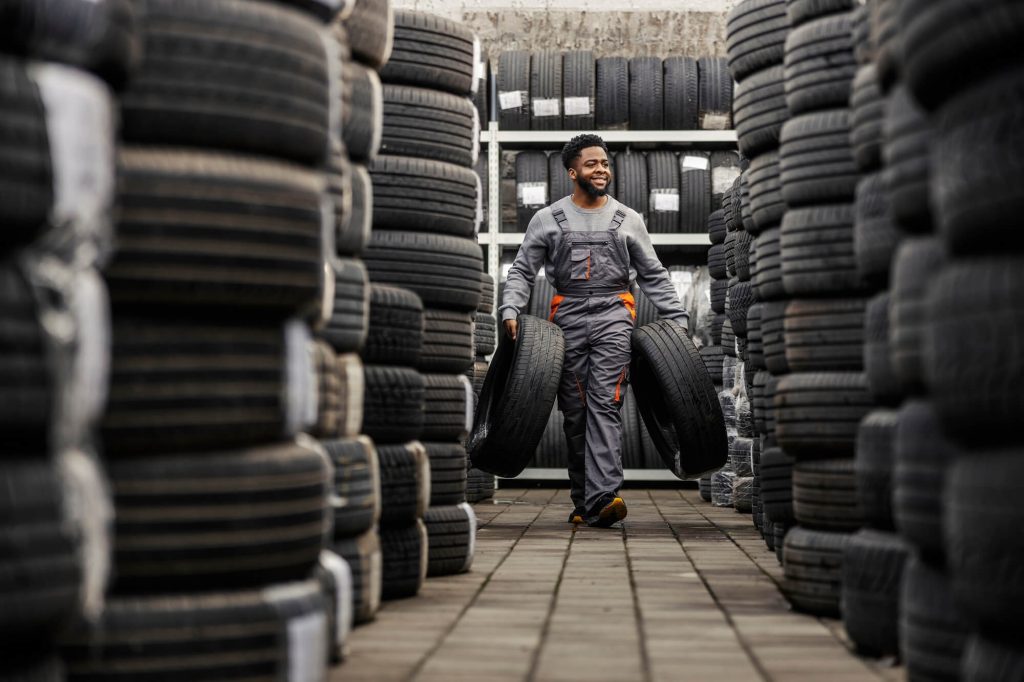
How should tyres be stored properly at the end of the season?
Proper off-season tyre storage involves washing them thoroughly, drying them and storing them in a cool, dry and dark place, in the correct position – upright for the tyres themselves and stacked or hung on hooks for complete wheels. Hi, it’s the Wulkanizacja 24H team here! The seasonal tyre change is a regular fixture in the calendar for every driver in Warsaw. Many of us focus solely on the act of changing from summer to winter tyres and vice versa, but we often forget a key part of this process: what happens to the set of tyres that’s been removed. How you store your tyres over these few months has a direct impact not only on their lifespan, but above all on your safety on the road in the coming season.
From our many years’ experience in the tyre industry, we know that mistakes made during storage can cut the lifespan of even the best set of tyres in half. The rubber they’re made from is a compound that’s sensitive to external conditions such as temperature, moisture and UV rays. That’s why we’d like to share our knowledge and practical tips with you on how to look after your tyres when they’re not on your car. Think of it as a chat with a mechanic you know, who’s got your best interests at heart.
In a nutshell
- Store tyres without rims in an upright position only, rotating them by 90 degrees approximately every 4 weeks.
- You can stack the complete wheels with rims (one on top of the other) or hang them on special hooks.
- The optimum storage temperature is between -5 and +25 degrees Celsius, with a relative humidity of less than 70 per cent.
- Before storing your tyres, always wash them thoroughly, dry them and check them for damage and tread wear.
Why is storing tyres incorrectly risky?
Improper tyre storage is a sure-fire way to cause premature wear and the loss of key driving characteristics, which poses a real safety risk. The rubber compound from which a tyre is made ages under the influence of adverse factors. Its greatest enemies are UV radiation, extreme temperatures, moisture and contact with chemicals such as oils or solvents. The rubber loses its elasticity, becoming hard and brittle, and micro-cracks appear on its surface, which over time can lead to the tyre rupturing whilst driving.
On our website Wulkanizacja 24H in Warsaw We regularly come across cases where customers bring in tyres which, despite having good tread, are no longer fit for use precisely because they have been stored incorrectly. These are often tyres that have been kept all summer on a sunny balcony or in a damp, poorly ventilated cellar. Such tyres will not provide adequate grip, will increase braking distances and may fail when you least expect it; that is why we place such great emphasis on this aspect of car maintenance.
How do you prepare tyres and wheels for storage?
It is essential to take a moment to prepare your tyres properly before storing them away for a few months. This is absolutely fundamental and will pay off in the long run. The process consists of three simple but extremely important steps: thorough washing, a detailed inspection of their condition, and any necessary maintenance. Remember to mark the tyres to indicate which axle and side of the vehicle they come from, for example by writing with chalk on the tread (PP – front right, LT – rear left). This will make it easier to rotate the tyres next season, which helps ensure they wear evenly.
What should you use to clean your tyres, and how exactly should you do it, before storing them?
It is best to wash tyres using lukewarm water with a mild detergent, such as car shampoo, and a soft brush. The most important thing is to remove all dirt from the tread and the sides of the tyre, such as mud, sand and, above all, road salt and bits of tarmac. Salt is particularly corrosive to rubber and rims, especially aluminium ones. After washing, rinse the tyres very thoroughly with clean water and leave them to dry completely. Moisture left on the rubber accelerates the ageing process, so rushing this step is not advisable.
How do you check the condition of your tyres and when do you need to replace them?
When you remove the tyres from your car, it’s the perfect opportunity to give them a thorough inspection. First and foremost, check the tread depth – the legal minimum is 1.6 mm, but for safety’s sake we recommend replacing summer tyres when the tread depth reaches 3 mm, and winter tyres when it reaches 4 mm. Next, carefully examine each tyre for any mechanical damage: cuts, cracks, bulges on the sidewall or embedded foreign objects. If you’re in any doubt, you’re always welcome to pop in. As part of our tyre service in Warsaw, we offer professional advice on tyre purchases and will assess free of charge whether your set is safe for the coming season.
Should you use rubber care products?
Opinions are divided on this matter, but we, drawing on the recommendations of leading tyre manufacturers and our own experience, take a cautious approach. Modern tyres contain chemical agents in their compound that slow down ageing, which are released during normal use. The use of additional preservatives, particularly those based on petroleum or silicone, can disrupt this process and even damage the rubber’s structure. The safest and entirely sufficient method is to wash and dry the tyres thoroughly. Let’s leave any ‘polishes’ for when the tyres are fitted to the car, rather than whilst they’re sitting in the garage.
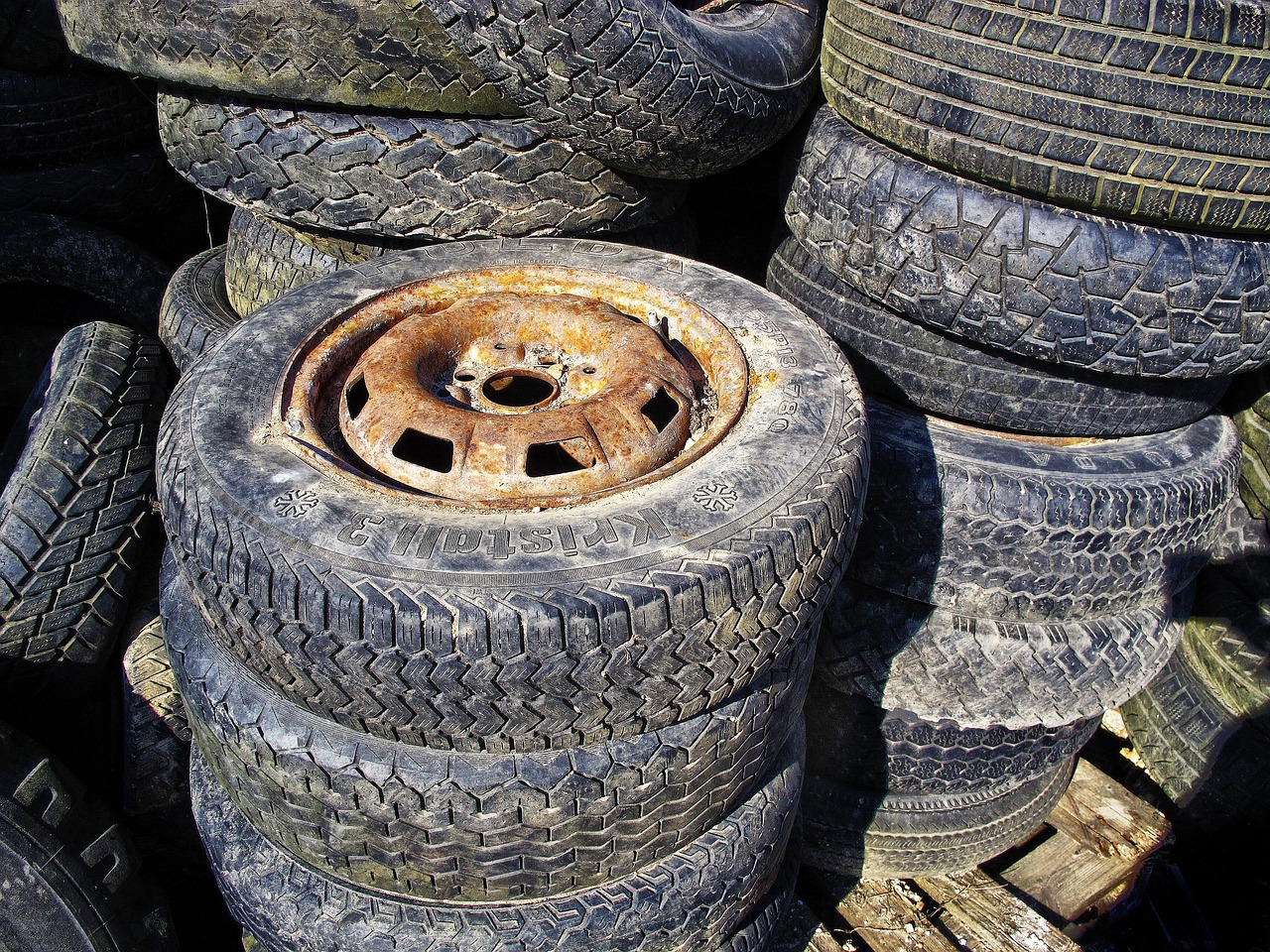
How should tyres be stored – with or without their rims?
How tyres are stored depends fundamentally on whether you remove the entire wheels from the car or just the tyres themselves. This distinction is crucial, as incorrect storage can lead to permanent deformation, rendering the tyre unsuitable for further use. Remember that a tyre without a rim is much more prone to deformation under its own weight. At our tyre hotel, which we run for customers from districts such as Włochy, Mokotów and Ochota, we follow strict storage guidelines to ensure that every set is returned to its owner in perfect condition.
| Type | Recommended position | Unauthorised position |
|---|---|---|
| Tyres only (without rims) | Vertically (on their sides), on a rack or shelf. They should be rotated every few weeks. | Lying down (in a pile), hung on hooks. |
| Complete wheels (tyres on rims) | Lying flat (stacked, one on top of the other), hanging (on special hooks or hangers). | Vertically for a long time (risk of deformation at a single point). |
How should you store tyres to prevent them from becoming misshapen?
Tyres on their own – that is, without rims – should only be stored in an upright position, side by side, ideally on a special tyre rack or shelf. This arrangement prevents them from becoming flattened. However, it is essential to rotate each tyre by 90 degrees roughly once a month. This ensures that the pressure is distributed evenly and prevents permanent deformation at the point where the tyre comes into contact with the ground. Under no circumstances should tyres without rims be stacked one on top of the other, nor should they be hung on hooks, as their own weight will cause the sidewalls and tread to become deformed.
Can whole wheels be hung up or stacked?
The situation is quite different when it comes to storing whole wheels, i.e. tyres fitted to rims. In this case, the rim acts as a rigid frame that protects the tyre from deformation. Therefore, complete wheels can be safely stacked on top of one another, up to a maximum of four. An even better solution is to hang them on special, dedicated hooks or hangers that are mounted on the wall. It is also worth reducing the tyre pressure to around 1.5 bar – this will reduce the internal stress within the tyre.
Where is the best place to store tyres?
The ideal place to store tyres is one that is cool, dry, dark and well-ventilated. Tyres do not fare well in extreme conditions, so you should avoid places exposed to direct sunlight, proximity to heat sources such as radiators or stoves, and the vicinity of ozone-generating equipment, such as transformers or electric motors. Ozone is one of the most damaging factors for rubber. It is equally important to ensure that there are no chemicals nearby, such as petrol, oils, greases or solvents, as their vapours can react with the rubber compound.
What are the optimum temperature and humidity levels?
The optimum temperature for storing tyres is between -5 and +25 degrees Celsius. It is best if the temperature remains constant, without sudden fluctuations. Low humidity is also important – ideally below 70 per cent – to prevent condensation forming on the surface of the tyres and rims, which could lead to corrosion, particularly in the case of steel rims. These are precisely the conditions we strive to provide in our storage facility, which is used by motorists from all over Warsaw, from Bemowo to Ursus.
Can tyres be stored on a balcony or in a cellar?
A balcony is one of the worst places to store tyres. There, they are exposed to the full range of adverse conditions: direct sunlight (UV), significant temperature fluctuations between day and night, rain, snow and damp. A cellar, on the other hand, can be a good place, provided it is dry and cool. Unfortunately, many basements in blocks of flats are characterised by high humidity, which encourages the growth of mould and accelerates the ageing of rubber. If you’re unsure about the conditions in your basement, it’s safer to look for another solution.
How much does tyre storage cost in Warsaw?
The cost of professional tyre storage in Warsaw is relatively low, especially when you consider the benefits it offers. It’s not just about convenience and saving space in your home or garage, but above all, it’s an investment in the longer lifespan of your tyres and your own safety. Instead of risking damage to a set of tyres worth a fair bit of money, you entrust them to specialists who will ensure they are stored in optimal conditions. Thanks to our pricing policy, we offer very low prices, making the service accessible to virtually every driver.
What are the prices for storing a set of tyres?
The prices for seasonal storage of a set of tyres or complete wheels in Warsaw are very attractive and competitive. The cost of the service usually depends on the size of the wheels, but in any case it is incomparably lower than the potential cost of having to buy a new set of tyres due to damage caused by poor storage. It is worth treating this as a small, seasonal expense that guarantees peace of mind and the certainty that, come spring or autumn, you will be fitting tyres in perfect condition to your car. Our aim is to offer professional service at an affordable price, which is why we stand out from our competitors with our attractive terms.
What are the benefits of handing your tyres over to Wulkanizacja 24H?
When you choose to store your tyres at our service centre, you gain, above all, peace of mind and convenience. You don’t have to worry about finding a suitable place, transporting dirty tyres or preparing them for storage – we take care of everything. Your tyres are stored in a specially equipped warehouse where conditions are ideal. What’s more, we thoroughly inspect every set, and you’ll be informed of their condition. It’s a convenient solution, especially as you can leave your tyres with us straight after a seasonal change, which we carry out immediately, 24 hours a day, 7 days a week.
What should you check before fitting tyres for the new season?
Before the tyres, which have spent several months in storage, are fitted back onto your car, it is essential to check their condition once again. Even if they have been stored in ideal conditions, it’s worth taking a moment to carry out a final check. This is your last chance to ensure that travelling on this set of tyres will be completely safe. Checking the pressure, carrying out a visual inspection and having them professionally balanced are the absolute minimum requirements, which we always remind our customers of.
How can you assess the condition of tyres after they’ve been stored for a few months?
You should begin assessing the condition of your tyres after storage with a thorough visual inspection. Look for any new cracks, particularly on the sidewalls, which could indicate that the rubber is ageing. Check for any deformities or bulges. Then check the tyre pressure and top it up to the levels recommended by the vehicle manufacturer. If you notice anything worrying, don’t take any risks – consult a professional. In the event of a breakdown or if you have any doubts, our mobile tyre repair service is available throughout Warsaw.
Why is wheel balancing with a road test so important?
It is absolutely essential to rebalance the wheels every time before fitting them to the car, even if they have not been removed from the rims. During use and storage, the weight distribution within a wheel may undergo slight changes, which can cause vibrations in the steering wheel, discomfort and accelerated wear of the suspension and the tyres themselves. At our service centre, it is standard practice to balance wheels using a road test, which simulates the load on the wheel whilst driving with exceptional precision and ensures perfect balance. This service directly enhances driving comfort and safety, and is also essential for the proper functioning of modern TPMS systems, i.e. tyre pressure monitoring sensors.
Summary
- Always Prepare your tyres for storage by washing them thoroughly, drying them and checking their condition.
- Remember regarding the fundamental difference in storage methods: store tyres on their own vertically, and whole wheels in a stack or on hooks.
- Ensure Store tyres in suitable conditions, i.e. in a cool, dry and dark place, away from chemicals and sources of heat.
- Consider using a professional tyre storage facility to ensure optimal conditions and save space.