
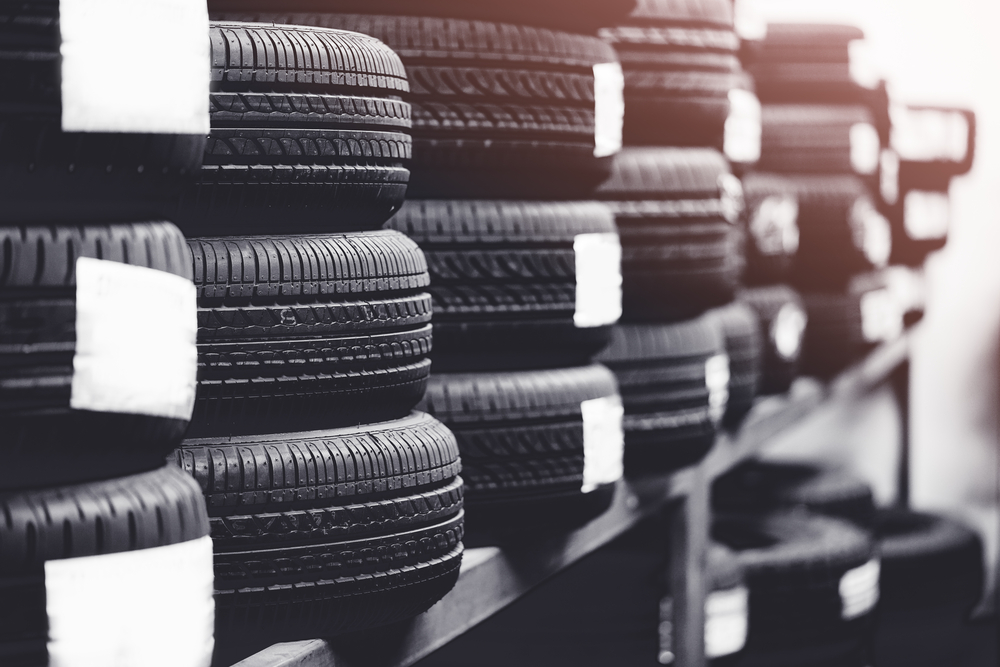
Tyre changes are a regular service that allows you to adapt your car’s tyres to the current weather conditions and the time of year. When swapping summer tyres for winter ones, we use a storage facility where the tyres will be kept safe whilst awaiting their turn. In this article, we focus on the issue of storing tyres when they are not in use. We offer advice on how tyres should be stored, how to organise the storage space, and in what position tyres should be placed to prevent deformation and other damage.
In what position should tyres be stored?
During the winter months, tyres should be stored in a suitably planned and prepared location. Whether tyre change Whether the work is carried out in a garage or at home, tyres should be stored in a way that is suited to their needs and prevents deformation and damage.
In the case of tyres on rims, a horizontal position is recommended, i.e. stacking the individual tyres on top of one another. Special spacers are often used to keep the tyres separate from one another. Some people also choose to store tyres suspended from the ceiling using special hooks.
Regardless of the position you choose, it is worth remembering how important it is to rotate your tyres regularly and change their order. This will help to even out excessive pressure and prevent any potential deformation caused by it.
In the case of tyres without rims, it is recommended that they be stored upright during the winter. Tyres should not be stacked or leaned against one another. Instead, it is recommended that all tyres stored in this way be rotated regularly, every few days or weeks.
Where and how should tyres be stored correctly?
The area designated for tyre storage should be adequate for the number of tyres to be stored and free from any items that could pose a potential hazard.
First and foremost, it is advisable to choose a room with low humidity and not too much direct sunlight. Excessive sunlight falling directly on the tyres poses a serious threat to their structure. If it is not possible to shield the room from natural light, it is advisable to use tyre covers.
Furthermore, the area around the tyres should be kept free of sharp objects that could damage the tyres, as well as oils, greases, solvents and other chemicals.
Storing tyres correctly – optimal conditions
The temperature in the room where tyres are stored should be between 10 and 25 degrees Celsius, to ensure that the tyres are not adversely affected. Higher or lower temperatures may have a negative effect and lead to material degradation. The room should be well ventilated to prevent the build-up of moisture and airborne dirt. Furthermore, the room should be kept clean and tidied regularly, and the tyres themselves should be properly insulated from the floor.