
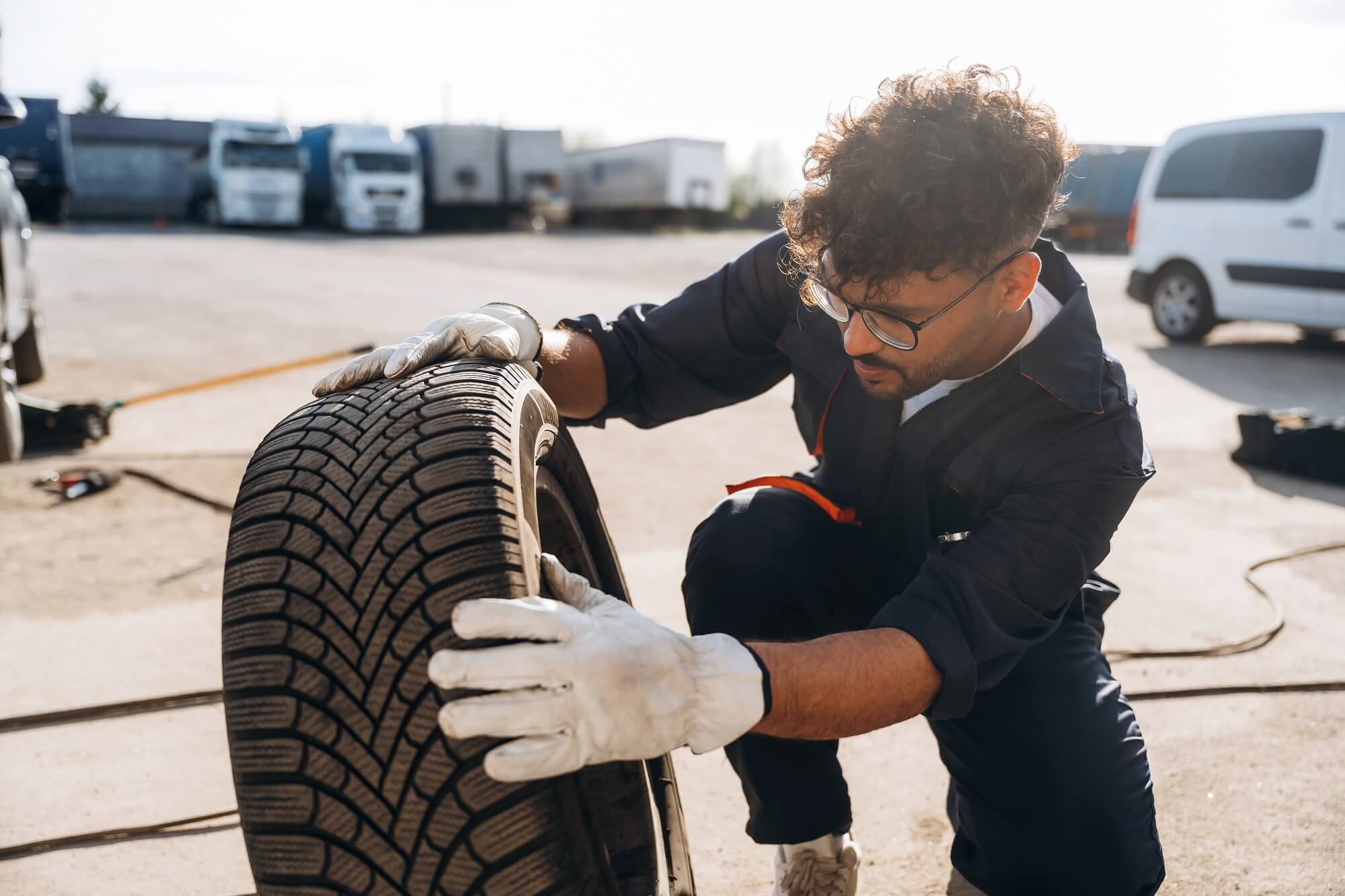
A puncture caused by a pothole – what should you check straight away?
Have you ever hit a pothole and felt your heart leap into your throat? It’s only natural. A knock like that can damage a tyre, a wheel rim and sometimes even the suspension. A quick check of the wheel’s condition can help you avoid higher costs and risks on the road.
In this guide, you’ll find out what to check immediately after a collision, how to spot serious damage, and when it’s best to pull over. You’ll also find tips on how to document the damage for your insurer, and when a tyre is suitable for repair and when it needs replacing.
How can you quickly check a tyre after hitting a pothole?
Pull over to a safe spot and, in a few minutes, check your tyre, wheel and tyre pressure.
- Switch on your hazard warning lights and pull over out of the traffic lane.
- Take a look all round the tyre. Check for cuts, bulges, scuffs and foreign objects.
- Check the wheel rim from the outside and the inside. Look out for dents on the rim and any cracks.
- Listen to see if the air is hissing.
- Check the pressure using a pressure gauge or the TPMS tyre pressure monitoring system.
- Take a look at the position of the car. If one side has ‘sagged’, there may have been a loss of pressure.
- Assess the handling on a short, quiet stretch of road. Vibrations, pulling to one side or knocking noises are warning signs.
How can you spot a crack or bulge on the sidewall of a tyre?
A bulge or tear in the sidewall usually indicates damage to the cords and means the tyre is unfit for further use.
Hitting the sharp edge of a pothole often damages the tyre’s sidewall reinforcement layer. This can result in a bulge or a tear. Damage of this kind cannot be repaired, as the tyre loses its strength. Some abrasions are superficial, but if you can see fibres or wire, the tyre is unfit for use. Cracks near the tyre bead are also dangerous. If in doubt, it is safer to fit the spare wheel or use the emergency tyre kit and head to a garage.
Could the wheel rim have warped, and how can I check?
Yes. A puncture can bend the rim or cause a micro-crack, leading to wheel wobble and a loss of air pressure.
- Check the rim edges. Dents and flat ‘flattened’ areas are common signs of an impact.
- Check for cracks in the paintwork and small gaps in the metal, particularly on the inside.
- Jack up the car and turn the wheel. If it ‘wobbles’, the wheel rim is out of true.
- Check that no bubbles appear when you carry out a soapy water test at the junction between the tyre and the wheel rim.
- At the workshop, you can have the wheel’s runout measured and, if possible, have it professionally straightened and balanced.
How do you check the tyre pressure and for leaks after a knock?
Use a pressure gauge or the TPMS reading, and check for leaks using a foam test on the tread, the sidewall, around the valve and along the rim.
- Compare the tyre pressure with the vehicle manufacturer’s recommendations. A drop in pressure indicates a puncture.
- Apply soapy water and watch to see if any bubbles appear.
- Press down on the valve stem, and check the nut and the valve insert.
- If the pressure drops, top up the tyre to the recommended level and keep an eye on it.
- If the tyre is deflating rapidly or unevenly, do not continue driving. Fit the spare tyre or seek assistance.
When is it safe to drive to a garage, and when should you stop the vehicle?
You can only continue driving if there are no bulges or cuts in the tyre sidewall and it is not losing air. In any other situation, stop the car.
- Drive slowly to the garage, steering clear of potholes and speed bumps. Avoid the motorway.
- Stop the vehicle immediately if:
- there is a bulge or a crack in the side,
- the pressure drops rapidly or the tyre feels ‘soft’,
- There are loud knocking noises, you can feel vibrations, the car pulls to one side,
- The wheel rim is clearly bent or cracked.
- Don’t drive on a flat tyre. Driving for even a short distance with a flat tyre will damage both the tyre and the wheel rim.
- If you run out of tyres, call out a mobile breakdown service or a mobile tyre repair service.
What symptoms indicate suspension damage following an impact?
Pulling to one side, vibrations, knocks and a crooked handlebar are typical signs of having hit a pothole.
An impact can alter the wheel alignment or damage a control arm, kingpin, anti-roll bar link or shock absorber. If the steering wheel is not straight ahead, the car pulls to one side and you can feel a vibration in the steering wheel, there is a risk of damage. Knocking noises over bumps and leaks from the shock absorbers also require diagnosis. At a garage, it is worth having the wheel alignment and wheel balancing checked, including a road test, as well as the condition of the suspension and steering components.
How do you document damage for a complaint or insurance claim?
Take clear photographs, note down the time and place of the incident, gather evidence and keep your receipts.
- Photos of the hole and its surroundings from various angles. Show the scale, for example, using the edge of a card.
- Photos of the wheel, tyres, rims and the damaged areas, taken from close up and from a distance.
- Make a note of the date, time, street name and side of the road. Save the location on your phone or on a map.
- Footage from a dashcam, if available. Details of any witnesses.
- Receipts for repairs, tyre replacement and wheel rim replacement. Please keep the damaged parts for inspection.
- Reporting a claim to the insurer or the road authority in accordance with the procedure.
- Once the repair is complete, ask for a report detailing the work carried out and photographs of the internal damage to the tyre.
When should you replace a tyre straight away, and when is a repair enough?
A bulge, a split in the sidewall or exposed fibres mean the tyre needs replacing. A small puncture in the tread can usually be repaired.
Tyres with damage to the sidewall, a crack at the bead, exposed wires, a tear in the shoulder, or those that have been driven on whilst deflated are eligible for replacement. It is also worth considering replacement if the tread is heavily worn or the tyre is old. Repair is usually possible if the damage is isolated, minor and located within the tread area. The best results are achieved by repairing from the inside using a repair plug, rather than simply inserting a plug from the outside. After a repair, it is essential to have the wheel balanced and the wheel alignment checked, particularly following a heavy impact.
A pothole can take you by surprise, but a calm assessment of the situation and a few simple tests will help you make a quick decision. If you’re in any doubt, seek professional advice. In Warsaw, there is a 24-hour tyre service available, including a mobile service, which straightens rims, repairs and replaces tyres, balances wheels with a road test, and checks wheel alignment. This reduces downtime and minimises the risk of the problem recurring.
Take advantage of the 24-hour tyre service in Warsaw or book a mobile tyre repair service and get back on the road without any unnecessary delay.