
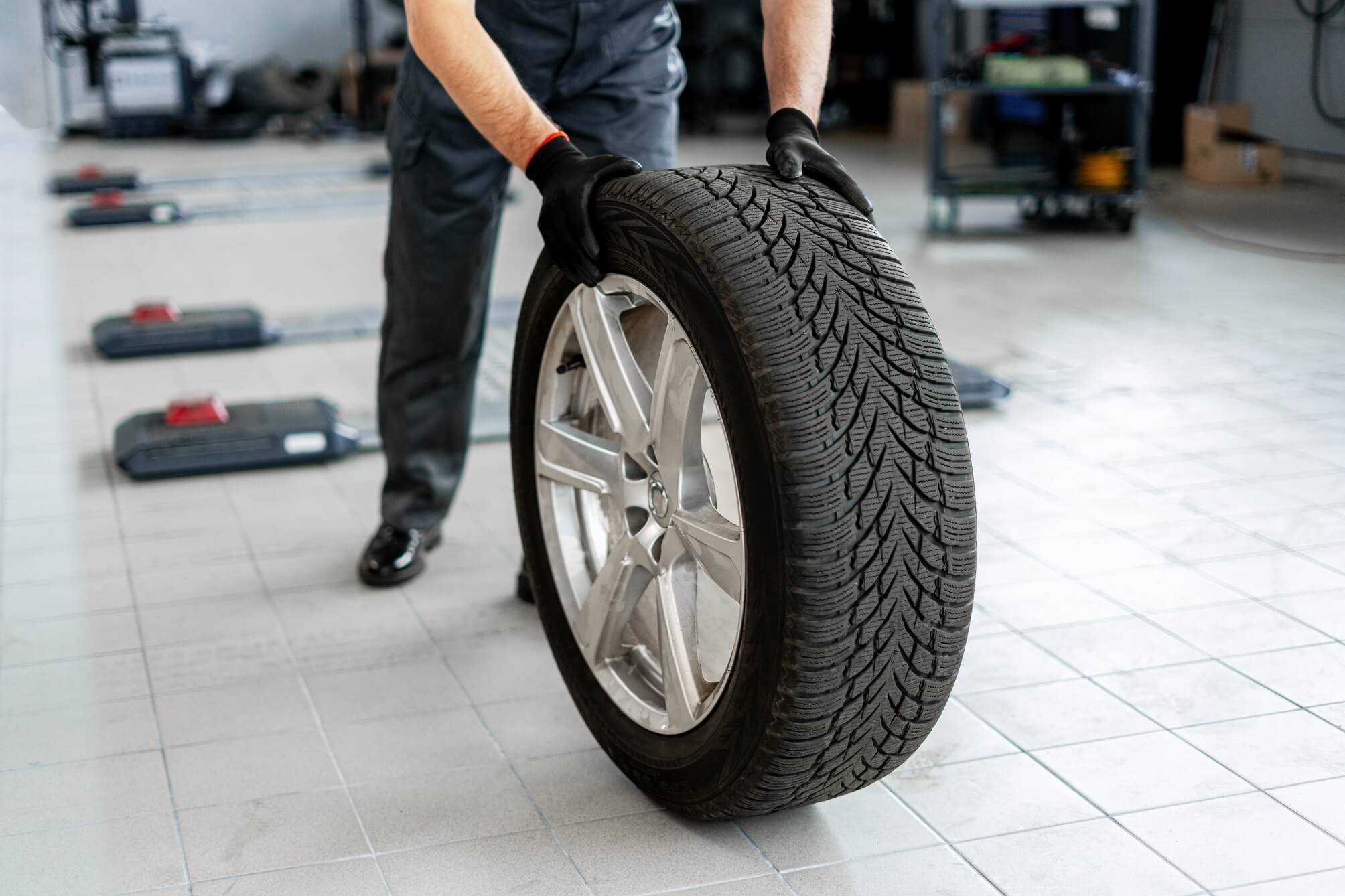
A tyre is losing air after being fitted – what could have gone wrong?
Every day, hundreds of drivers return from having their tyres changed and, a few hours later, notice the tyre pressure warning light. Stress levels rise, and the question pops into their heads: what’s gone wrong? The good news is that the cause is usually simple and can be pinpointed quickly.
In this article, you’ll learn about the most common causes of punctures after fitting, find out how to check for leaks at home, and discover when to take the tyre back to the service centre. This will save you time and help you avoid driving on a flat tyre.
Why does a tyre lose air straight after being fitted?
Most often, the fault lies with the valve, the point where the tyre meets the rim, or the rim itself; less commonly, it is caused by hidden damage to the tyre or a fitting error.
Once the tyres have been replaced, the seals are working properly again. Any inaccuracy in cleaning the rim, fitting the tyre bead or tightening the valve core quickly becomes apparent. The air loss may be very slow, so the TPMS warning light may not come on until the next morning. It also happens that a tyre had a pre-existing micro-damage which, after being removed and re-inflated, began to leak.
Is the valve or the valve core the cause of the leak?
Yes, a loose valve insert or a leaky valve stem is one of the most common causes.
The valve insert may not have been tightened properly, the seal under the valve stem cap may have become contaminated, and the snap-in rubber valve can sometimes crack at the base. In wheels fitted with a TPMS sensor, the condition of the seal and the retaining sleeve is also important. The valve cap does not maintain tyre pressure but protects against dirt, so its absence can lead to leaks. The solution is to check and, if necessary, replace the valve insert or the entire valve, especially if it is old.
Is the rim seal or corrosion causing the leak?
Yes, a dirty or corroded rim flange can allow air to leak at the tyre bead.
Corrosion, residues of old mounting compound and chips of paint accumulate at the edge where the tyre meets the rim. Micro-cracks form, through which air escapes in specific spots. With steel rims, rust is more often to blame, whilst with alloy rims it is usually due to impacts and sharp edges. At the garage, the contact area is cleaned mechanically and a professional rim sealant is applied. If the rim is bent, it may need to be straightened.
Was the tyre fitted incorrectly onto the rim during installation?
Yes, if the wheel rim is not fully seated on the rim flange, this can cause a leak and, at times, vibrations whilst driving.
During fitting, the bead should spring evenly onto the rim and ‘seat’ itself all the way round. The right fitting compound and the correct pressure for seating will help. If there is a reference line on the sidewall of the tyre, its distance from the rim should be consistent around the entire circumference. Uneven seating leads to air loss and can accelerate wear. In extreme cases, the bead may be cut, requiring repair or replacement of the tyre.
Is there an object lodged in the tyre, or is there a micro-crack?
Yes, a small nail, screw or crack in the tread may become apparent as a loose patch once the tyre has been removed.
A foreign object may be lodged between the tread blocks and be invisible at first glance. A puncture can also occur on the tyre shoulder, where repair is not permitted. An effective method of repairing a puncture in the tread area is vulcanisation from the inside, i.e. a patch plug or a combined repair. Cord inserts applied from the outside are regarded as an emergency solution. A cracked sidewall cannot be repaired.
Could the use of sealant, tape or adhesive have failed?
Yes, temporary sealants and household adhesives are only a short-term solution and make subsequent repairs more difficult.
Liquid sealants often cause the valve and TPMS sensor to stick together, and the leak returns after a few days. The tape used on tubeless bicycles does not solve the problems associated with car rims. Silicones and adhesives are no substitute for cleaning the rim and using the correct sealant for the rim flanges. A professional service centre uses the appropriate products and procedures to ensure a permanent seal.
How can you detect a puncture after changing a tyre using home remedies?
The simplest method is to check the tyre pressure and carry out a soapy water test on the valve, the tread and the rim edge.
At home, you can carry out the test without removing the wheel. A solution of water and washing-up liquid, sprayed onto the valve, the valve stem, the rim and the tyre tread, will reveal bubbles at the site of the leak. Gently rotating the wheel makes it easier to spot the leak. Listening for a hissing sound in a quiet place can be effective. Checking the tyre pressure in the morning and in the evening will indicate the rate of air loss. In cars fitted with TPMS, the readings on the dashboard are helpful. The valve core can be checked for micro-leaks by lightly touching it with a brush dipped in foam.
When is it better to take your car to a garage rather than trying to fix it yourself?
If air is escaping rapidly, you must stop the vehicle immediately; do not continue driving on a flat tyre, and call out a mobile breakdown service or have the car towed to a garage.
A professional service will clean and seal the rim flange, replace the valve or insert, inspect the tyre from the inside and carry out repairs in accordance with industry standards. If necessary, the rim can be straightened and balanced with a road test to rule out any vibrations. TPMS system servicing ensures the sensors function correctly after repair. A mobile service is also sometimes available tyre repair service, which provides a service to drivers in the city and the surrounding area. The solutions cover cars, vans and motorbikes, making it easier to manage an entire fleet or just a few vehicles from home.
A puncture after changing tyres rarely indicates a serious problem. Usually, it is enough to ensure the rim is properly sealed, replace the valve or repair a puncture in the tread. A quick diagnosis saves you the tyre, fuel and stress. A responsible driver reacts to the first signs and chooses a repair that restores the tyre’s airtightness for the long term, rather than just for a short while.
Use our 24-hour emergency repair service in Warsaw or book a mobile repair service at a location of your choice to have the leak repaired quickly and safely.