
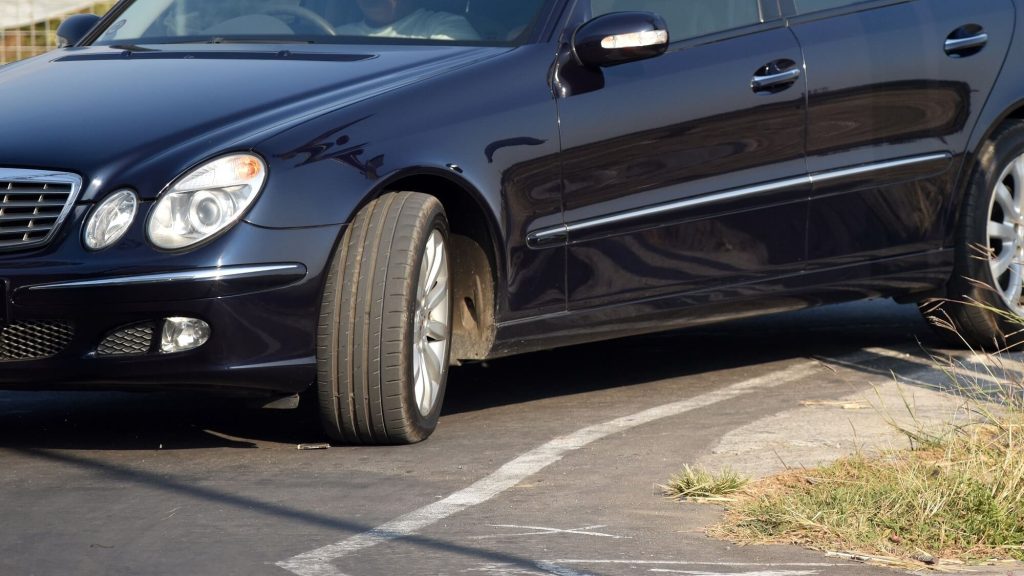
Squeaking noises when turning – could they be related to the wheels?
A brief creak in the car park or a loud screech when taking a tight bend can spoil your peace of mind behind the wheel. Sometimes it’s just down to the weather, but sometimes the noise can be a sign of wear and tear or a fault.
Why does the car squeak when turning?
Most often, it is friction between the tyre, the brake pad or the brake calliper and the brake disc; sometimes it is also caused by moisture or dirt.
Lateral load increases when cornering. The tyre may squeal on a smooth surface, especially at low speeds. After rain, a layer of rust forms on the discs. The first few braking manoeuvres wear this away, which can be noisy. The squeal may also be caused by the edge of a brake pad, the wear indicator tab or a dust cover touching the disc. Less commonly, the bearings are to blame; these tend to hum or growl instead. The noise can also be caused by a fault in the power steering or the accessory belt, although these are not part of the wheel assembly.
Does a noise when turning always mean there’s a problem with the wheels?
No. The noise often comes from the brakes, drive joints, suspension or power steering system.
A knocking sound when taking sharp bends or accelerating is a common sign of a worn drive joint. A whining or squeaking noise that occurs only when turning the steering wheel whilst stationary suggests a problem with the power steering or the accessory belt. Cracking and squeaking noises from the tyres during slow manoeuvres indicate problems with the upper steering column bearings or suspension bushings. If the noise increases with speed, there may be a problem with a tyre, wheel rim or wheel bearing.
How can you tell the difference between a squeak coming from the wheels, the steering system and the brakes?
Count the number of instances and listen carefully to when and how the sound occurs.
- A squeaking noise that varies with speed and subsides when braking gently suggests a problem with the brakes.
- A screeching sound on smooth concrete during a tight manoeuvre, without using the brakes, is usually caused by the tyres.
- A whine or squeak that occurs only when turning the steering wheel – even when stationary – is most often caused by the power steering or the belt.
- A humming noise that changes when turning left or right and increases with speed is a sign of a bearing fault.
- A metallic hum combined with a grinding noise is sometimes caused by the disc guard coming into contact with the disc.
A quick test in an empty car park helps. Drive slowly round the circle in both directions. Check whether the sound changes when you brake lightly and when you release the brake.
Which parts of the wheel are most likely to cause a squeaking noise when turning?
Most commonly, tyres, brake pads and discs, disc covers, stones lodged in the tread and warped rims.
- Tyres. A hard compound, low temperatures and a smooth road surface make skidding more likely.
- Brake pads and discs. Enamel on the pad, wear indicators or rust build-up cause a squeaking noise during gentle braking and manoeuvres.
- Disc guard. If bent, it may rub against the disc when cornering.
- Small stones in the tyre tread. They can squeak or click depending on the steering angle.
- Wheel rim. A warped rim or one with a dirty tyre bead can cause vibrations and squeaking. Straightening the rim and refitting the tyre can help.
- Sensors and valves. A leaky valve may hiss. With tyres fitted with a TPMS, it is important to ensure they are fitted correctly and that the seals are in good condition.
How can you check the bearings and hubs yourself for squeaking?
Check the play and smoothness of the wheel’s rotation, and listen to how the sound changes as you turn the wheel.
Whilst stationary, move the wheel at the 12 o’clock and 6 o’clock positions, and at the 3 o’clock and 9 o’clock positions. Excessive play is a bad sign. Turn the wheel and listen for any roughness. Whilst driving, make a gentle turn to the right, then to the left. A louder humming noise when weight is applied to one side is a typical symptom of a bearing on the outside of the bend. A clean hub and the correct bolt tightening torque minimise the risk of noises after a tyre change. If in doubt, a diagnostic check on a hoist and a test drive at the garage will clear up any doubts.
Can dirt or moisture around the wheels cause squeaking?
Yes. Water, salt and brake dust often cause temporary squeaking.
After a car wash or after rain, a thin layer of rust forms on the discs. It disappears after a few hard braking manoeuvres. Brake dust and sand can cause a squeaking noise in the brake callipers and covers. In winter, road salt increases friction and corrosion of brake components. It helps to wash the rims and the area around the calipers regularly, as well as to check the brake pad guides.
When does a squeaking noise when cornering indicate a risk of a breakdown?
When it is constant, loud and accompanied by vibration, resistance in the handlebars or knocking noises.
You should be concerned if noises get louder as you drive or once the engine has warmed up. A metallic screech accompanied by the car pulling to one side may indicate worn brake pads. A humming noise that changes when cornering points to a bearing. Rhythmic knocking when turning or accelerating indicates a problem with the drive joint. A whining noise when turning the steering wheel whilst stationary, particularly if accompanied by vibrations in the steering wheel, suggests a problem with the power steering. In such situations, prompt diagnosis and repair are essential to avoid damage and an extended braking distance.
What simple steps can you take to prevent your tyres from squealing when cornering?
Check the condition of your tyres and brakes, as well as the wheel balance and wheel alignment, on a regular basis.
- Tyre pressure check and TPMS calibration following the changes.
- Wheel balancing after every tyre change. The effectiveness of the process is confirmed by a road test following the balancing.
- Checking the condition of the brake pads and discs, and cleaning the guide rails.
- Wheel rim straightening and correct fitting of tyres with a clean bead.
- Check the wheel arch liners and mudguards to ensure nothing rubs against them when turning.
- Adjustment of toe and suspension alignment. Reduces tyre squeal and uneven wear.
- Seasonal cleaning of wheel rims and brake calipers, and removal of stones from the tyre tread.
In Warsaw, it is easy to have all these services carried out in one place. Services available include tyre repair, replacement and servicing; wheel straightening; TPMS maintenance; wheel balancing with a road test; as well as steering and suspension repairs. Tyre services are provided both at the workshop and via an emergency mobile service; mobile call-outs are arranged subject to prior confirmation of availability and taking into account road conditions and range. Włochy, Mokotów and Ochota, as well as Bemowo and Ursus, are within the workshop’s service area.
A squeaking noise when turning doesn’t always indicate a fault, but it’s always worth understanding what’s causing it. A quick diagnosis can save you stress and spare parts. If the noise returns or gets louder, seeking help from a garage with experience in wheels, brakes and wheel alignment will provide clear answers and a quick solution.
Book a wheel alignment and brake pad replacement in Warsaw, so you can enjoy a quiet and smooth ride!