
Why does the car pull to one side?
Almost every driver has experienced the car pulling to one side, a phenomenon that makes stable and safe driving difficult. Drivers struggling with a car that pulls to one side are forced to constantly correct their course and keep a close eye on the steering wheel. A vehicle pulling to one side is one of the most common reasons why drivers seek professional diagnosis of their chassis system. 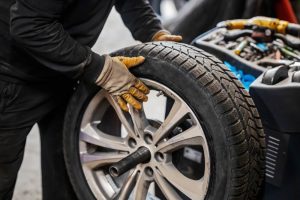
Of course, the reason for the car pulling to one side may also lie in issues with the steering, braking or other systems. In this article, we look at the most common causes of a car pulling to the right or left, and suggest ways in which drivers can tackle this problem.
The car pulls to the right – causes
Drivers who notice their vehicle pulling to the right should check the toe-in and camber of the wheels, particularly on the right-hand side. Lower tyre pressure in the front right tyre may also be to blame, as may the resulting increase in rolling resistance. Sometimes the cause turns out to be uneven tyre wear and the resulting grooving, which generates asymmetrical rolling resistance. In such cases, it may be necessary to tyre repair at a car repair shop.
Other reasons why a car may pull to the right include: a seized brake caliper, noticeable play or faults in the suspension components.
The car pulls to the left whilst driving – causes
Some of the causes of a car pulling to the left may be similar to those causing it to pull to the right. These include excessive camber on the left-hand wheel or incorrect tyre pressure. A seized left-hand brake caliper and noticeable play on the left-hand side may also be responsible for the pull. This phenomenon can occur following a collision, post-accident repairs or even minor knocks. Anyone experiencing these issues should decide to wheel alignment in Warsaw.
A car pulling to the right or left – diagnosis and recommended solutions
Drivers who notice their car pulling to the left or right should not ignore this symptom, but should seek professional help. First and foremost, it is recommended to have the suspension alignment checked and any necessary adjustments made. Checking tyre pressure and condition is also an essential step. It is worth checking for any play in the suspension and steering system. We also recommend taking a close look at the braking system, particularly the condition of the brake pistons.
Once the servicing has been completed, it is advisable to carry out a handling test on various road surfaces and at different speeds. Drivers can choose routes with uneven or sloping surfaces, during which they will have the opportunity to systematically observe the vehicle’s behaviour.